We live in a world full of switches, even the computers and mobile phones we use are, because the machine language we use to communicate with computers and phones is composed of 0s and 1s, where 0 represents off and 1 represents on.
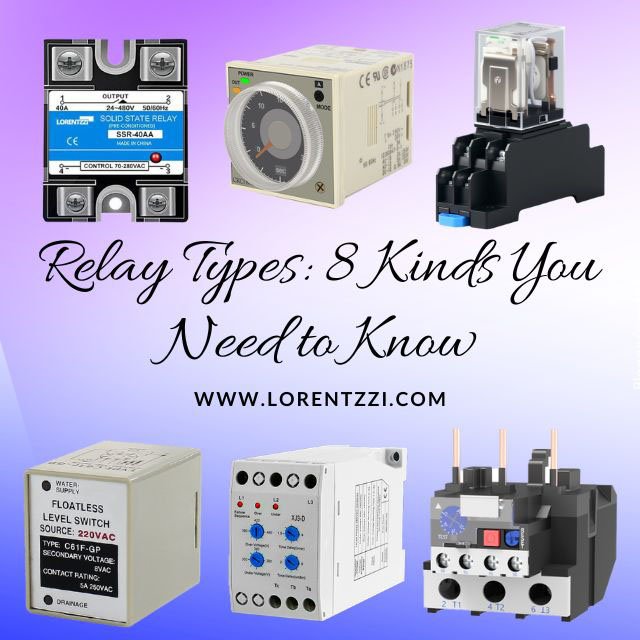
In industrial control, switch operation 0 and1 are always realized by relays. So how many types of relays are there? In this blog post, we will walk through 8 of the most typical and widely used relays.
Now, let’s begin!
What is a relay?
To better understand each type of relay, we first need to know what a relay is.
Simply put, a relay is a switch that can control a larger load (such as a 220VAC 30A heating element) with a smaller control signal (such as 5 VDC 20 mA). You can simply regard it as an electrically controlled switch for easy understanding. By using relays, you can effectively isolate low-voltage and high-voltage circuits, greatly improving electrical safety.
Electromagnetic relay
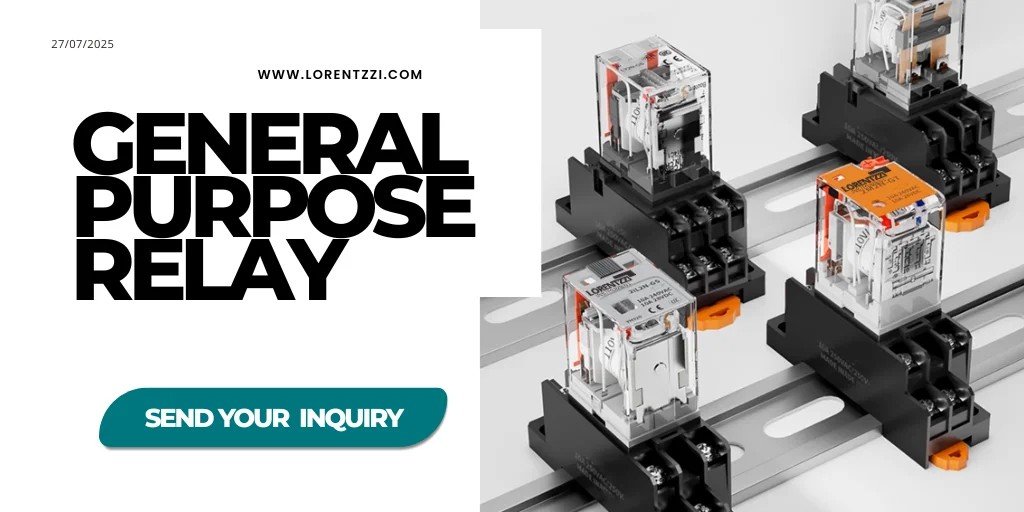
An electromagnetic relay, also known as a general-purpose relay or intermediate relay, is a product that uses an electromagnetic field at the control terminal to control the connection and disconnection of a circuit at the load terminal.
AC contactors work on the same electromagnetic principle and are widely used with relays for high-power load control (Contactor vs Relay: 9 Key Differences You Must Know). For example, by supplying power to the coil inside an AC contactor, it generates an electromagnetic field that attracts the main contacts to close, thereby controlling the load circuit to start the load.
For more information on electromagnetic relays, you can read this blog post: General Purpose Relay: What Is It And How Does It Work?
Time relay
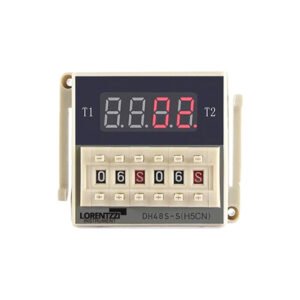
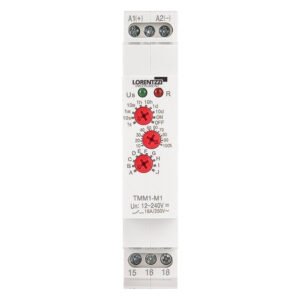
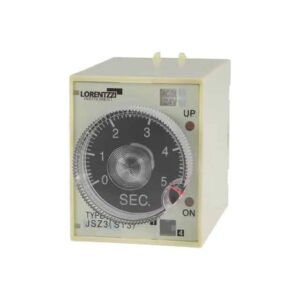
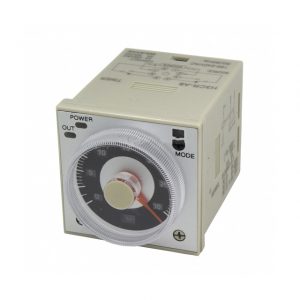
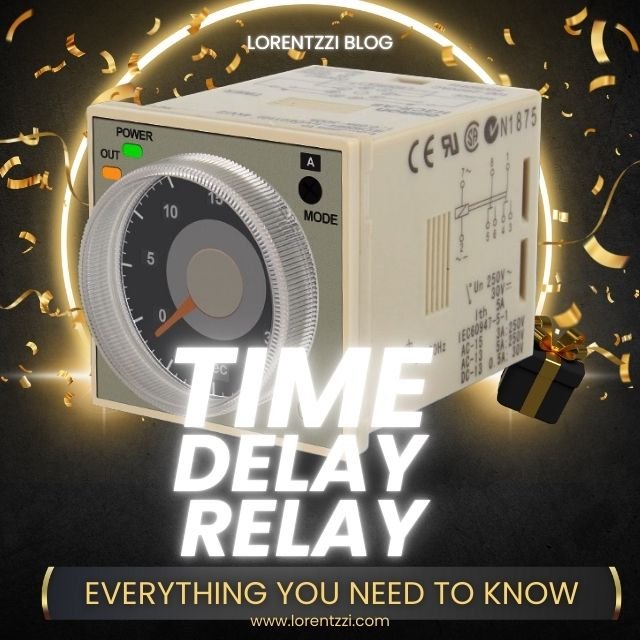
The second type of relay we’ll discuss here is the time-delay relay.
Time-delay relays are typically used to control loads based on time. For example, if you want to delay the start-up of different motors, you can use a time-delay relay to prevent excessive motor load from causing electrical shock stress to the main circuit in a short period.
By using different types of time relays, you can control the load according to a time sequence, such as starting the load on a timer, cyclically switching the load on and off, delaying the shutdown of the load after a power outage, and so on.
Solid-state relay


The third most commonly used type of relay is the solid-state relay, often simply called an SSR.
Unlike the two types of relays mentioned above, solid-state relays are contactless semiconductor relays with no moving parts. They are most often used in conjunction with PID temperature controllers for temperature control. Compared to electromagnetic relays, solid-state relays offer faster switching speeds and are noiseless, making them ideal for applications in PID temperature controllers where frequent switching of heating elements is required to maintain temperature.
Therefore, solid-state relays are specifically designed for temperature control systems.
Water level relay
Do you want your water pump to automatically start when the tank is empty and automatically stop when the tank is full? You can achieve this using a water level relay.
A water level relay is a relay used to detect water level and control the start and stop of a water pump. For example, using our C61F-GP floatless relay with two floats, you can easily control the start and stop of the water pump. Its working principle is: when the water level is low, the relay contacts close, thereby starting the water pump controlled by the AC contactor.
Phase protection relay
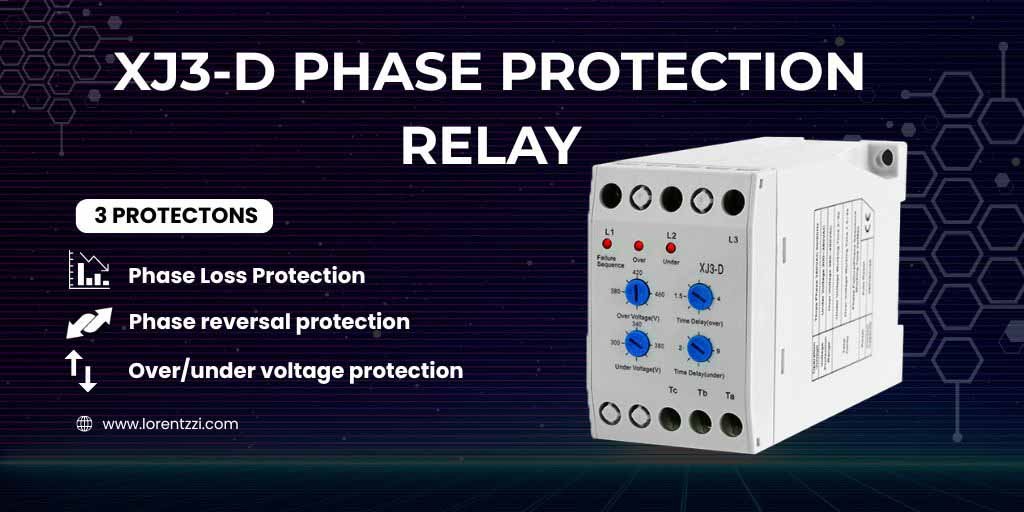
This type of relay is widely applied to protect three-phase electrical equipment. It monitors abnormal power conditions including phase loss, phase sequence error, and three-phase unbalance. Once any power fault occurs, the relay will cut off the power supply in time to avoid equipment burnout and mechanical damage.
Thermal overload relay
A thermal overload relay is a low-voltage electrical appliance that uses the heating effect of current and the bending principle of a bimetallic strip to protect a motor from prolonged overload, phase loss/phase imbalance. A thermal overload relay must be used in conjunction with an AC contactor. It does not directly cut off the main circuit, but rather disconnects the circuit to the contactor coil.
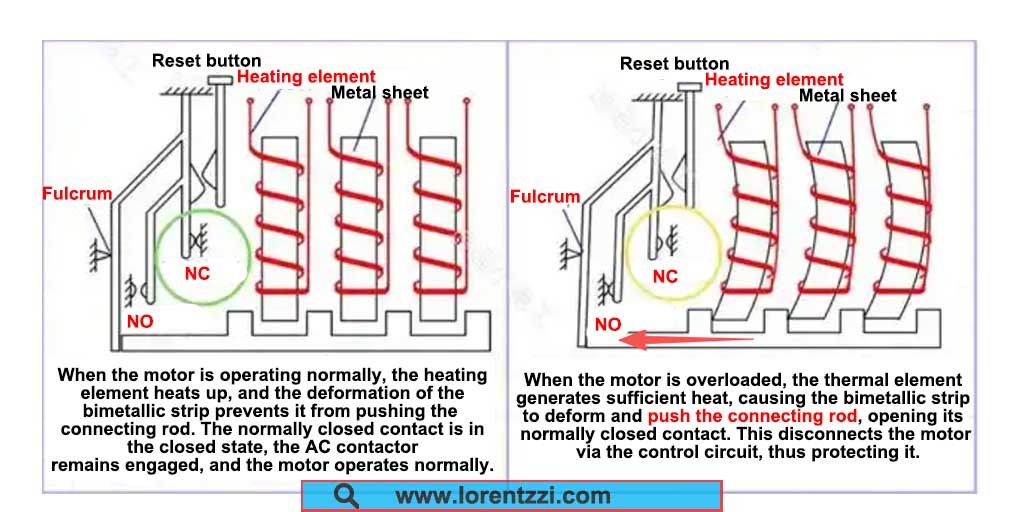
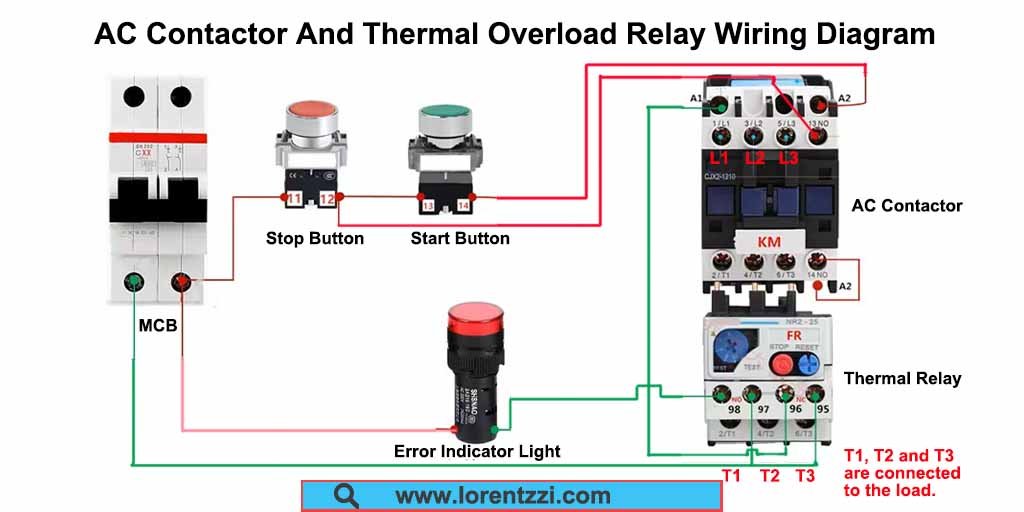
The diagram below shows the wiring diagram for a thermal overload relay and an AC contactor. Once the motor is overloaded or experiences a phase loss, the normally closed (NC) terminal of the thermal overload relay will become the normally open (NO) terminal, thus cutting off the coil power supply and consequently the load power supply. At this time, the normally open (NO) terminal of the thermal overload relay will become normally closed, so you can also detect this fault by checking the indicator light connected to the normally open (NO) terminal of the thermal overload relay.
Car starter relay
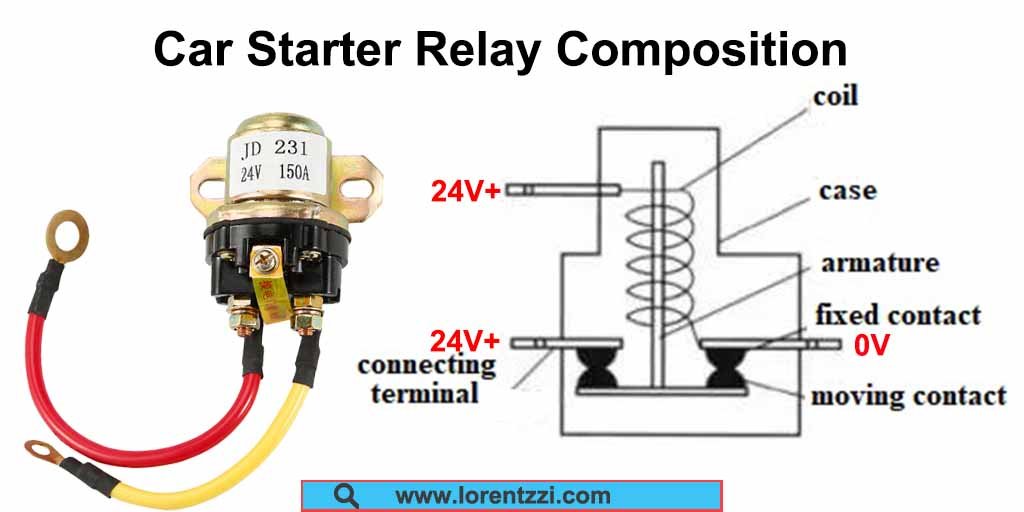
As the name implies, a car starter relay is primarily used to start the vehicle engine. When the key is inserted and turned to the start position, a low 12VDC or 24VDC control signal is sent to the starter relay. The internal coil is then energized, which closes the main circuit contacts and supplies power to start the engine.
Latching relay
If you need to keep high-power loads continuously energized without sustaining control signals at the control terminals, a latching relay is the ideal solution.
Once triggered, a latching relay maintains its switched state without continuous power or input signals. It only reverses to the opposite state when receiving a second control pulse.
Simply put, a latching relay works like a latching button: it stays in one state (for example, circuit closed) after being actuated, and only switches to the other state (circuit open) when triggered again.
Conclusion
In general, there are 8 most commonly used relay types: electromagnetic relays, time relays, solid-state relays, water level relays, phase protection relays, thermal overload relays, car starter relays, and latching relays, each of them plays a very important and unchangeable role in the field of industrial control.
If you still have questions about the relay types, you can try to feel free to contact us via email: shonxu@lorentzzi.com. Our team at Lorentzzi Electric will respond to you within 24 hours.