Nous vivons dans un monde rempli d'interrupteurs, même les ordinateurs et les téléphones portables que nous utilisons le sont, car le langage machine que nous utilisons pour communiquer avec les ordinateurs et les téléphones est composé de 0 et de 1, où 0 représente l'arrêt et 1 l'activation.
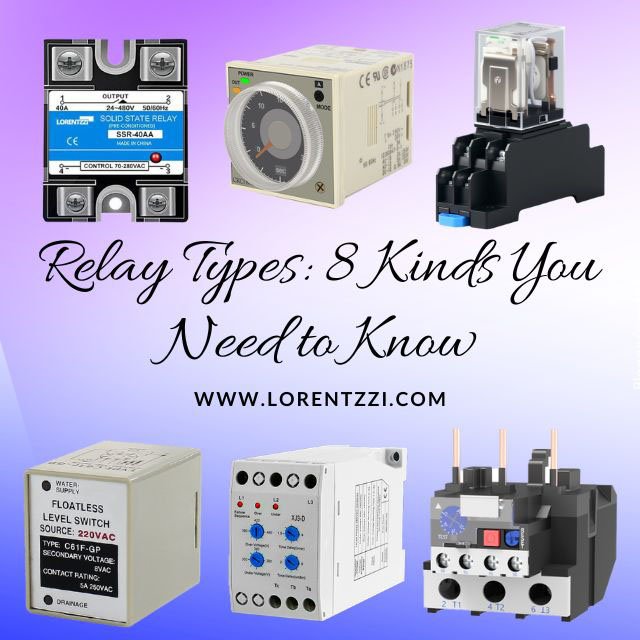
Dans les commandes industrielles, les opérations de commutation 0 et 1 sont toujours réalisées par des relais. Combien de types de relais existe-t-il ? Dans cet article de blog, nous allons passer en revue 8 des relais les plus typiques et les plus largement utilisés.
Maintenant, commençons !
Qu'est-ce qu'un relais ?
Pour mieux comprendre chaque type de relais, il faut d'abord savoir ce qu'est un relais.
En termes simples, un relais est un interrupteur qui peut contrôler une charge plus importante (telle qu'un élément chauffant de 220VAC 30A) avec un signal de commande plus petit (tel que 5 VDC 20 mA). Pour faciliter la compréhension, on peut simplement le considérer comme un interrupteur à commande électrique. L'utilisation de relais permet d'isoler efficacement les circuits basse tension et haute tension, ce qui améliore considérablement la sécurité électrique.
Relais électromagnétique
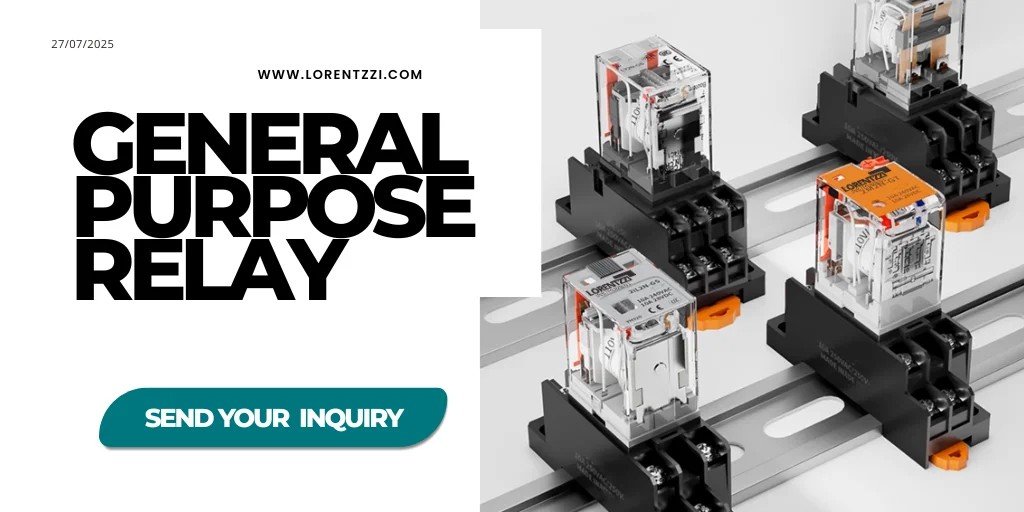
Un relais électromagnétique, également connu sous le nom de relais polyvalent ou relais intermédiaire, est un produit qui utilise un champ électromagnétique au niveau de la borne de commande pour contrôler la connexion et la déconnexion d'un circuit au niveau de la borne de charge.
Contacteurs CA fonctionnent selon le même principe électromagnétique et sont largement utilisés avec des relais pour la commande de charges de forte puissance (Contacteur ou relais : 9 différences essentielles à connaître). Par exemple, lorsqu'on alimente la bobine d'un contacteur CA, celle-ci génère un champ électromagnétique qui attire les contacts principaux les uns vers les autres, provoquant ainsi leur fermeture, ce qui permet de commander le circuit de charge afin de démarrer la charge.
Pour plus d'informations sur les relais électromagnétiques, vous pouvez lire cet article de blog : Relais à usage général : Qu'est-ce que c'est et comment fonctionne-t-il ?
Relais temporel
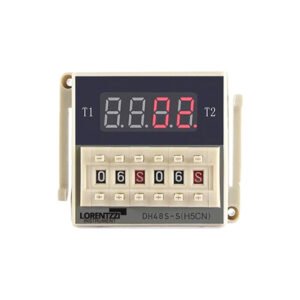
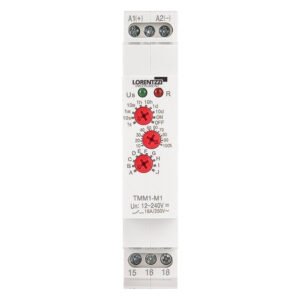
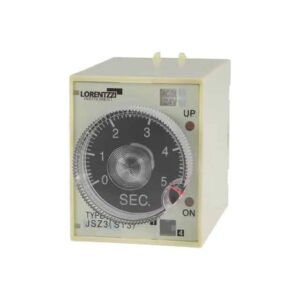
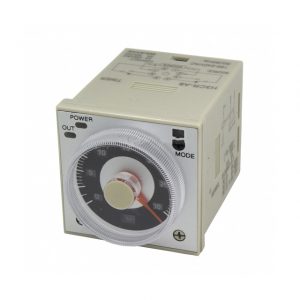
Le deuxième type de relais dont nous parlerons ici est le relais temporisé.
Les relais temporisés sont généralement utilisés pour contrôler les charges en fonction du temps. Par exemple, si vous souhaitez retarder le démarrage de différents moteurs, vous pouvez utiliser un relais temporisé pour éviter qu'une charge de moteur excessive ne provoque un choc électrique sur le circuit principal dans un court laps de temps.
En utilisant différents types de relais temporisés, vous pouvez contrôler la charge selon une séquence temporelle, par exemple en la mettant en marche à l'aide d'une minuterie, en l'activant et la désactivant de manière cyclique, en retardant son arrêt après une coupure de courant, etc.
Relais à semi-conducteurs


Le troisième type de relais le plus utilisé est le relais à semi-conducteurs, souvent appelé simplement SSR.
Contrairement aux deux types de relais mentionnés ci-dessus, les relais à semi-conducteurs sont des relais à semi-conducteurs sans contact et sans pièces mobiles. Ils sont le plus souvent utilisés avec des régulateurs de température PID pour le contrôle de la température. Par rapport aux relais électromagnétiques, les relais à semi-conducteurs offrent des vitesses de commutation plus rapides et sont silencieux, ce qui les rend idéaux pour les applications dans les domaines suivants Régulateurs de température PID lorsqu'il est nécessaire de changer fréquemment d'élément chauffant pour maintenir la température.
C'est pourquoi les relais à semi-conducteurs sont spécialement conçus pour les systèmes de contrôle de la température.
Relais de niveau d'eau
Vous souhaitez que votre pompe à eau démarre automatiquement lorsque le réservoir est vide et s'arrête automatiquement lorsque le réservoir est plein ? Vous pouvez y parvenir en utilisant un relais de niveau d'eau.
Un relais de niveau d'eau est un relais utilisé pour détecter le niveau d'eau et contrôler le démarrage et l'arrêt d'une pompe à eau. Par exemple, en utilisant notre C61F-GP relais sans flotteur avec deux flotteurs, Grâce à ce contacteur, vous pouvez facilement contrôler le démarrage et l'arrêt de la pompe à eau. Son principe de fonctionnement est le suivant : lorsque le niveau d'eau est bas, les contacts du relais se ferment, ce qui fait démarrer la pompe à eau contrôlée par le contacteur CA.
Relais de protection de phase
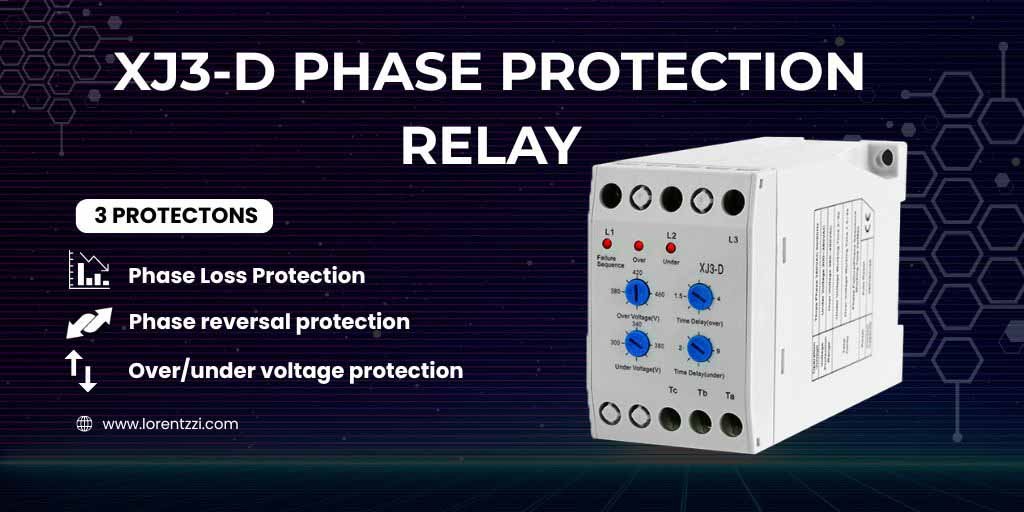
Ce type de relais est largement utilisé pour protéger les équipements électriques triphasés. Il surveille les conditions d'alimentation anormales, notamment la perte de phase, l'erreur de séquence de phase et le déséquilibre triphasé. Lorsqu'un défaut d'alimentation se produit, le relais coupe l'alimentation à temps pour éviter que l'équipement ne brûle ou ne subisse des dommages mécaniques.
Relais de surcharge thermique
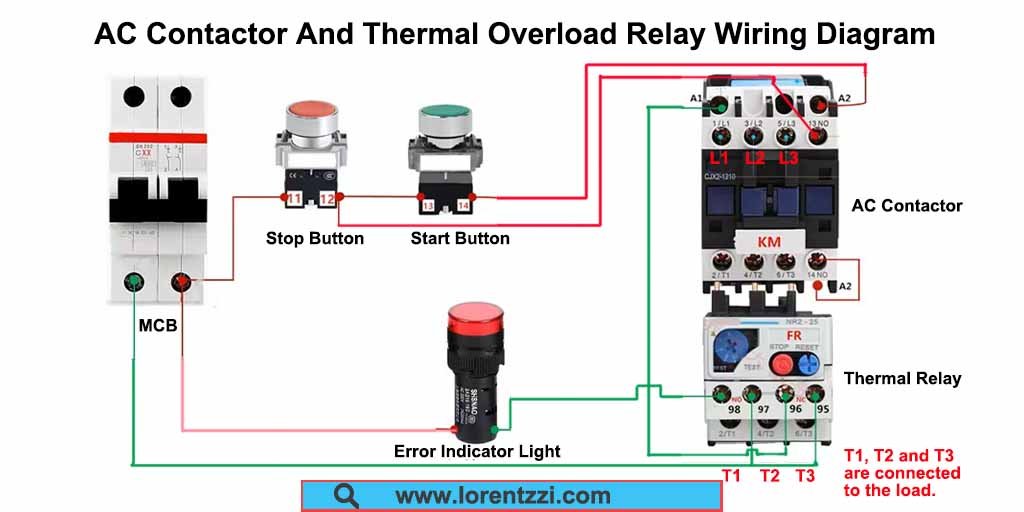
Un relais de surcharge thermique est un appareil électrique basse tension qui utilise l'effet chauffant du courant et le principe de flexion d'un bilame pour protéger un moteur d'une surcharge prolongée, d'une perte de phase/d'un déséquilibre de phase. Un relais de surcharge thermique doit être utilisé en conjonction avec un contacteur CA. Il ne coupe pas directement le circuit principal, mais déconnecte le circuit de la bobine du contacteur.
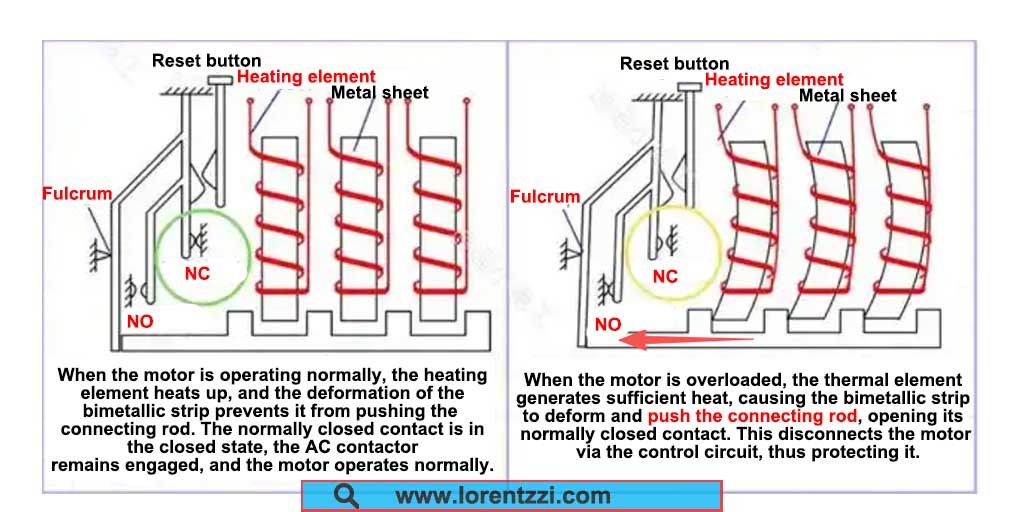
Le diagramme ci-dessous montre le schéma de câblage d'un relais de surcharge thermique et d'un contacteur CA. Lorsque le moteur est surchargé ou subit une perte de phase, la borne normalement fermée (NC) du relais de surcharge thermique devient la borne normalement ouverte (NO), coupant ainsi l'alimentation de la bobine et, par conséquent, l'alimentation de la charge. A ce moment, la borne normalement ouverte (NO) du relais de surcharge thermique devient normalement fermée, de sorte que vous pouvez également détecter ce défaut en vérifiant le voyant lumineux connecté à la borne normalement ouverte (NO) du relais de surcharge thermique.
Relais de démarrage de voiture
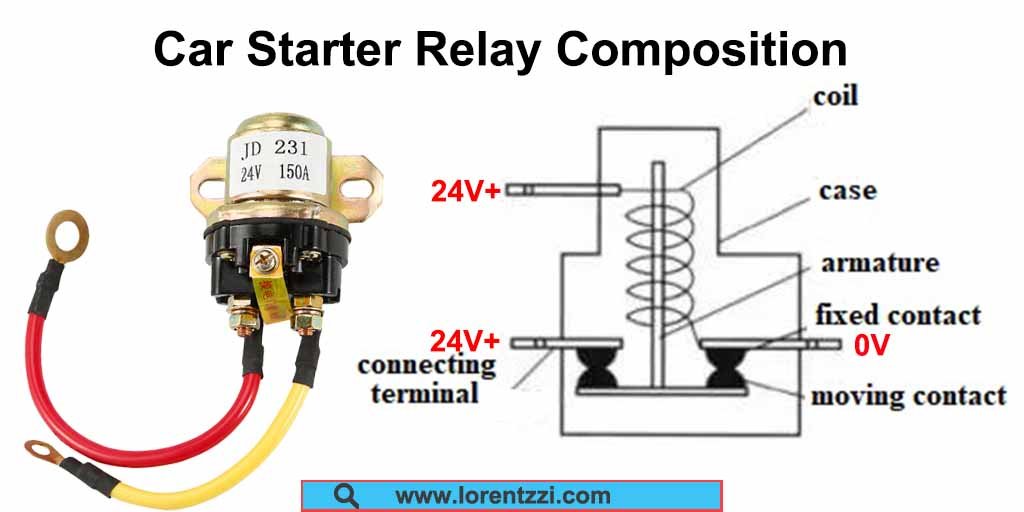
Comme son nom l'indique, un relais de démarrage de voiture est principalement utilisé pour démarrer le moteur du véhicule. Lorsque la clé est insérée et tournée en position de démarrage, un signal de commande faible de 12 ou 24 VDC est envoyé au relais de démarrage. La bobine interne est alors alimentée, ce qui ferme les contacts du circuit principal et alimente le démarrage du moteur.
Relais à verrouillage
Si vous devez maintenir des charges de forte puissance sous tension en continu sans maintenir les signaux de commande aux bornes de commande, un relais à verrouillage est la solution idéale.
Une fois déclenché, un relais à verrouillage maintient son état de commutation sans alimentation continue ni signaux d'entrée. Il ne passe à l'état opposé que lorsqu'il reçoit une seconde impulsion de commande.
En termes simples, un relais à verrouillage fonctionne comme un bouton à verrouillage : il reste dans un état (par exemple, circuit fermé) après avoir été actionné, et ne passe à l'autre état (circuit ouvert) que lorsqu'il est déclenché à nouveau.
Conclusion
En général, il existe 8 types de relais les plus couramment utilisés : les relais électromagnétiques, les relais temporisés, les relais statiques, les relais de niveau d'eau, les relais de protection de phase, les relais de surcharge thermique, les relais de démarrage de voiture et les relais à verrouillage, chacun d'entre eux jouant un rôle très important et immuable dans le domaine du contrôle industriel.
Si vous avez encore des questions sur les types de relais, n'hésitez pas à nous contacter par courrier électronique : shonxu@lorentzzi.com. Notre équipe à Lorentzzi Electric vous répondra dans les 24 heures.