

When using solid-state relays, good heat dissipation is crucial, and the use of fast-acting fuses is equally important.
A suitable fast-acting fuse can protect single-phase or three-phase solid-state relays from damage caused by overcurrent or short circuits in the controlled circuit.
In this blog post, you will learn:
- What is a fast-acting fuse?
- Why does your solid-state relay need a fast-acting fuse?
- Different types of fast-acting fuses.
- How to choose the most suitable fast-acting fuse for your solid-state relay?
Now let’s make it happen!
What is a fast-acting fuse?
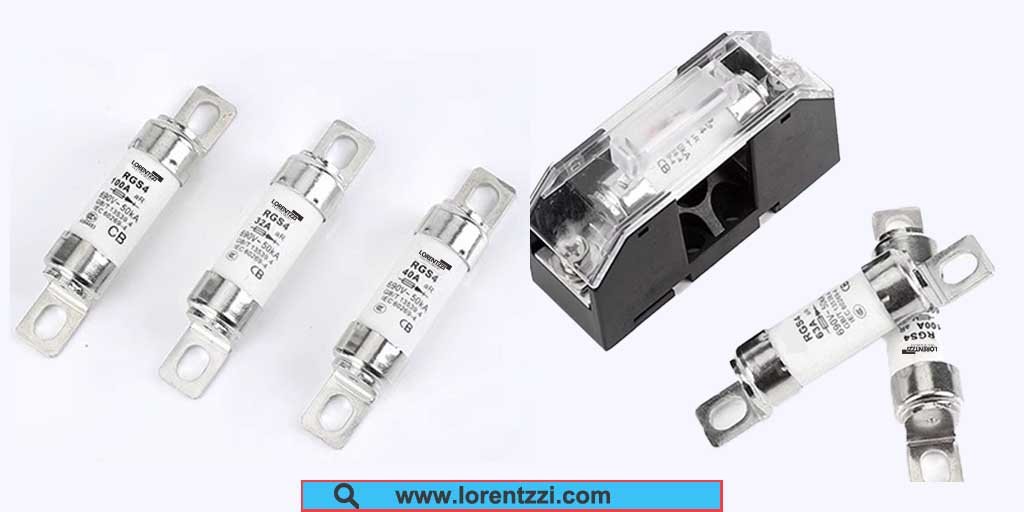
A fast-acting fuse is a one-time circuit protection device mainly consisting of a fusible element, an insulating housing.
Among these components, the fusible element is typically made of high-purity silver, silver alloy, or a thin copper sheet with a narrow neck design. The insulating housing is primarily constructed of high-strength ceramic, offering high voltage resistance and reliable arc suppression performance.
When an overload or short-circuit current exceeds its rated value, the fusible element melts instantaneously due to overheating, rapidly disconnecting the circuit and protecting semiconductor and industrial electrical equipment.
It features an ultra-fast response time, with a melting time of only milliseconds.
Why do you need a fast-acting fuse for your solid-state relay?
Solid-state relays can be divided into two main categories: DC solid-state relays (DC SSRs) and AC solid-state relays (AC SSRs). They both use semiconductors(AC SSR uses thyristor, DC SSR uses Mosfet) as control elements to connect or disconnect loads.
Consulting their ITSM or IDM datasheets, you’ll find that most thyristors are rated for less than 400A@20 ms (see the ITSM value for the BTA41 triac in the image below), while MOSFETs are rated for approximately 1000A. If the circuit is short-circuited, the current can easily reach thousands of amperes, which can easily burn out the control unit.
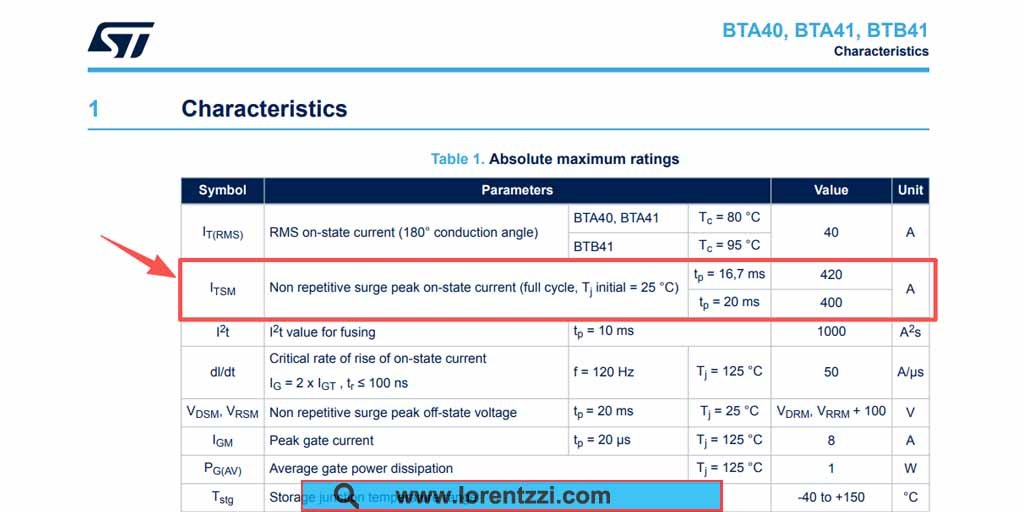
Therefore, to prevent damage from overcurrent, the solution is to use a fast-acting fuse, which can cut off the circuit in less than 10 milliseconds, much faster than the 20-millisecond fuse time of the control unit. This means that the fast-acting fuse has already cut off the power to the control unit before it is damaged.
Different types of fast-acting fuses
To select the most suitable fast-acting fuse for a solid-state relay, it is necessary to understand its common classifications.
According to breaking characteristics, fast-acting fuses are mainly divided into three types: aR, gR and gG/gM.
Both aR and gR types feature an ultra-fast breaking speed, with a breaking time of less than 10 milliseconds.The difference is that the aR fuse is designed solely for short-circuit protection of semiconductor devices, while the gR fuse provides both overload and short-circuit protection.
As for gG and gM type fast-blow fuses, their fusing speed is generally slower than that of the aR and gR type fast-blow fuses discussed earlier. Typically, the fusing time is approximately 0.1 to 5 seconds.
How to select the right fast-acting fuses for your solid-state relays?

As mentioned above, solid-state relays can only withstand surge currents of less than 20 milliseconds. If the circuit is interrupted within this time window, the internal thyristor or MOSFET is effectively protected from burnout.
In contrast, the fusing time of type aR and type gR fast-acting fuses is less than 10 milliseconds, far less than the 20-millisecond withstand limit of solid-state relays. Therefore, these two types of fuses can provide reliable protection for solid-state relays.
From another perspective, such as current, how do you choose the right fast-acting fuse for a solid-state relay (SSR)? In the following section, we will teach you how to do this step by step.
1. Check the maximum withstand current of the solid-state relay
There are three types of solid-state relays: single-phase solid-state relays, three-phase solid-state relays, and solid-state voltage regulators. The supplier will usually specify the maximum output current it can withstand in the load section; please pay close attention to this.
2. Confirm whether the load voltage is AC or DC
Additionally, check whether your solid-state relay is used to control a DC or AC load. DC solid-state relays require DC fast-acting fuses for protection, while AC solid-state relays require AC fast-acting fuses.
3. Select the correct fuse type
Because solid-state relays are semiconductor switches, their response time is faster than that of ordinary mechanical switches. Therefore, the fusing time of the fast-acting fuse should be faster than its response time and failure time. Therefore, you need to use the aR and gR type fast-acting fuses mentioned earlier.
4. Choose a fast-acting fuse with an appropriate rated current:
If the load is a resistive load (such as a heating element), the rated current of the fast-acting fuse should be 1.5 times the rated current of the solid-state relay; if the controlled load is a motor, a fast-acting fuse with a rated current of 2 to 2.5 times the rated current of the solid-state relay should be selected to withstand the large surge current when the motor starts.
How to wire a fast-acting fuse to a solid-state relay?
After selecting a suitable fast-acting fuse following the above guidelines, the next step is correct wiring with the solid-state relay.
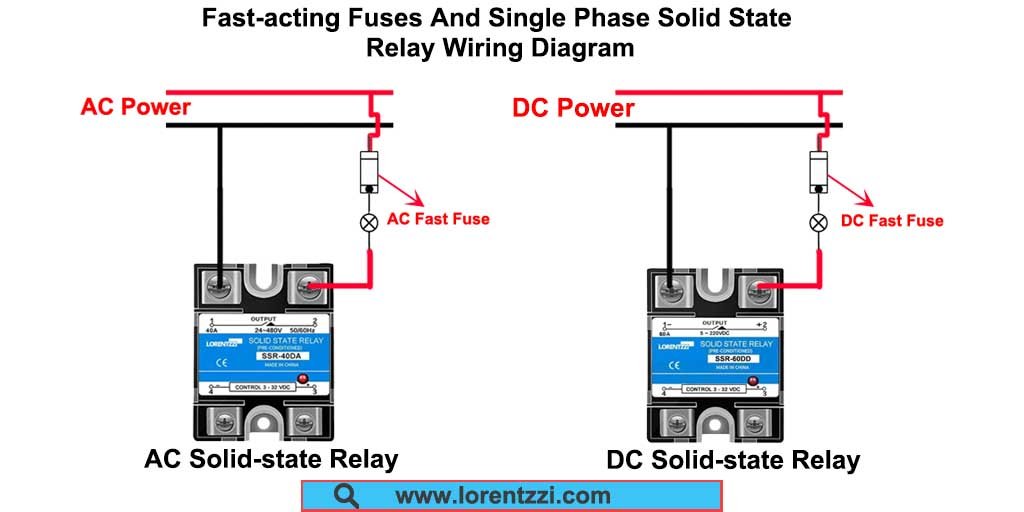
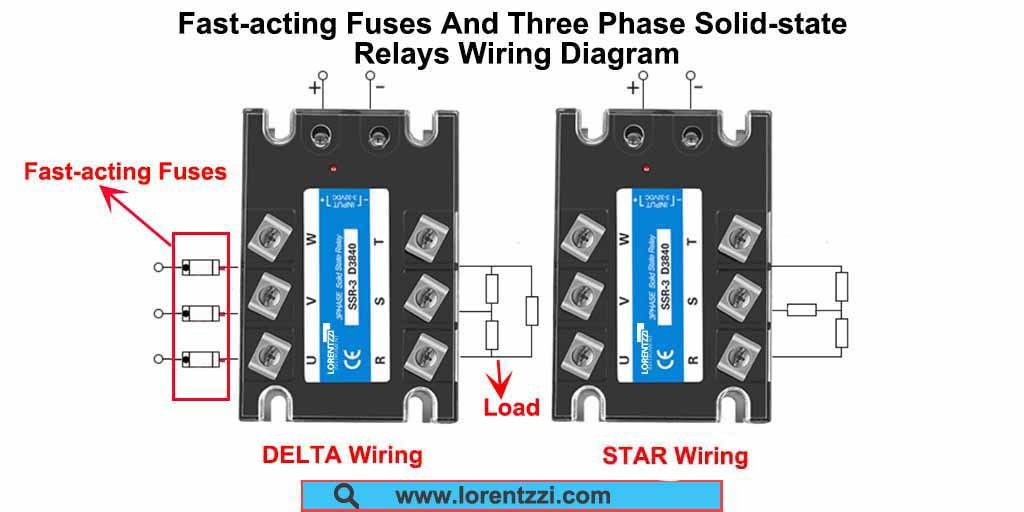
The fast-acting fuse is mainly used to protect the internal power devices of the SSR, such as thyristors or MOSFETs. It must be connected in series with the solid-state relay and the load. In the event of load short-circuit or overload fault, the fast-acting fuse can immediately cut off the power supply to protect the SSR.
In the following pictures, we will show you how to wire the fast-acting fuses to different types of solid-state relays:
Conclusion
In summary, fast-acting fuses are indispensable auxiliary components in solid-state relay applications. They not only protect the load from short-circuit damage but also reliably protect the internal semiconductor devices of the solid-state relay from burnout in the event of a fault.
If you would like to learn more about solid-state relays or get our recommendations for the most suitable fast-acting fuses, please send your questions to shonxu@lorentzzi.com, and Lorentzzi Electric‘s engineers will provide you with a solution as soon as possible.