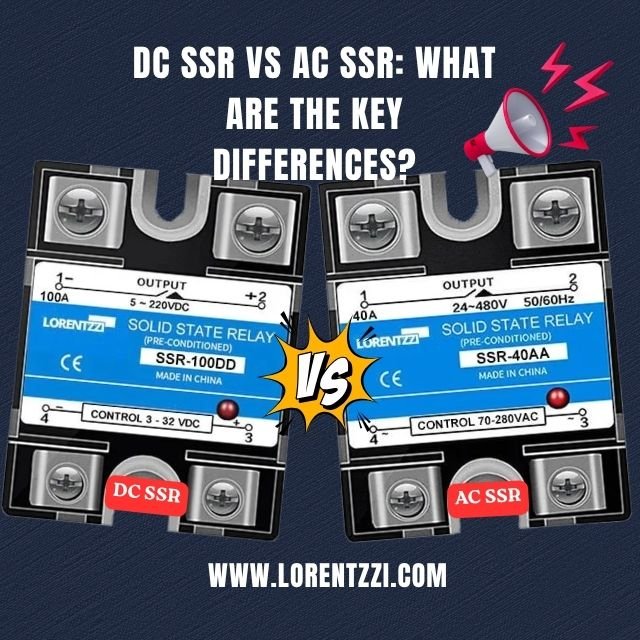
Solid-state relays (SSRs) have grown widely popular in industrial control systems thanks to their key benefits: silent operation, rapid response, long service life, and no arcing during load switching.
Solid-state relays are mainly divided into two categories: DC solid-state relays (DC SSRs) and AC solid-state relays (AC SSRs), based on the controlled voltage difference. So, what are the key differences between these two types of solid-state relays? This article will provide a detailed explanation.
Now, let’s learn together!
What is DC SSR?
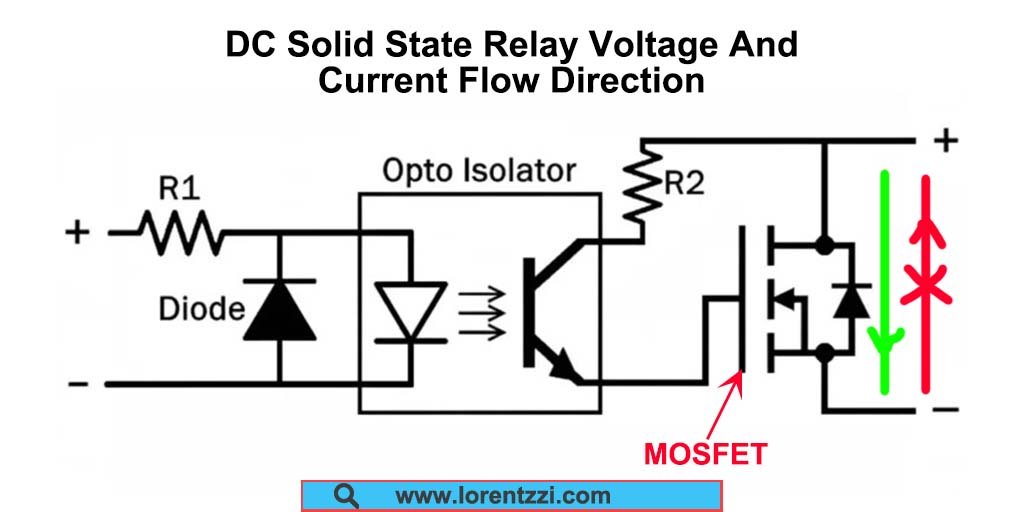
Simply put, a DC solid-state relay (DC SSR) refers to a relay whose load is a DC power supply. It can be used to switch DC loads on and off, such as DC heaters and DC motors.
We wrote a blog post about DC solid-state relays, you can check it out: DC Solid State Relay: What Is It And How It Works?

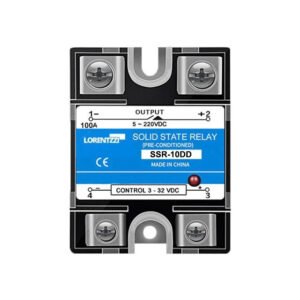
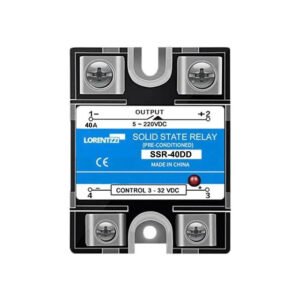
What is AC SSR?
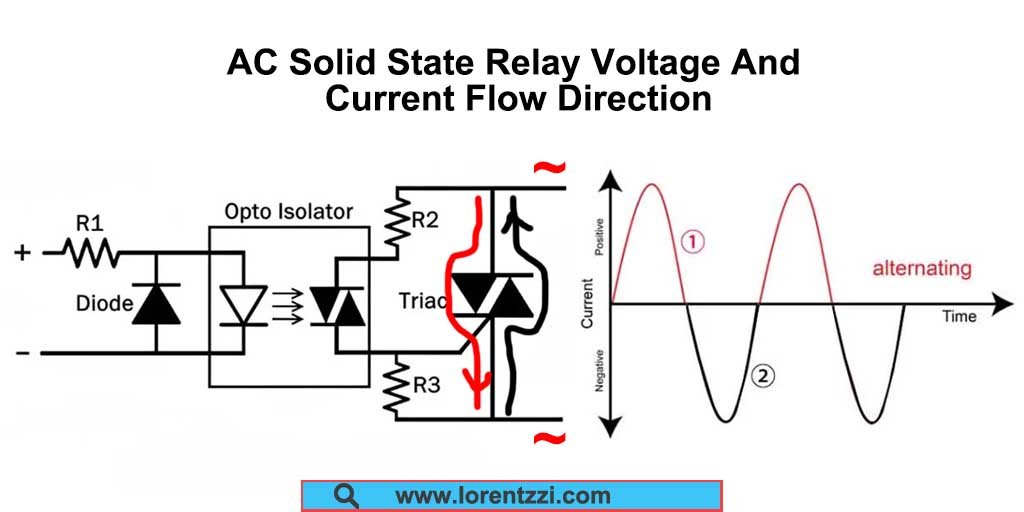
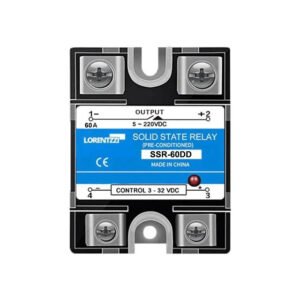
An AC SSR, often simply called an AC solid-state relay, controls AC power through a pair of back-to-back thyristors or triac switching elements (TRIAC). Unlike a DC solid-state relay (DC SSR), it is primarily used to connect and disconnect AC loads, such as AC heaters and AC motors.
Both types of solid-state relays operate on a similar principle to AC contactors(want to get more details between SSR and contactor, please read our blog: SSR Vs. AC Contactor: Which Is Better In A Temperature Control System?). That is, when the control terminal is energized(usually the control signal is a small current and low voltage), the load(the controlled part with high voltage and high current) is also energized; conversely, once the control terminal signal is disconnected, the load is de-energized.


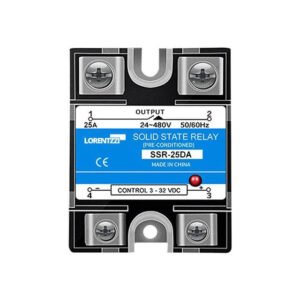

Key differences between DC and AC SSRs
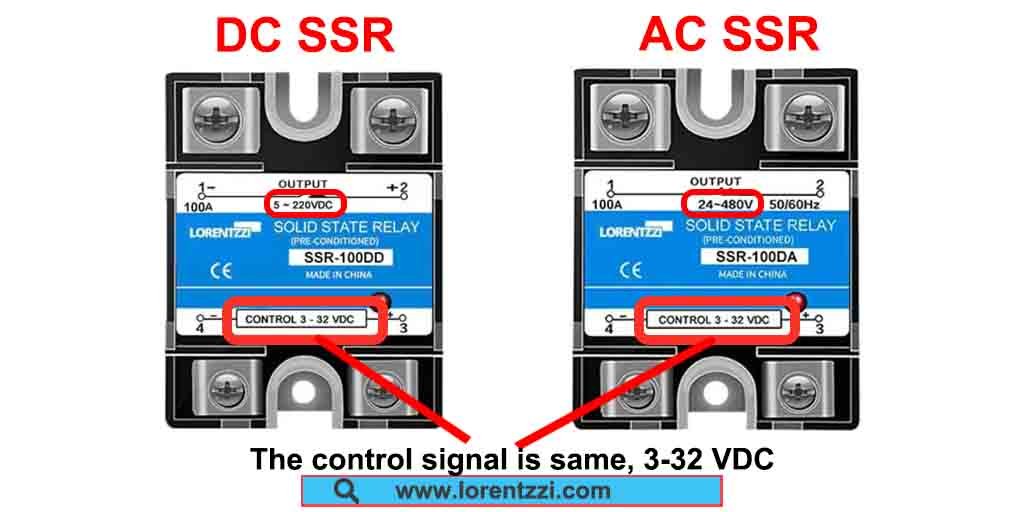
The main differences between DC solid-state relays and AC solid-state relays are reflected in the following 5 aspects: controlled voltage type, internal control load switching components, applicable loads, whether the load terminal reverse connection is supported, and control voltage type.
In the following parts, we will explain these 5 differences in detail.
1. Controlled voltage type
DC SSR: Designed exclusively for DC power control.
AC SSR: Designed exclusively for AC power control.
2. Internal control load switching components
DC SSR: Mainly uses MOSFET as the switching element. MOSFETs are voltage-controlled devices that can turn off immediately when the control signal is removed, regardless of load current.
AC SSR: Mainly uses a pair of back-to-back thyristors or TRIACs as the switching element. The thyristor and TRIAC are latching devices; they only turn off at AC current zero crossing, even if the control signal is removed.
3. Main applicable loads
DC SSR: Typical loads include DC heating elements, DC motors, solenoids, and battery-powered devices.
AC SSR: Typical loads include AC heating elements, AC motors, fans, pumps, and most household appliances. They are widely used to replace traditional AC contactors in many applications.
4. Whether the load terminal reverse connection is supported
DC SSR: The positive and negative terminals of the DC power supply must be strictly connected to the control section of the DC SSR. Reversing the polarity will damage the MOSFET, causing the DC SSR to malfunction.
AC SSR: Since AC power supplies do not have positive and negative terminals, reversing the live and neutral connections will not damage the SSR. The only causes of damage to AC SSRs are high temperature, overcurrent, and overvoltage.
5. Control voltage type
DC SSR: Typically, the control voltage is limited to 3-32VDC; AC control signals are less common in the market.
AC SSR: Common control signals can be not only 3-32VDC, but also AC70-280VAC.
Can I use AC SSR as DC SSR to control DC loads?
No, you cannot use an AC SSR to control a DC load.
As mentioned earlier, AC solid-state relays (SSRs) use thyristors or TRIACS as their internal switching elements. These devices can only turn off when the AC voltage waveform crosses zero after the control signal is removed.
Since DC power supplies do not have zero-crossing points, once an AC solid-state relay is triggered in a DC circuit, it will remain on and cannot be turned off even after the control signal is removed.
Therefore, AC SSRs are not suitable for DC load applications.
Can I use DC SSR as AC SSR to control AC loads?
Now that AC SSRs cannot be used to control DC loads, can DC SSRs be used to control AC loads instead?
The answer is still no.
DC SSR typically uses MOSFET as their internal switching components, which are designed only for unidirectional DC current. AC voltage constantly changes direction and generates reverse voltage, which will damage the MOSFET immediately and cause the DC SSR to burn out or malfunction completely.
Therefore, DC SSRs cannot be used interchangeably to control AC loads.
Conclusion
In short, the main difference is that DC solid-state relays are mainly used to control DC power supplies, while AC solid-state relays are mainly used to control AC power supplies.
If you are looking for a reliable supplier of DC solid-state relays (DC SSRs) and AC solid-state relays (AC SSRs), Lorentzzi Electric can provide both of these high-quality products, you can send your inquiry to shonxu@lorentzzi.com, we will provide quotation within 24 hours.