By using timer switches, streetlights can be easily and conveniently turned on at dusk (e.g., 5:00 PM) and turned off at dawn (e.g., 7:00 AM) without manual operation, thus greatly reducing the cost of manually switching streetlights on and off. In addition, it also helps to save energy.
In this article, we’ll walk you through the key points below:
- What is a light timer switch?
- How does a light timer switch work?
- Types of light timer switches
- Advantages of using light timer switches
- How to use a light timer switch
- How to choose the right timer switch for your lighting system
Next, let’s delve deeper into each key point in the following chapters.
What is a light timer switch?
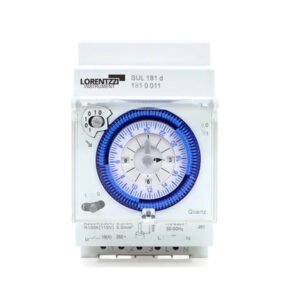
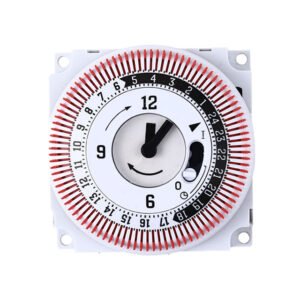
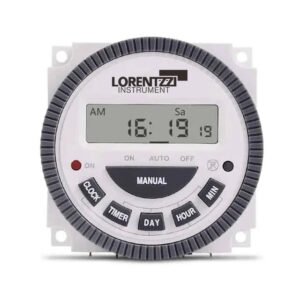
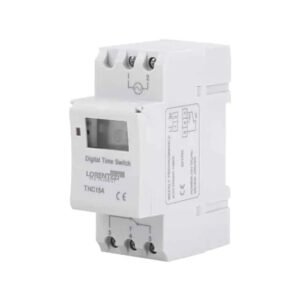
A timer switch is a device used to automatically turn lights on or off at specific times. Users don’t need to manually operate the lights; they simply set the schedule in advance, and the timer switch automatically controls the lighting circuit.
For example, you can set your outdoor garden lights to turn on at 7:00 PM and turn off at 11:00 PM every day. Once set, the timer switch will automatically repeat this schedule daily.
Besides controlling garden lights and streetlights, timer switches are also widely used in:
- Home lighting
- Garden and landscape lighting
- Shop and office lighting
- Billboard lighting
- Factory and warehouse lighting
- Parking lot lighting
How does a light timer switch work?
Light timer switches fall into two main categories: electromechanical and digital. We will break down their working principles in the following sections.
Electromechanical light timer switch working principle
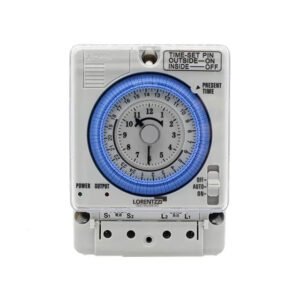
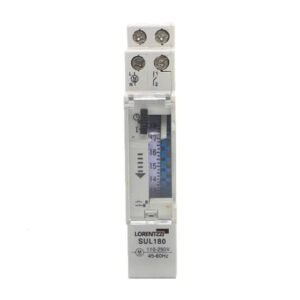
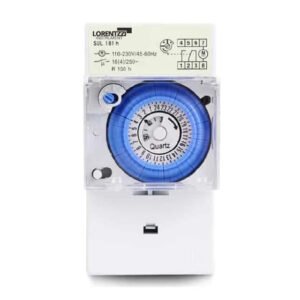
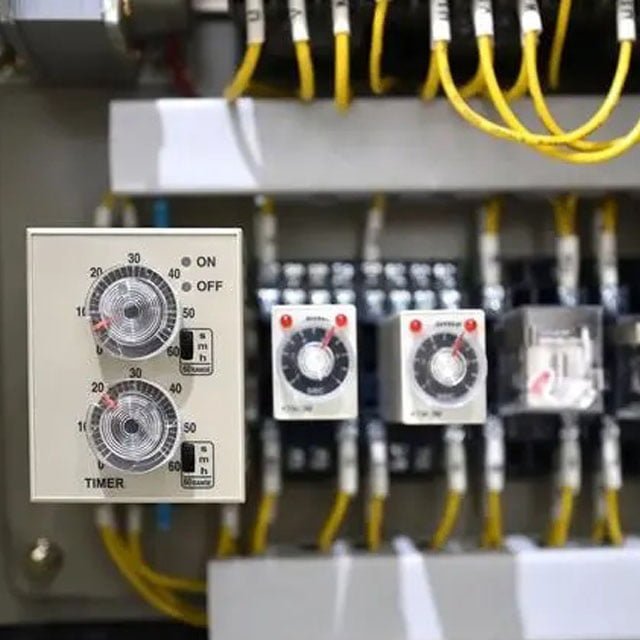
A typical electromechanical timer switch consists of a small synchronous motor, microswitch, gear set, and a time-setting dial.
Its operating principle is straightforward: After you configure the required on/off times, the mains-powered synchronous motor drives the gear train to rotate the dial at a constant speed. When the dial reaches the preset time position, built-in pins/tabs on the dial mechanically actuate the microswitch, closing or opening the circuit to activate or deactivate the connected load.
To operate an electromechanical light timer switch, you first set the dial to match your local current time. The synchronous motor then rotates the dial continuously, triggering the microswitch at the scheduled times to turn the load on or off automatically.
This mechanical design is simple and reliable, requires no complex microchips, and can withstand a certain amount of inrush current generated by the lighting fixture. However, it also has some limitations: the timing accuracy is generally low, it can only be set to a daily cycle, and if the product does not have a spare battery, the timer will lose the time setting after a power outage (however, our SUL180, SUL181H and TB388 electromechanical light timer switches all have built-in spare batteries, which can ensure that the internal motor can continue to be powered for 300 hours after a power outage).
Digital light timer switch working principle
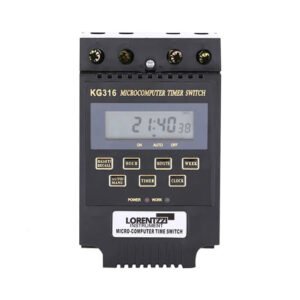
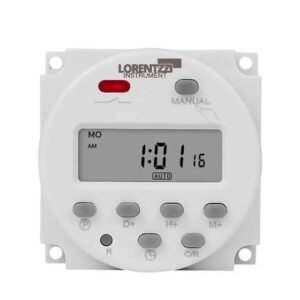
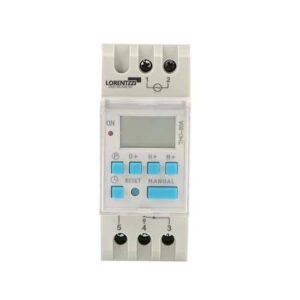
Unlike electromechanical timer switches that use a dial to set the switching time, digital timer switches typically use buttons to set the time.
Digital timer switches use a built-in microcontroller and quartz crystal oscillator for precise timing. Users can set the switching time via buttons or a touchscreen on the device. The built-in program can store multiple independent timing events, supporting daily, weekly, or custom cycles.
When the preset time arrives, the microcontroller sends a signal to activate an internal relay, thereby controlling the light to turn on or off. The timing and control accuracy of digital timer switches is far superior to that of mechanical timers.
Common types of light timer switches
In addition to the electromechanical and digital light timer switches mentioned above, there are also astronomical timer switches and intelligent timer switches.
Astronomical light timer switch
An astronomical light timer switch shares a similar appearance with a digital timer switch, yet it features different internal programming. It comes with a built-in geographic database to automatically adjust switching times according to sunrise and sunset.
For instance, daylight lasts longer in summer, so lights may need to turn on at 7:00 PM. In winter, dusk arrives much earlier, requiring lights to activate as early as 5:00 PM.
How does it work?
Without an astronomical timer, you would have to manually reprogram the on/off times every season. This becomes troublesome, especially when the timer is mounted in hard-to-reach high positions.
An astronomical timer stores location, date and time data. It automatically calculates sunrise and sunset times and adjusts your lighting schedule accordingly.
Intelligent light timer switch
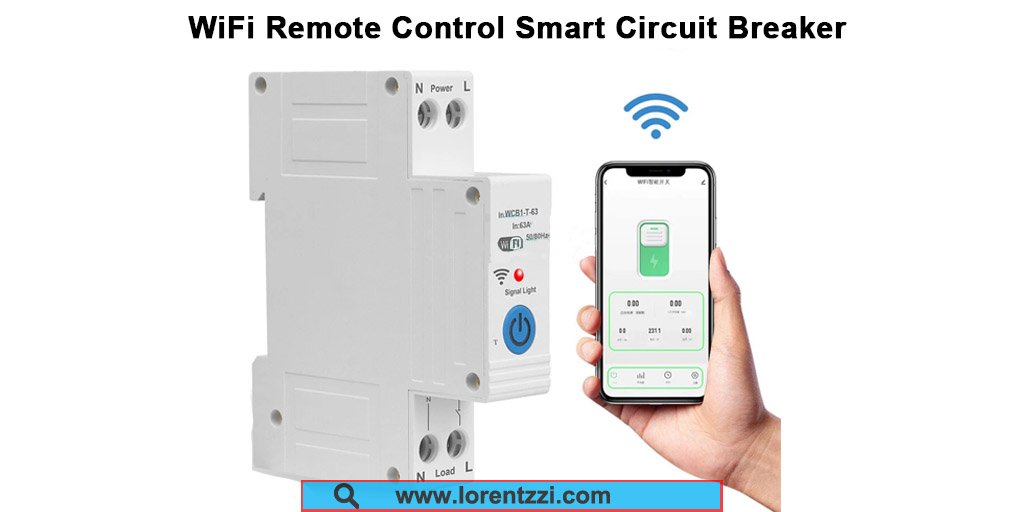
An intelligent light timer switch(or called smart circuit breaker) supports configuration through the manufacturer’s dedicated mobile app over Wi‑Fi or cellular data.
Even when mounted high up or fitted inside a wall electrical box, this smart timer allows users to remotely set and adjust the light on/off schedules directly from the app.
Smart timer switches significantly lower the barrier to entry for operation. They can automatically turn lights on and off according to a preset schedule. However, the downside is that they are more expensive compared to the three types of timer switches mentioned above.
Benefits of using a light timer switch
Using timer switches for lights can bring many benefits, such as automatically turning lights on and off without manual operation and saving energy.
Where can light timer switches be used?
Light timer switches are primarily used in residential lighting, garden lighting, street lighting, commercial lighting, billboard lighting, factory lighting, and parking lot lighting.
In addition, light timer switches can also be used in other industries, such as irrigation systems and the periodic filling and drainage of swimming pools.
Using a timer switch to control the water pump
Light timer switches can work with water pumps to enable automatic timed on/off operation.
Water pumps have a wide range of rated power, from 30W to 75kW. Since most timer switches (such as our KG316T, CN101A, TM619, etc.) have built-in relay contacts rated for less than 30A, direct connection cannot drive high-power water pumps exceeding 1kW. To control high-power water pumps, the timer switch needs to be used in conjunction with an AC contactor or solid-state relay. An AC contactor is a type of relay that uses a low-power control signal to switch high-power loads.
You can refer to the following wiring diagram:
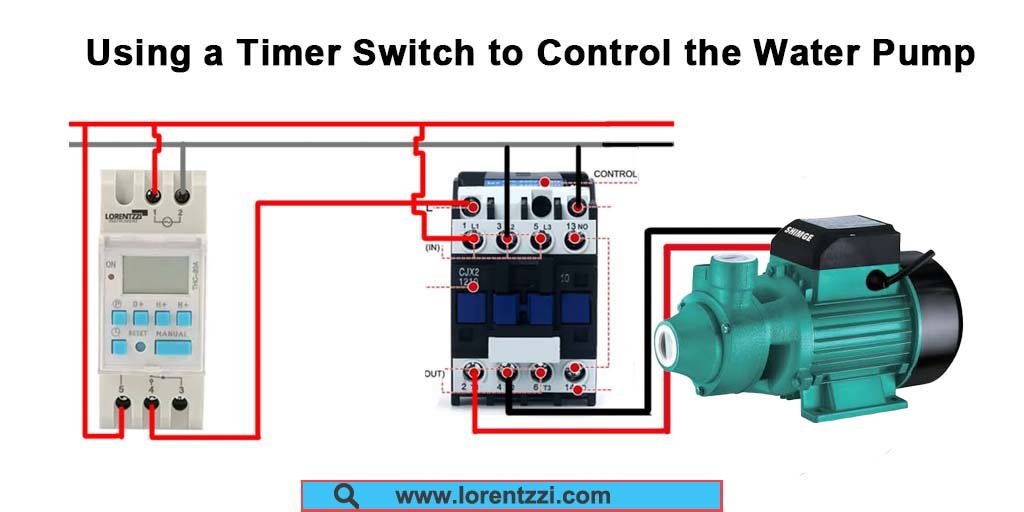
By using an AC contactor for indirect control, you can achieve many functions that timer switches cannot.
How to use a light timer switch
All timer switches operate in a similar manner (you can refer to our KG316T timer switch operation instructions: KG316T Digital Timer Setting Instructions); you can also learn by following these 6 steps:
Step 1: Set the timer switch to the current time.
For your light timer to function correctly, first set the device’s internal clock to match your local current time. This is a prerequisite for accurate automatic on and off control.
Step 2: Set the turn-on time.
Next, configure your desired switch-on schedule. For example, if you want the light to activate at 6:00 PM, locate the time setting and program 6:00 PM as the ON time.
Step 3: Set the turn-off time.
Then set your target switch-off time. As an example, if you wish the light to turn off at 6:00 AM, input 6:00 AM as the OFF time.
Step 4: Set the operating mode.
The light timer switch can be set to work at a set time every day, or it can be set to work at a set time during specific time periods, such as turning on the timer every Monday, Wednesday, and Thursday. You can choose the desired cycle mode according to the time period you want it to work.
Step 5: Connect the load correctly to the timer switch.
Ensure the load (e.g., LED light, water pump) is correctly connected to the timer switch terminals. Refer to the product wiring diagram to confirm that the load’s voltage and current ratings do not exceed the timer’s maximum capacity. If you are controlling a high-power load (e.g., a large water pump), use an AC contactor as an intermediate relay.
Step 6: Test and run.
The final step is testing. Turn on the timer power and confirm that the connected lights operate according to the preset schedule.
Before turning on the timer switch, carefully check all wiring.
For safety reasons, before connecting the LED light to the timer switch, connect the main power supply to a miniature circuit breaker (MCB) or a residual current operated circuit breaker (RCBO). (MCBs or RCBOs can effectively protect operators from electric shock.)
How to choose the right light timer switch
When selecting a timer switch, consider the following factors:
- Rated Voltage: Ensure it matches your power supply voltage. For example, if your power supply is 24VDC, choose a 24VDC light timer switch.
- Rated Current: The rated current must be higher than the lighting load. Typically, the timer’s contact current needs to be three times the LED lighting’s rated current.
- Load Type: Check if it supports LED, incandescent, fluorescent, or other types of lighting.
- Installation Method: Choose from wall-mounted, DIN rail, panel, or plug-in types.
- Programming Requirements: Is daily or weekly cycle required?
- Indoor or Outdoor Use: For indoor use, the protection rating is not a concern. For outdoor applications, consider placing the light timer switches in a waterproof junction box.
- Backup Battery: Helps ensure the timer functions correctly during power outages, preventing inconsistencies in on/off timing after power is restored.
- Manual Control: Allows for temporary manual control when needed.
Can a light timer switch be used together with a photocell?
Yes, a photocell and a timer switch can be used together.
The photocell and light timer switch can be connected in series. With this connection, the light will only turn on when two conditions are met: the photocell detects low brightness, and the timer is within its preset time.
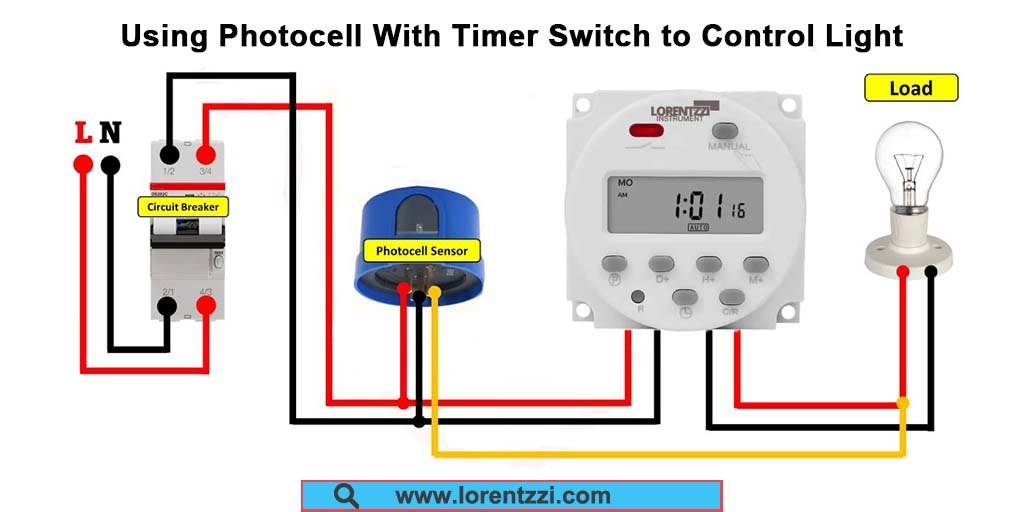
This prevents the LED light from turning on when the outdoor light is still bright, even when the timer switch is used alone.
Furthermore, you can also use a timer switch that combines time and brightness control functions.
Conclusion
In summary, timed light switches conveniently reduce the number of times operators need to manually switch lights on and off, and can intelligently control the lights while saving a significant amount of energy.
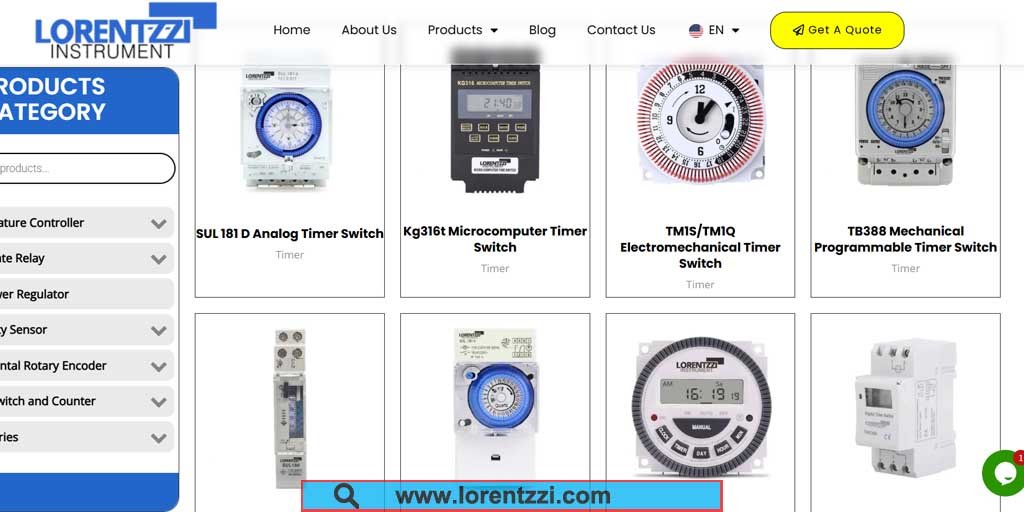
If you are looking for a reliable supplier of traditional or smart timer switches, you can contact us, Lorentzzi Electric, for more information.