Have you ever watched an automated assembly line, with dozens of motors, sensors, and actuators moving in perfect sequence without a single error?

What keeps them all in step? Not by chance, but by a hidden conductor.
Many people think of microprocessors or microchips as the real controllers, but industrial systems rely on a specialized device: a programmable logic controller (many people simply called it “PLC”).
As the command center for the machine, the PLC executes stored programs, controlling when each component starts, stops, or adjusts, ensuring the entire process proceeds exactly as designed.
So in this article, you will learn:
- What exactly is a PLC?
- PLC inputs and outputs
- Which products can be used with PLC
- And more.
What is a PLC?
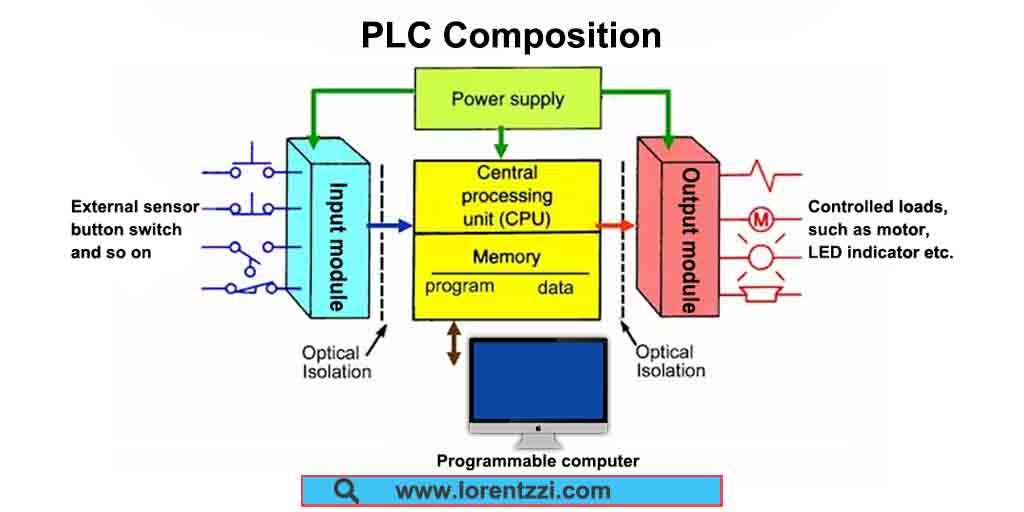
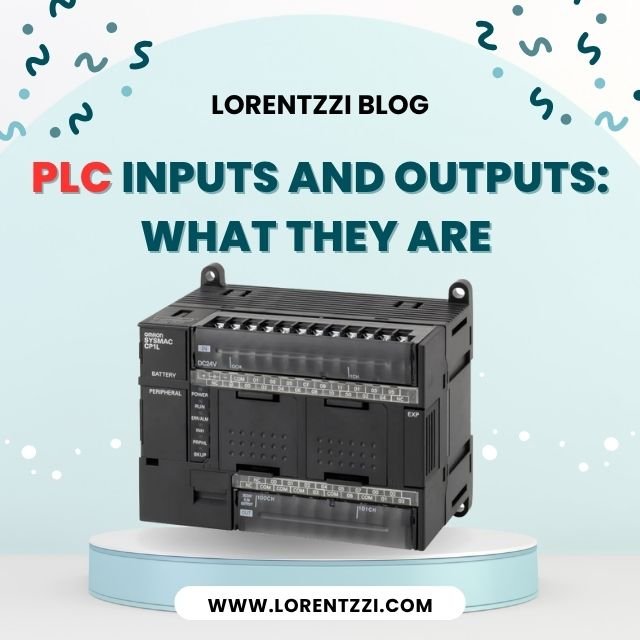
A programmable logic controller (PLC) is a rugged industrial computer whose core task is to execute user-written programs in continuous scan cycles.
During each scan, the PLC:
- Reads the status of all input devices (sensors, switches);
- Evaluates programmed logic, executes algorithms, and applies timing or sequencing functions;
- Updates output image tables and drives actuators, motors, or indicators accordingly.
For example, you can program a PLC to turn thousands of LED lights on and off in a precise pattern.
By combining timer blocks, counters, and algorithm instructions, the PLC can generate dynamic light shows or display predefined graphics on large facades.
PLC inputs
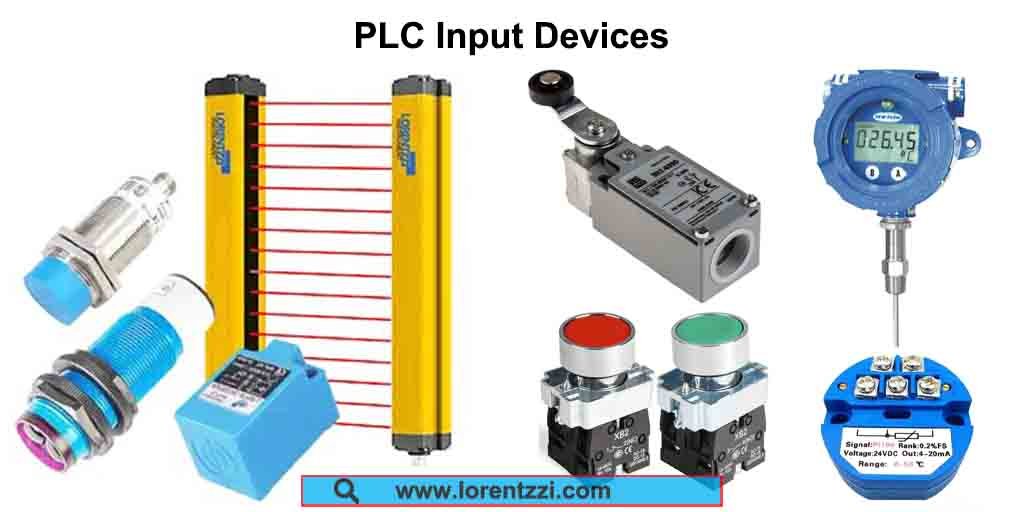
PLC inputs fall into two categories: digital and analog.
- Digital inputs have three wiring configurations:
– PNP (source) inputs, such as PNP proximity sensors,
– NPN (sink) inputs, such as NPN proximity sensors,
– Dry contact inputs, such as limit switches, buttons, float switches, and electromagnetic relays.
- Analog inputs accept standard signals such as 0-5 V, 0-10 V (voltage) and 0-20 mA, 4-20 mA (current).
An interesting example is if a temperature sensor needs to send a signal to a PLC, the change in the temperature sensor needs to be converted into a standard 0-10VDC voltage signal or 4-20mA current signal through a temperature transmitter.
These input devices act as sensors to detect external changes, and the PLC can then collect this data and make decisions to perform actions such as reducing motor speed, cutting power, etc.
PLC outputs
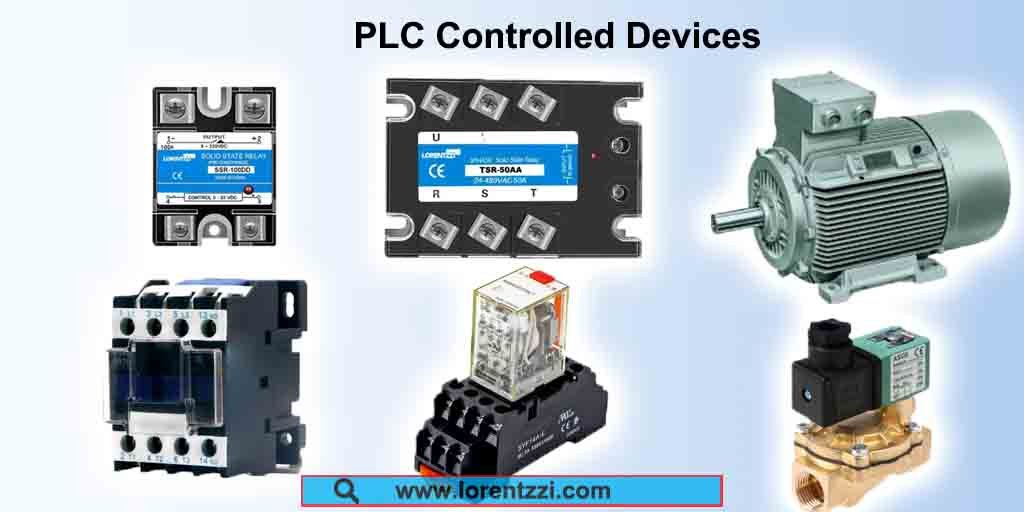
After the PLC’s internal program receives the sensor signal and processes the information, it is the PLC’s turn to output.
Strictly speaking, there are three types of PLC outputs: relay output, transistor output, and thyristor output.
In the following part, we will provide more information about these three outputs.
- Relay output: The relay output is dry contact, it needs an external power source to provide energy to the load or other intermediary control units. The relay output contact switching speed is generally a few milliseconds, which is much slower than the transistor and thyristor outputs.
- Transistor output: This output is a wet contact and can provide DC power to external devices, but its load capacity is very low, only 100-200mA, and it cannot directly drive the load. If you need to control a larger load, you can use an electromagnetic relay or AC contactor as an intermediate medium to indirectly control the large load.
- Thyristor output: Thyristor output is also a wet contact, it can provide AC power to the load. Like transistor output, its load capacity is also low. This output provides another option for PLC control load.
What products can be used with PLC?
PLC Inputs part:
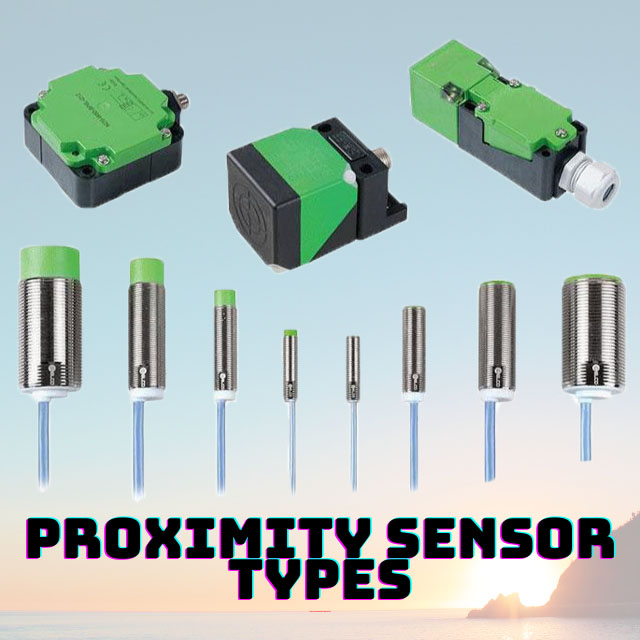
- Sensors with solid-state outputs (NPN/PNP, 3-wire): inductive proximity, capacitive proximity, photoelectric sensor, safety light curtain, incremental encoder, absolute encoder, pressure transmitter, flow transmitter, temperature transmitter.
- Dry-contact devices: limit switch, float switch, micro-switch, push-button, selector switch.
- Auxiliary supplies: 24 V DC switching power supply, DC-DC converter (to feed the sensors).
PLC outputs part:
- Relay outputs (dry contact, AC/DC): AC contactor coil, AC solenoid valve, indicator lamp, heater contactor, small motor.
- Transistor outputs (DC only, high-speed): DC contactor coil, DC solenoid valve, DC solid-state relay, stepper/servo drive pulse input, low-voltage lamp.
- Triac / SSR outputs (AC only): AC solid-state relay, AC lamp, AC solenoid valve.
- Analog outputs (0–10 V, 4–20 mA): inverter frequency reference, proportional valve, temperature controller set-point.
Conclusion
In summary, the PLC is the central controller in industrial automation. It can seamlessly connect with a variety of sensors, actuators, and other field devices to perform complex tasks.
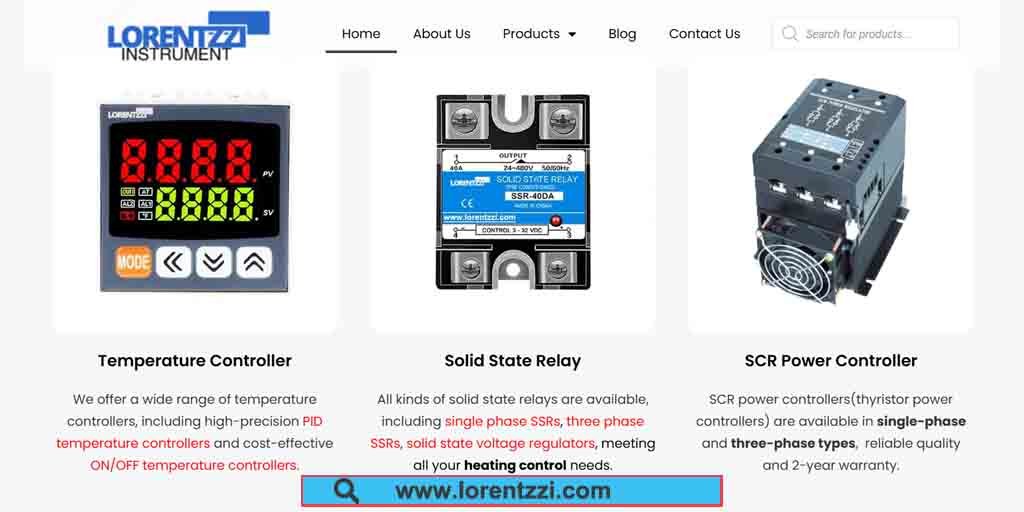
Lorentzzi® offers a comprehensive portfolio of compatible power supplies, sensors and actuators for PLC.
If you are now sourcing these components for your PLC, please contact us or send an email directly to shonxu@lorentzzi.com, we will reply to you within 24 hours.