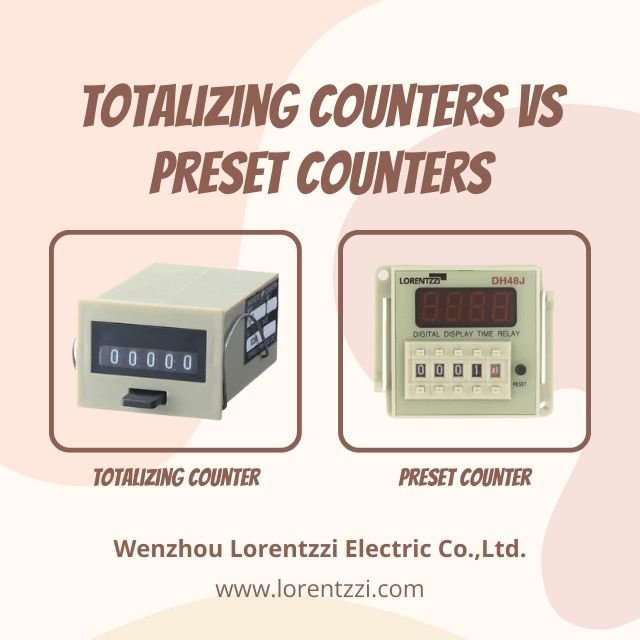
Totalizing counters and preset counters are two widely used types of counters in equipment maintenance.
They are also commonly used in automation to count objects and perform specific actions when a set value is reached.
Let’s learn more about them in detail. This blog post will cover the following:
- Definitions of these two types of counters
- Their main differences
- How to choose the right counter
- Can these two counters be used together?
Now let’s begin!
What is a totalizing counter?
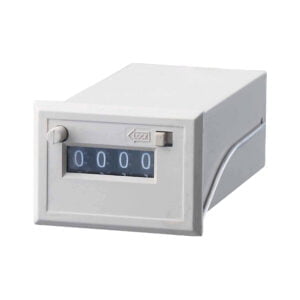
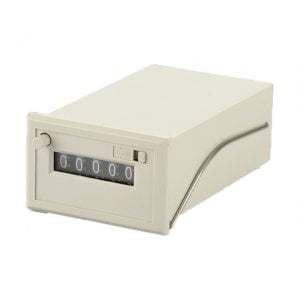
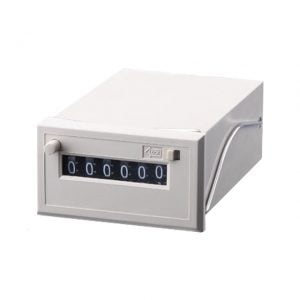
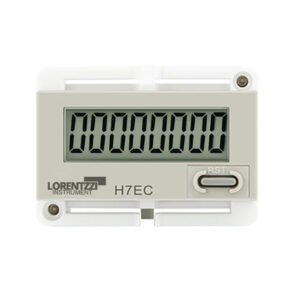
A totalizing counter, also known as a cumulative counter, can convert voltage, current pulse signals, or physical motion into measurable values and display them on an electronic display screen or mechanical wheel.
To better understand, you can think of it as an odometer that keeps counting without stopping or issuing an alarm.
Once it starts counting, it keeps accumulating the count.
What is a preset counter?

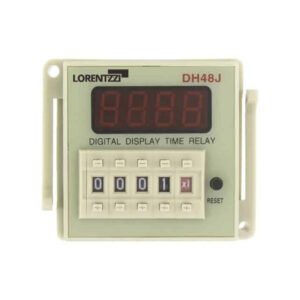
Now let’s take a look at the preset counter, which can also be called a counting relay.
It has a different working principle if compared with the totalizing counter.
Imagine you want your laser printer to work a certain number of times, and for the system to alert you on the human-machine interface so you can replace the lens or spare parts.
How would you achieve this?
The answer is obvious: Using a preset counter.
Therefore, a preset counter is a type of counting relay that compares the count result with a set value.
Once they are equal, it outputs a signal, such as changing a normally open circuit to a normally closed circuit.
For example, if you connect an alarm to this normally open contact, the alarm will sound an alarm so you know what happened.
What are the key differences between the two counters?
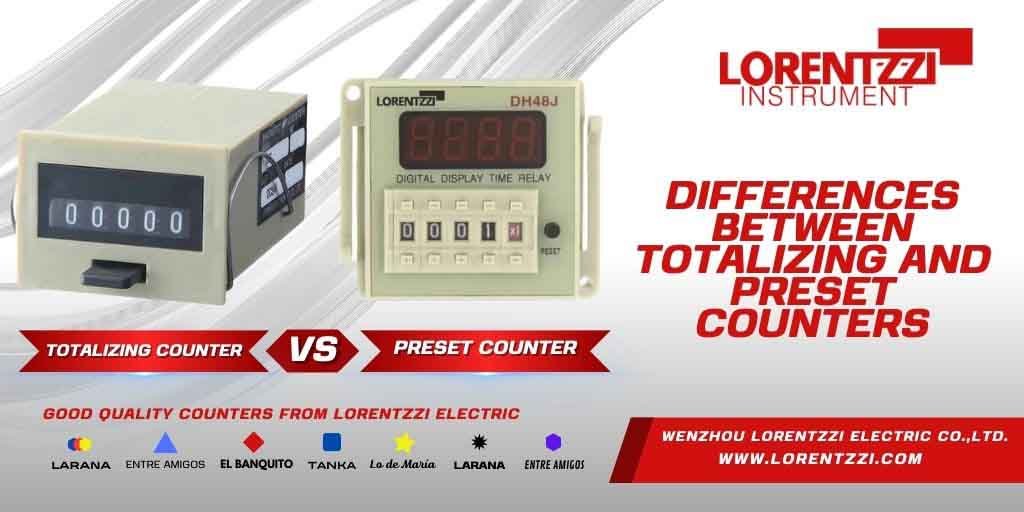
There are three main differences between cumulative counters and preset counters: purpose, scope of application, whether they support increment/decrement counting, and alarm function.
| Product | Totalizing counter | Preset counter |
|---|---|---|
Purpose |
Measurement & data collection |
Control & automation |
Scope of application |
Total production statistics, batch statistics, regular machine maintenance etc. |
Automated systems control processes such as packaging and categorizing items after a certain quantity has been counted, batch product processing etc. |
Increment/decrement counting |
No, but some counters have a reset function. |
Yes, the preset counter can be used to count up or down. |
How do I choose the appropriate counter from these two counters?
After reading the above, I think you have a general understanding of cumulative counters and preset counters.
Now, another question arises: how do you choose the right counter for your device?
Totalizing(accumulative) counters can be used in the following situations: when you only need to know the total number of products that have passed, to collect production data to generate reports, to monitor consumption (energy, water, materials), and to track historical data.
If you want to:
- Automatically stop a process when a set value is reached,
- Batch or package a fixed number of products,
- Trigger another machine after a set quantity is reached,
- Create repetitive cycles in production,
- Achieve automated control without operator intervention,
then a preset counter is the best choice.
Can I use a preset counter with a totalizing counter?
Although cumulative counters and preset counters are two different types of counters and are used in different fields, can I integrate these two counters into one system to achieve batch counting requirements?
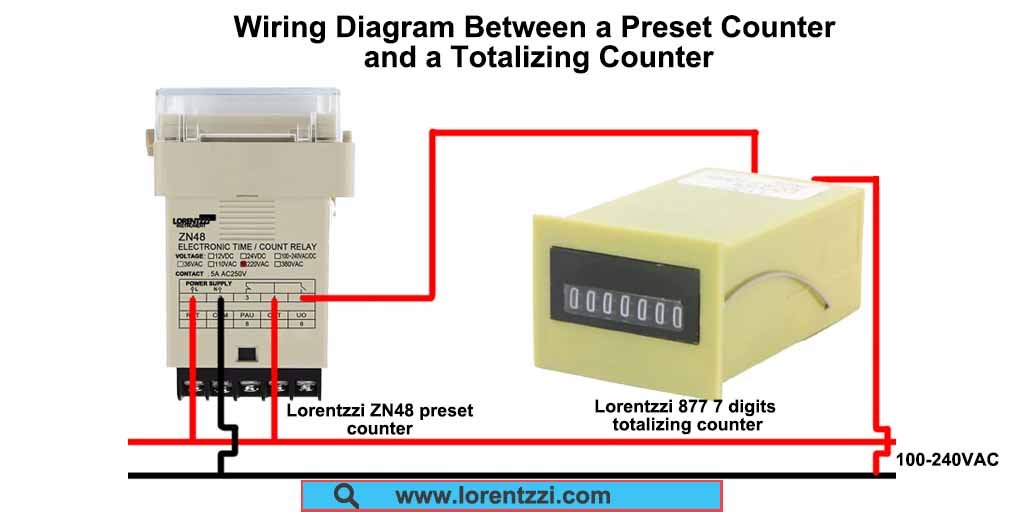
Yes, we can use both counters simultaneously.
For example, you can use our ZN48 preset counter with our 5-bit, 6-bit, or 7-bit accumulator electromagnetic counter.
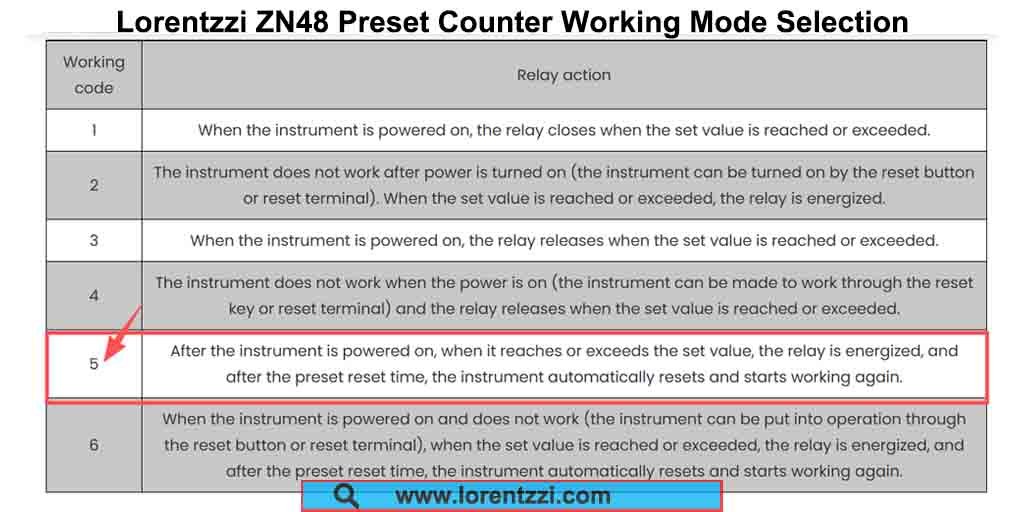
When the count reaches the set value, it outputs a voltage pulse signal, then the accumulator counter increments by 1, and our ZN48 counter can be automatically reset to zero after reaching the count value and continue counting( Note: Working mode should select 5 ).
This continuous resetting allows for production batch statistics.
Conclusion
In summary, the totalizing counter is only used to record counting results, while the preset counter can perform more complex tasks.
At Wenzhou Lorentzzi Electric Co.,Ltd., we offer not only totalizing counters but also preset counters.
If you are looking for high-quality counters, please send your inquiry to shonxu@lorentzzi.com.