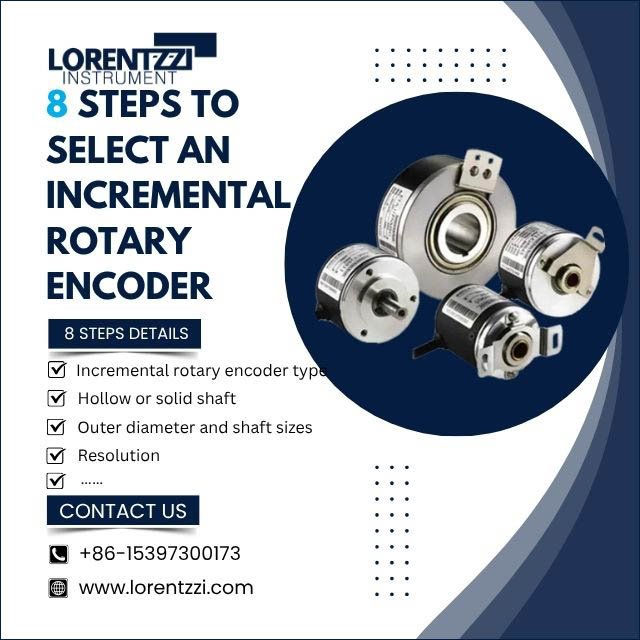
Are you having trouble selecting the right incremental rotary encoder?
You’re not alone; many beginners face the same problem.
Choosing the right incremental rotary encoder can not only save time but also reduce procurement costs, so it is necessary to create a selection guide for beginners.
Based on this need and our extensive experience in the production and supply of incremental rotary encoders, we will provide you with a simple eight-step incremental rotary encoder selection guide in this blog for your reference.
1. Select the appropriate incremental rotary encoder type
Incremental rotary encoders, often used as feedback sensors for motors, are mainly divided into two types: optical and magnetic.
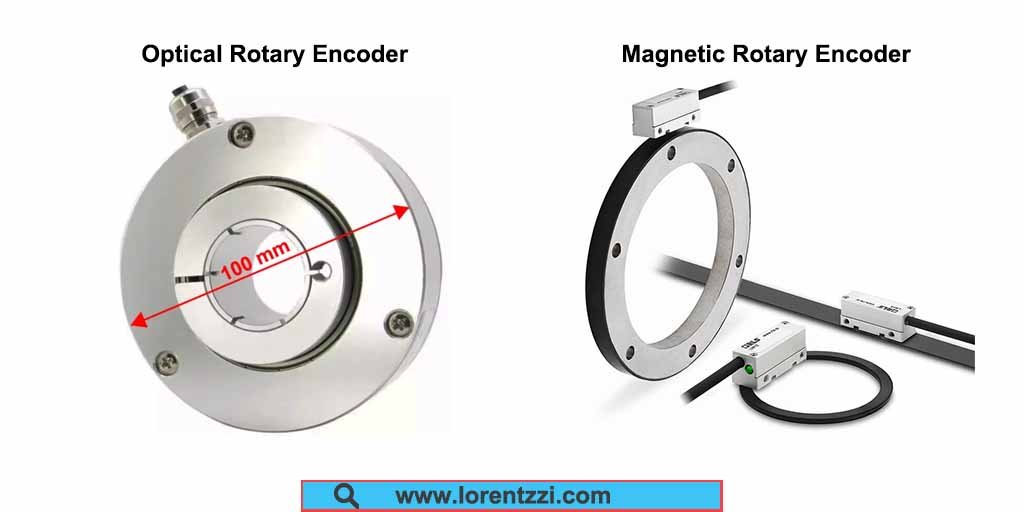
Optical incremental rotary encoders use light as a source for detection, while magnetic incremental rotary encoders use magnetic fields for measurement.
Comparing these two incremental rotary encoders, optical encoders offer higher measurement accuracy but are also more expensive; while magnetic encoders are more susceptible to interference from external magnetic fields but are much cheaper.
Therefore, if you want to measure motor speed more accurately, choosing an optical incremental rotary encoder is a wise choice.
2. Determine whether to use a hollow or solid shaft
In addition to the classifications described above, in the Lorentzzi optical incremental rotary encoder series, it can be further divided into two types: hollow shaft and solid shaft. Among these two types of incremental rotary encoders, the hollow shaft is more common and more widely used.
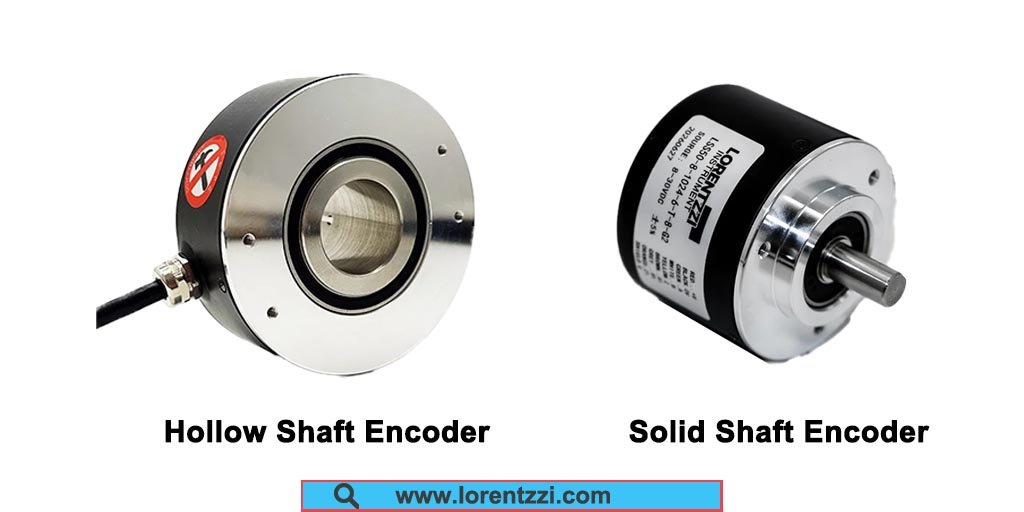
If you want to learn more difference between the hollow shaft and solid shaft incremental rotary encoders, you can have a look at our blog post: Hollow Shaft Vs. Solid Shaft Rotary Encoders: Key Differences & How to Choose.
So the second step is deciding whether you will need a hollow shaft or solid shaft incremental rotary encoder.
3. Check the outer diameter and shaft sizes
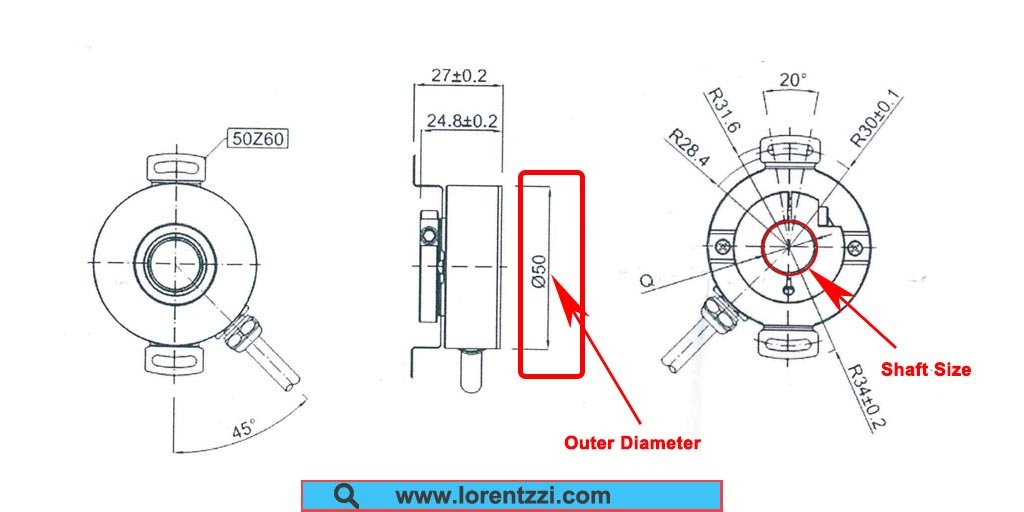
If you choose a hollow or solid shaft rotary encoder, the next step is to select their outer diameter and shaft size.
The larger the outer diameter, the higher the resolution, and the larger the shaft diameter can be.
Of all the incremental rotary encoders manufactured and supplied by Lorentzzi Electric, we can produce solid shaft incremental rotary encoders with a maximum outer diameter of 78 mm and a maximum shaft diameter of 15 mm, as well as hollow shaft types with a maximum outer diameter of 120 mm and a maximum bore diameter of 65 mm.
Of course, we can also customize larger encoders; you can contact us for customization.
4. Confirm the resolution of the incremental rotary encoder
Encoder resolution refers to the number of pulses (PPR) generated per revolution of the encoder.
Higher resolution enables finer angle measurements and more precise position and speed control.
Low-resolution encoders are suitable for simple speed monitoring and are relatively inexpensive; high-resolution encoders, on the other hand, are suitable for precise positioning and accurate speed measurement.
Therefore, if you require more accurate speed and rotation angle measurements, consider choosing a higher resolution encoder.
5. Select the output phase
Incremental rotary encoders can be classified by their output phases into three types: A, B two-phase, A, B, Z three-phase, and six-phase differential line driver encoders (A, /A, B, /B, Z, /Z).
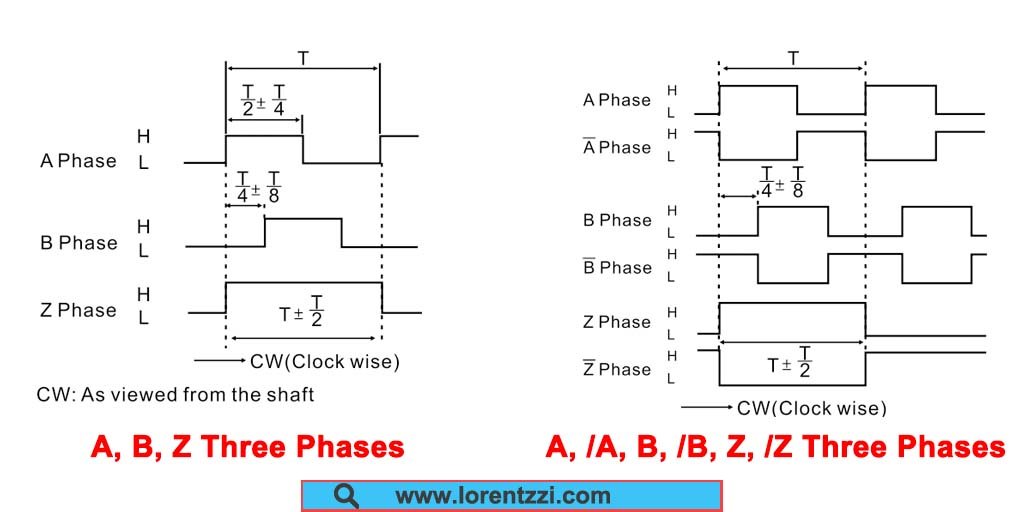
The A, B two-phase encoder only detects motor speed and rotation direction. It has no zero-position detection function, which is available on A, B, Z three-phase and six-phase differential encoders.
Compared to A, B, Z three-phase encoders, six-phase differential encoders support longer signal transmission distances (up to 150 meters) and have better resistance to external noise.
You can learn more by reading our blog post: What Is A Line Driver Encoder?
Therefore, if your working environment is noisy and requires long-distance signal transmission, such as when using an encoder near a frequency converter, a six-phase differential encoder is strongly recommended.
6. Determine the output signal
The output signals of incremental rotary encoders include totem pole output, PNP or NPN open collector output, voltage output, push-pull output, and line drive output.
We’ve written a blog post about incremental encoder outputs: Incremental Encoder Output Signals: Types And Differences, from which you can learn more about the differences and knowledge between these signals.
Therefore, when selecting an encoder, please specify the output signal you want; otherwise, it may not be compatible with your PLC, motor driver or other controllers.
7. Confirm the operating voltage
All Lorentzzi incremental rotary encoders are available in three operating voltages: 5VDC, 8-30VDC, and 5-30VDC.
The 5VDC operating voltage is typically used with line driver (differential long line driver) outputs. The 8-30VDC is generally used for NPN/PNP open-collector, push-pull outputs. The 5-30VDC is a wide-voltage model, operating within a voltage range of 5V to 30V, offering the strongest compatibility.
Therefore, if you have no idea how to choose the operating voltage, you can simply consider using the 5-30VDC version, which can be used in any situation.
8. Select the signal outlet type
Finally, let’s take a look at the signal outlet type.
The solid shaft incremental rotary encoder offers two output options: cable output and DB connector output; in addition, the cable output can be radial cable output or axial cable output.
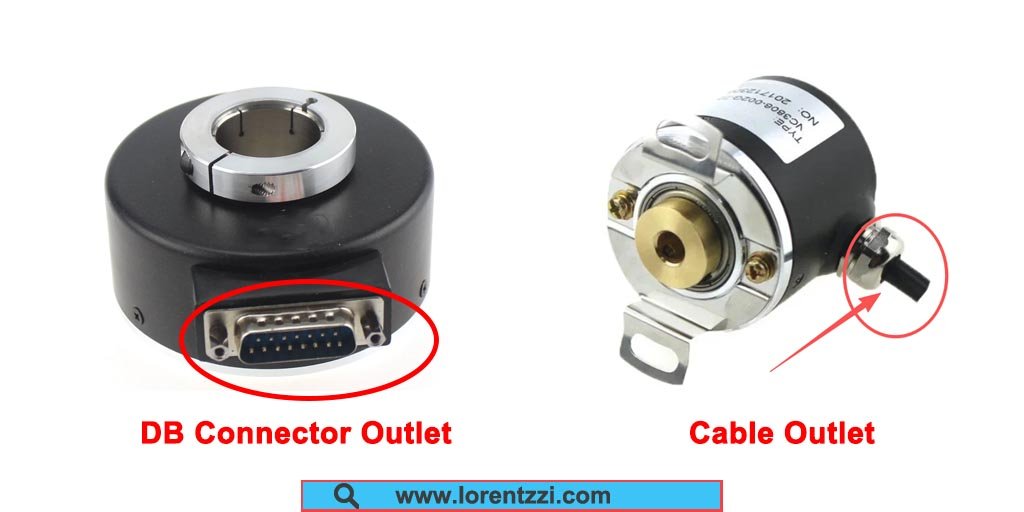
For hollow shaft incremental rotary encoders, signal output can be either via a DB connector or a radial cable.
Compared to cable sockets, DB connectors offer several advantages, such as ease of assembly and disassembly, neat wiring, standardized interfaces, and a protective encoder tail.
Conclusion
In short, selecting a suitable incremental rotary encoder can be divided into 8 steps:
- Confirm whether you will need optical or magnetic encoder;
- Determine whether to use a hollow or solid shaft;
- Check the outer diameter and shaft sizes;
- Confirm the resolution;
- Select the output phase;
- Determine the output signal;
- Confirm the operating voltage;
- Choose the signal output method: cable or connector.
If you still have questions about choosing an incremental rotary encoder, or if you would like to purchase or customize an incremental rotary encoder, you can contact us, Lorentzzi Electric, for support.