As displacement, speed and position sensors, incremental rotary encoders are widely used in various devices, such as PZT cameras, geared winding machines, automatic washing machines, textile machinery, conveyor systems, etc. But do you know how many output types there are for incremental rotary encoders? What are the key differences between them?
Generally speaking, incremental encoder output signals include totem pole output, open collector output, voltage output, push-pull output, line driver output. This article will explain them one by one to give you comprehensive knowledge. Now let us take a deeper look.


Totem pole output
The totem pole output is a circuit wiring two NPN transistors together, its circuit is like below:
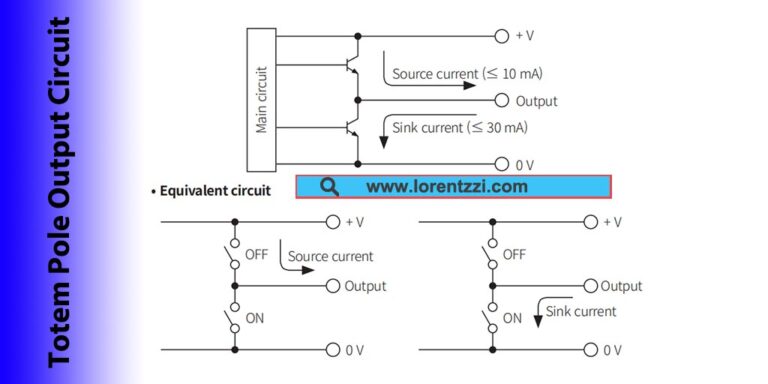
When the output signal is “H”, the upper transistor is turned on and the lower transistor is turned off. When the output signal is “L”, the upper transistor is turned off and the lower transistor is turned on.
The totem pole output has the characteristic of low output impedance because the circuit is designed to enable current to flow in both directions. In addition, it is little affected by waveform distortion and noise, and can be used for transmission over longer distances.
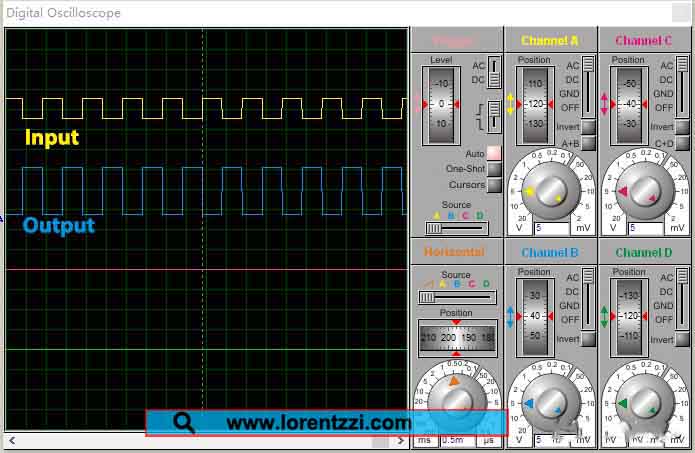
The totem pole waveform realizes the output of a small voltage driving a large voltage
Open collector output
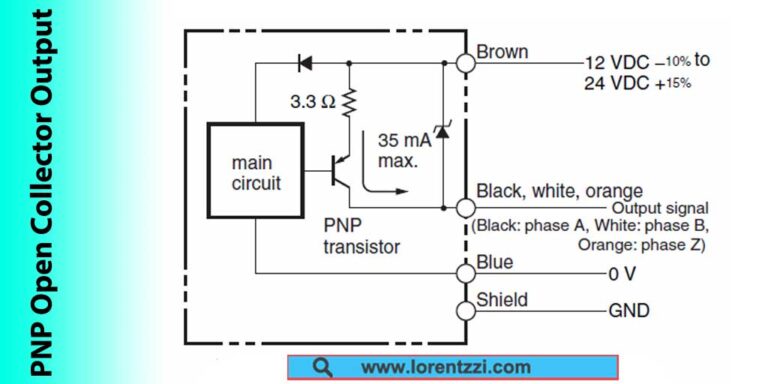
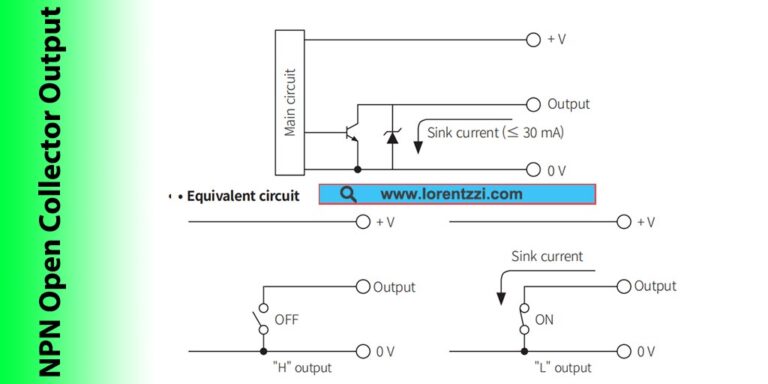
Since transistors include PNP transistors and NPN transistors, the collector output of the incremental rotary encoder can be divided into PNP open collector output and NPN open collector output. These two types of open collector outputs are more commonly used in PLC control systems.
The advantages of collector output are simple structure and low cost. The disadvantages are low level. It is easily affected when the signal is transmitted over long distances or when there is large electromagnetic interference. It cannot be directly used for control, signal processing and long-distance transmission, and needs to be amplified, shaped and other processes.
Voltage output
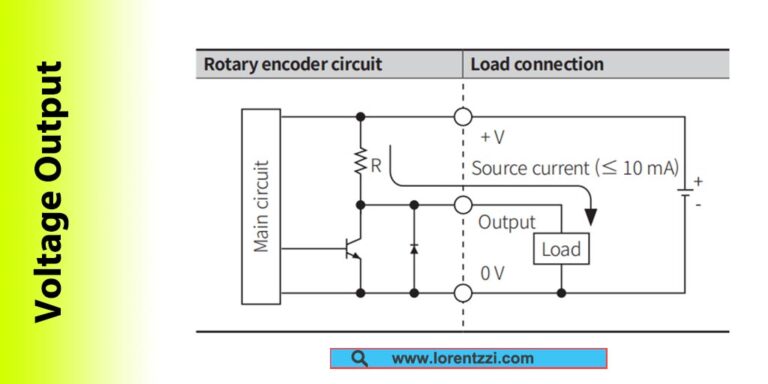
The voltage output is achieved by connecting a pull-up resistor between the collector of the NPN transistor and the power supply to clamp the collector output voltage within a stable range.
The characteristic of voltage output is that it simplifies the external circuit design because no additional pull-up resistor is required. The output level is stable and suitable for occasions that require a stable voltage signal. It is often used to connect to devices that require stable voltage input, such as PLC (Programmable Logic Controller), etc.
Push-pull output
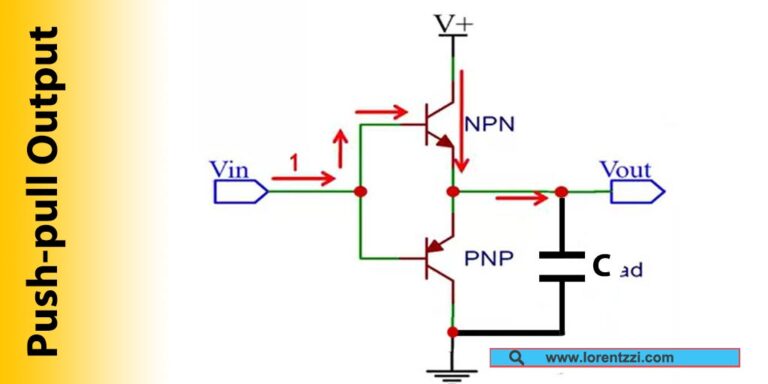
The push-pull output circuit consists of two transistors, an NPN transistor and a PNP transistor, which receive the input signal and the inverted signal of the signal respectively. When the input signal is at a high level, the NPN transistor is turned on and the PNP transistor is cut off; when the input signal is at a low level, it will be inverted.
The characteristic of push-pull output is that it can output both positive and negative phases of the signal, has strong anti-interference ability, strong driving ability, and is suitable for long-distance transmission.
Push-pull output is suitable for occasions where long-distance transmission is required or NPN and PNP input devices need to be connected at the same time.
For more knowledge, you can have a look at our article: Push-Pull Output In Encoder: The Definition And Characteristics.
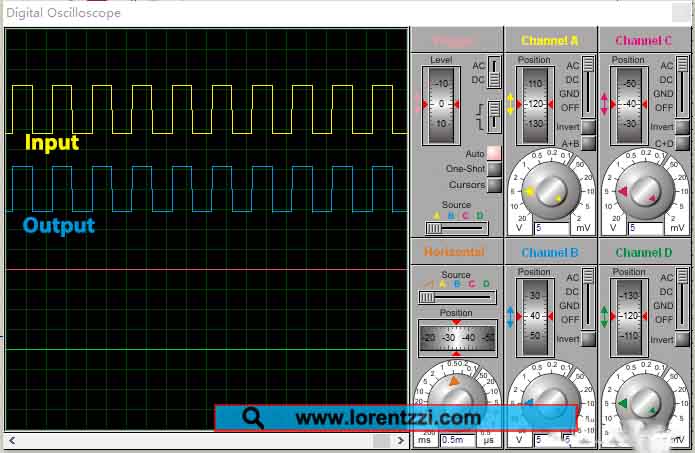
Complementary push-pull simulation waveform, input voltage equals output voltage
Line driver output
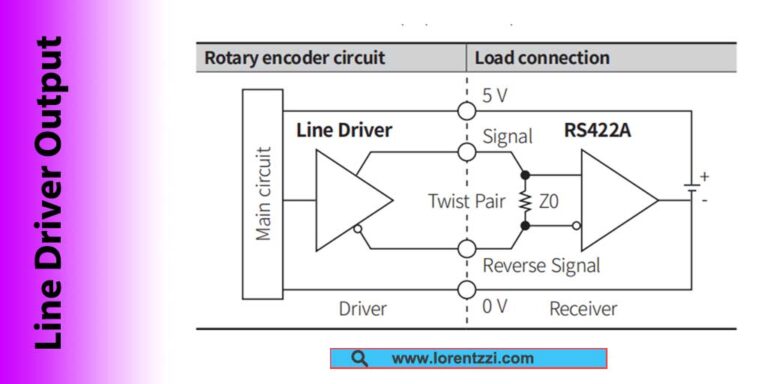
If you want the output signal of the incremental rotary encoder to be unaffected by external noise and to be transmitted over long distances without distortion, the best choice is long line driver output (or RS422). It has 6 signal outputs, namely A A- B B- and Z Z-.
More information, please learn our this article: What Is A Line Driver Encoder?
Conclusion
The above 5 incremental rotary encoder outputs all have their advantages and disadvantages, but now the more popular outputs are push-pull and line driver outputs because of their strong anti-interference and long distance transmission abilities.
Lorentzzi®, as one of the excellent incremental rotary encoder manufacturers in China, can produce very good quality optical rotary encoders with all 5 outputs. If you have other questions, please contact us for support or send an email directly to shonxu@lorentzzi.com.