
Are you a beginner and unsure how to choose the right hour meter for regular equipment maintenance?
This article provides a complete eight-step selection guide for your reference.
We will offer the hour meter selection advice based on the following eight aspects: application requirements, operating voltage, type, shape, accuracy, mounting method, brand and supplier, and cost.
Let’s get started!
Step 1: Knowing your application requirements
Different devices require different hour meters.
For example, if your device is a small engine or diesel generator that is used frequently, a digital timer is a good choice.
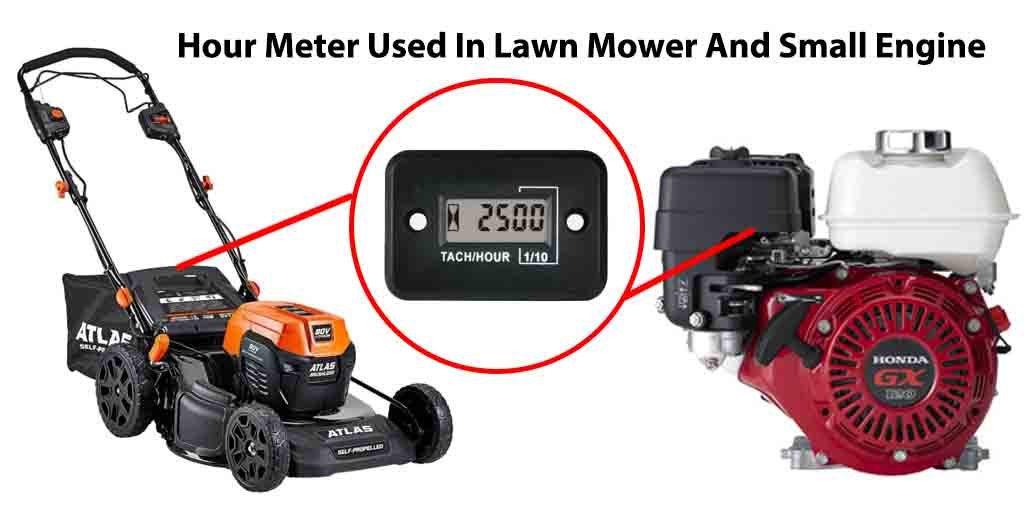
However, if your device is large and may only be used a few times a year, a mechanical hour meter is more suitable.
This is because the two types of hour meters operate on different principles.
If the device is used infrequently and left idle for extended periods, the digital timer may run out of power, resulting in data loss.
A mechanical timer, on the other hand, does not require a power source; it starts timing as soon as it is powered on, and the timing data is not lost after it stops.
Step 2: Choosing the hour meter working voltage
The second point to consider is the operating voltage of the timer you plan to use.
Different timers may require different voltages to operate. For example, a Lorentzzi timer can operate at 110 VAC, 220 VAC, 12 VDC, 24 VDC, or 5 VDC.
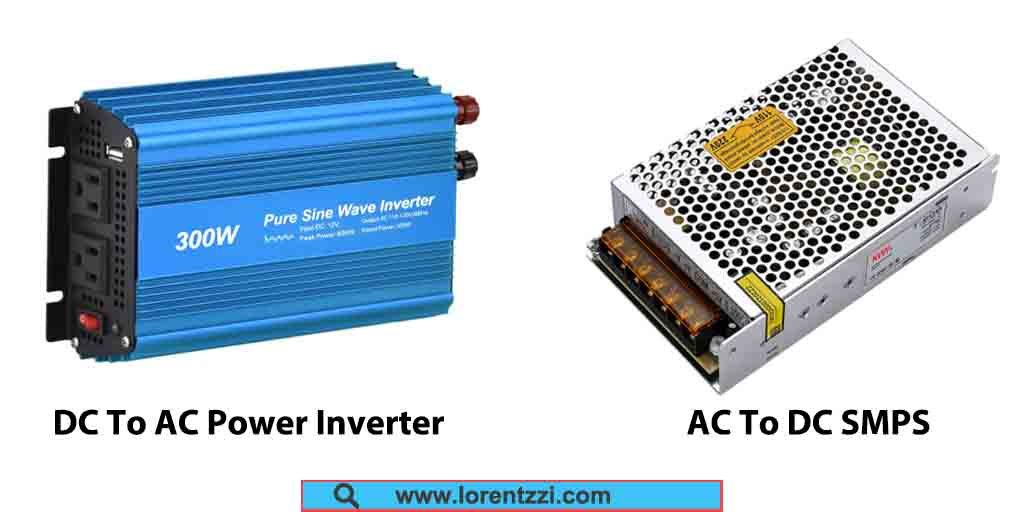
Please clarify which voltage your device can provide to the hour meter. What if you have purchased an AC hour meter, but you can only provide DC power? You can try purchasing a small power inverter to convert DC to AC. The power inverters can efficiently convert DC power from a battery to AC.
Conversely, if the hour meter only uses DC power, but your device only has AC power, you can use a switching power supply(SMPS) to indirectly power the DC hour meter.
Step 3: Decide the hour meter types
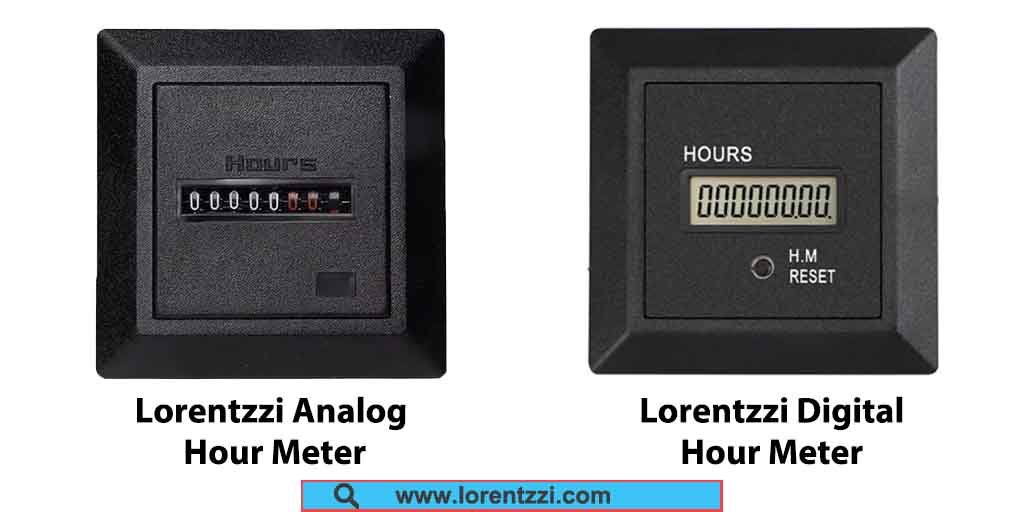
The hour meters come in two main types: digital and analog.
Lorentzzi offers both types(You can send us your inquiry to get our newest hour meters catalog). Digital hour meters typically feature large, easy-to-read LCD or LED displays, offering an attractive appearance and convenient viewing.
Mechanical hour meters, on the other hand, use analog dials or gears to record time.
Mechanical hour meters are more reliable than digital hour meters, retaining their recorded time even after extended periods of inactivity.
Step 4: Decide the hour meter shape
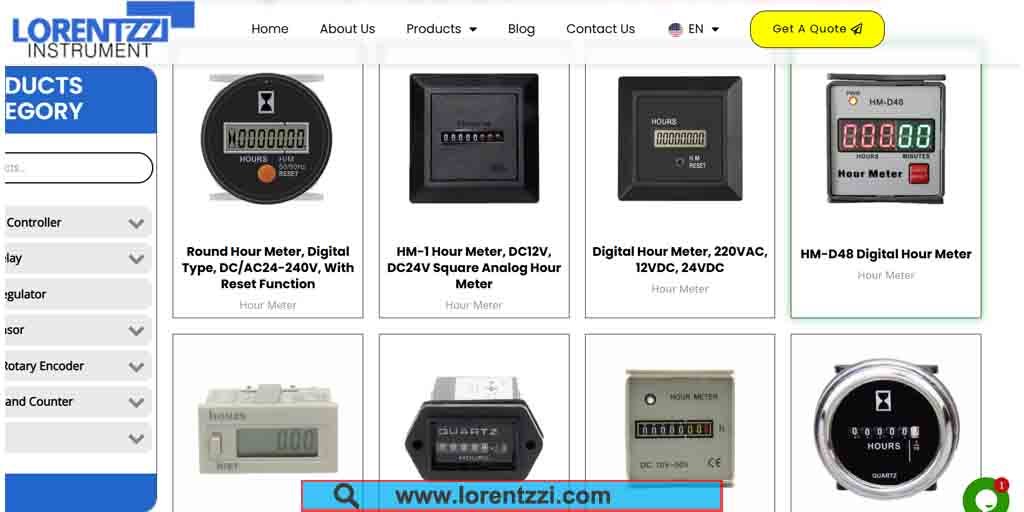
Our Lorentzzi® hour meter series is available in two shapes: square and round.
Round and square hour meters differ in their mounting methods and appearance; you can choose whichever you prefer, either yourself or your clients.
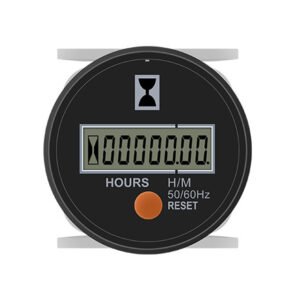
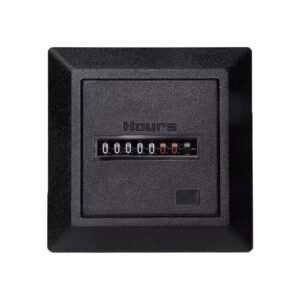
The following products are our most popular square and round hour meters for your reference:


Step 5: Confirm the accuracy
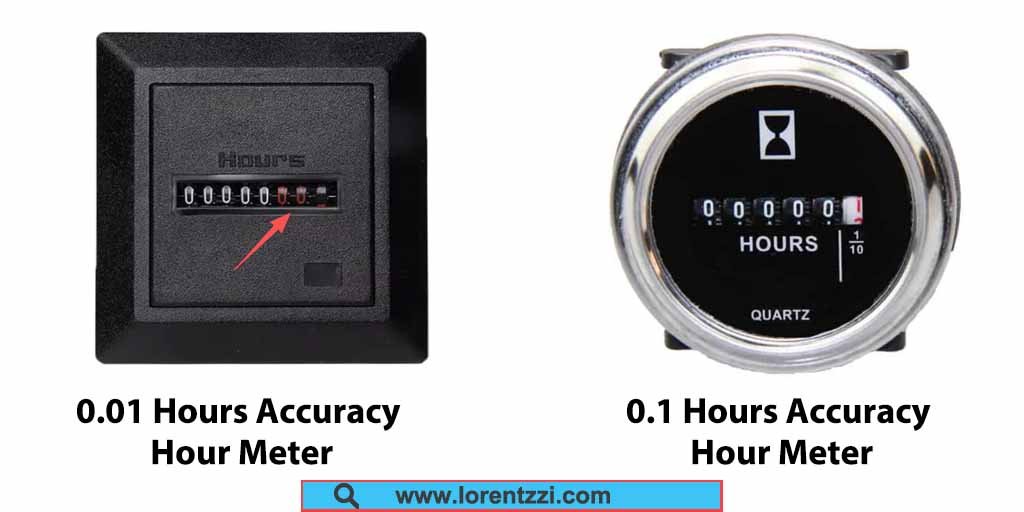
All Lorentzzi® hour meters are available in two precision levels: 0.01 hours and 0.1 hours.
The 0.01-hour minimum unit offers higher timing precision, while the 0.1-hour unit is less precise.
If you require more accurate time measurement, the 0.01-hour unit is recommended, but it will be more expensive.
Step 6: Confirm the installation method
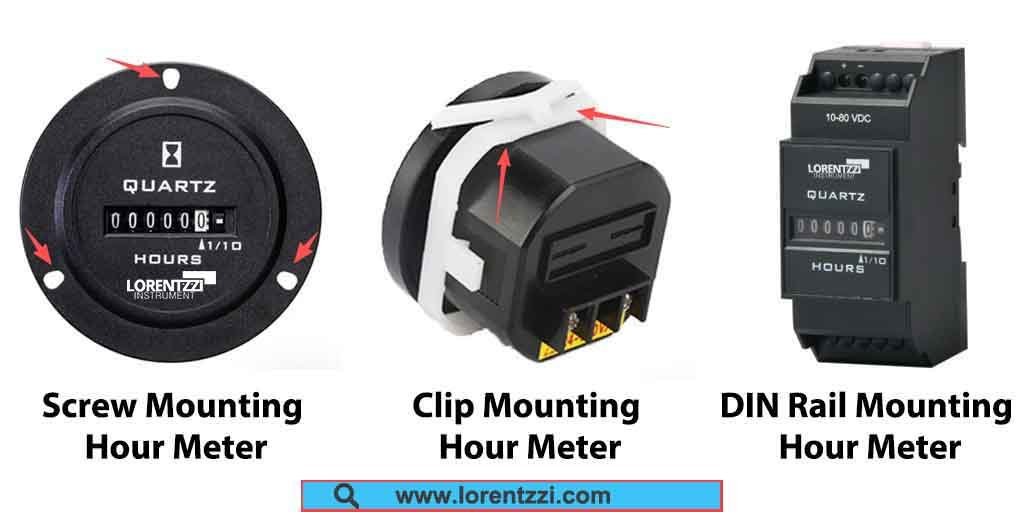
I investigated hour meters from different suppliers on the market and found three mounting methods: screw panel mounting, clip-on panel mounting, and DIN rail mounting.
Of these three methods, the first two are the most common and very simple to install. Installation is as simple as cutting holes according to the product dimensions and tightening screws or clips on the back panel.
DIN rail mounting hour meters are more suitable for installation on DIN rails inside distribution boxes.
Step 7: Choosing the hour meter brand and supplier
Choosing a branded hour meter means a higher price, but also lower use risk.
We’ve written an article listing the world’s top ten hour meter manufacturers and suppliers; you can click to view it: Top 10 Global Hour Meter Manufacturers and Suppliers.
Step 8: Select the cost-effective and higher quality hour meter
We all know that you get what you pay for.
So, strive for an optimal balance between the hour meter’s cost, functionality, durability, and long-term value.
While opting for the cheapest hour meter may be tempting, investing in a high-quality model with reliable warranty coverage—even at a slightly higher price point—proves more cost-effective in the long run.
It minimizes downtime and replacement expenses, ultimately delivering greater savings over time.
Conclusion
After reading the above 8 suggested steps, we believe you now clearly understand how to choose the right hour meter.
If you are also looking for a professional hour meter supplier from China, Wenzhou Lorentzzi Electric Co.,Ltd. is your ideal choice.
We have many years of experience providing various hour meters and complete equipment solutions to customers worldwide.
Contact us now for your hour meter solution!