Both water level relays and float switches can be used for water supply and drainage in water control systems such as industrial hot water boilers and swimming pool water level control, but which one is better?
This article will provide you with comprehensive information from the following four aspects:
- What are water level relays and float switches?
- Applications of water level relays and float switches
- The main differences between these two products
- How to choose between these two products
Let’s take a closer look now!
What is a water level relay?
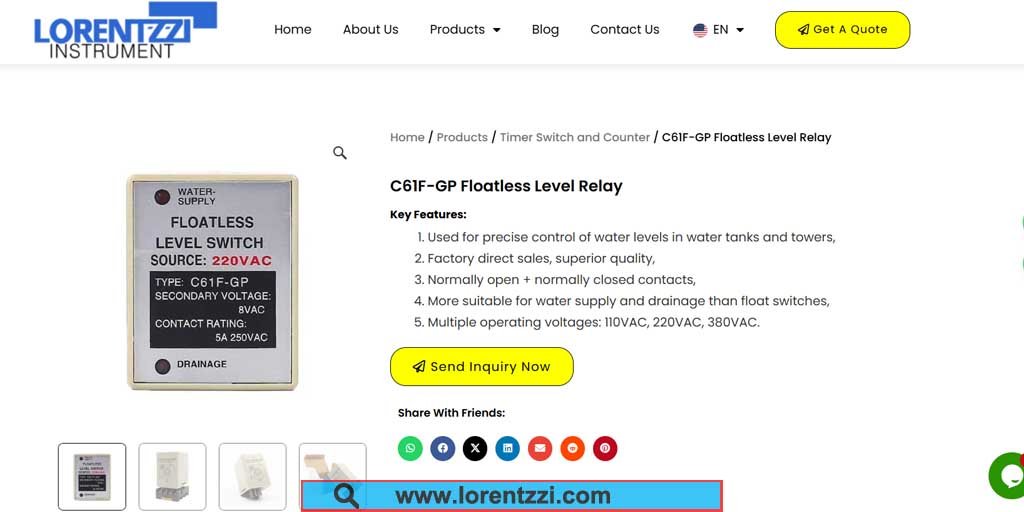
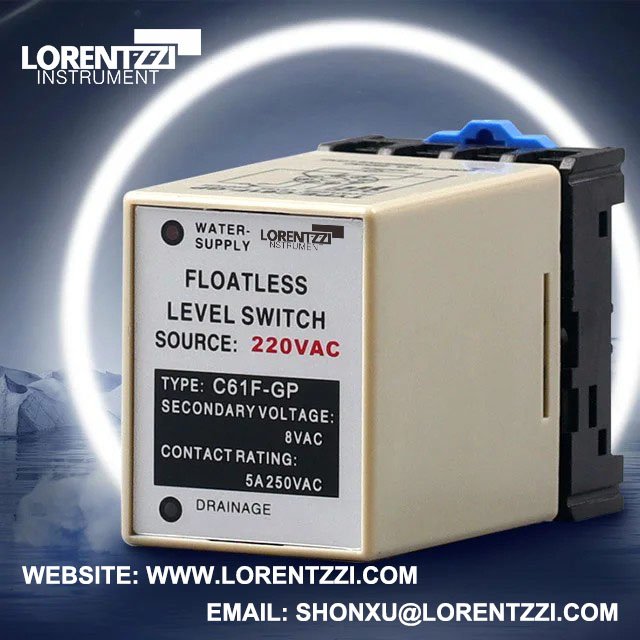
A water level relay, such as our C61F-GP floatless level switch, is an automatic switch that uses the conductivity of water to control the water level through three metal electrodes.
These three metal electrodes are located inside the water tank: a common electrode, a low-level (start) electrode, and a high-level (stop) electrode.
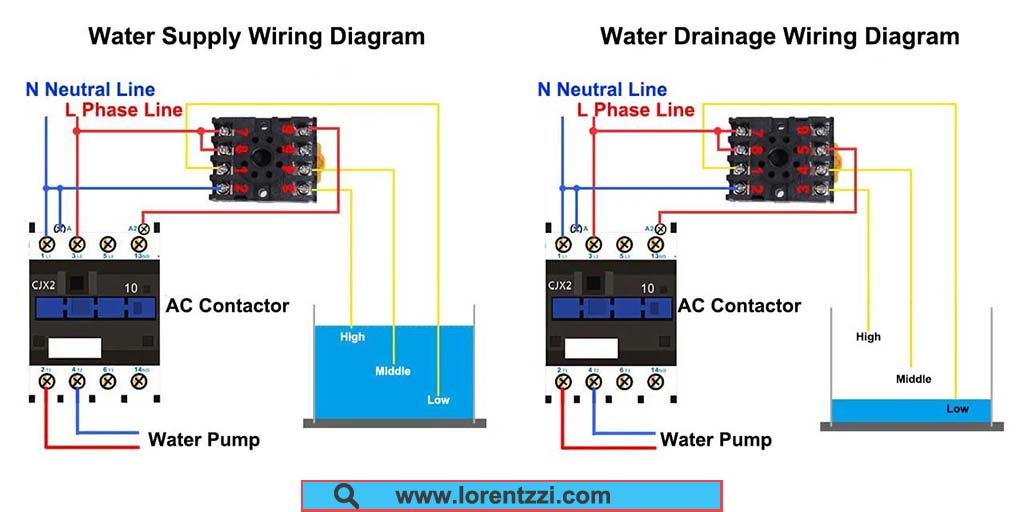
Now let’s take water supply as an example to explain its working principle: When the water level drops below the low-level electrode, the circuit between the low-level electrode and the common electrode is disconnected, and the water level relay starts the water pump to add water to the tank. When the water level rises above the high-level electrode, the circuit between the high-level electrode and the common electrode is closed, and the relay stops the water pump.
What is a float switch?
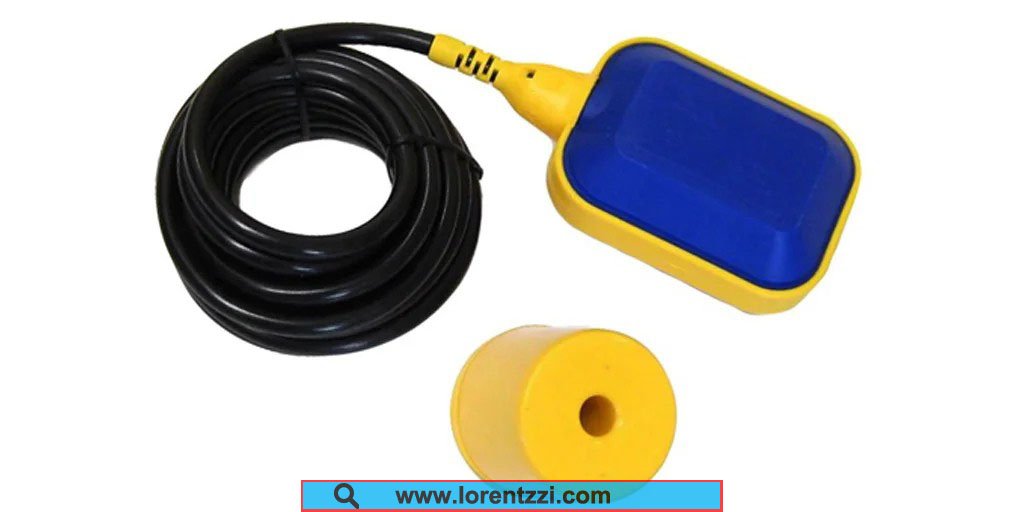
Unlike water level relays, float switches use buoyancy to close or open internal microswitches, thereby controlling the liquid level.
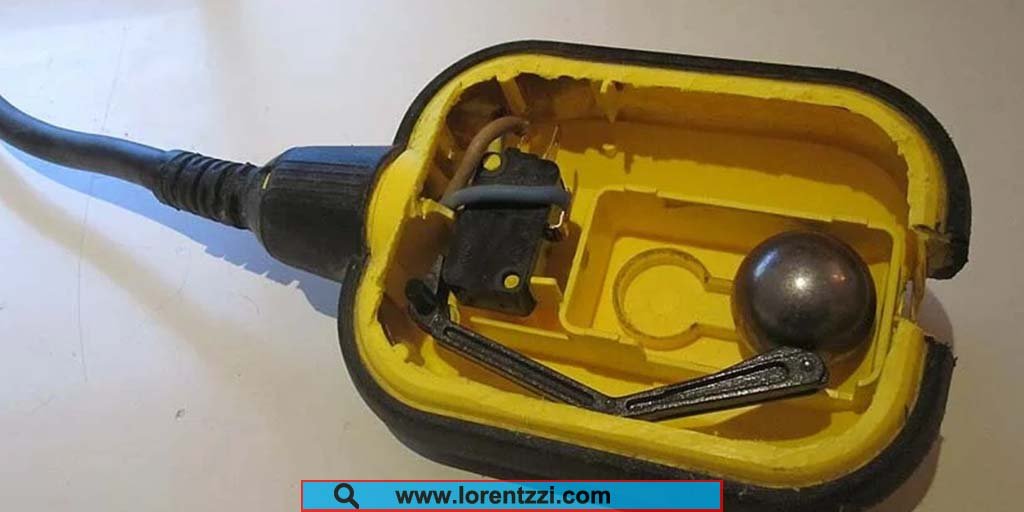
Now, let’s take the example of using a float switch to control a water pump to supply water to a water tank to explain the working principle of a float switch: When the water level in the tank drops to a certain level, the float tilts, and the internal steel ball rolls down, pushing the micro switch to switch on the water pump to supply water to the tank. When the water level reaches a certain height, the steel ball returns to its original position, the micro switch opens, and the water pump stops working.
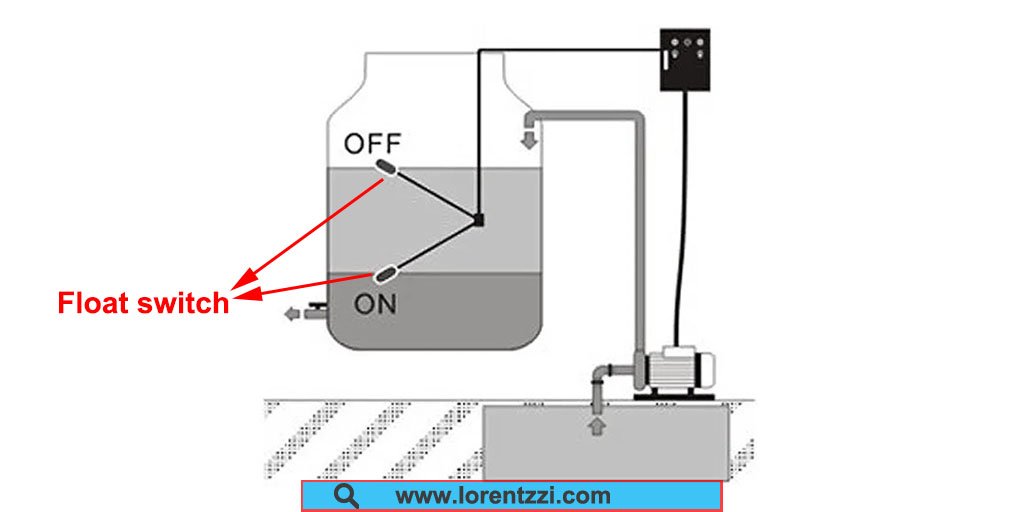
You can learn more information about the float switch through this blog post: A Deepest Study of Float Switch.
Water level relay and float switch applications
The main applications of water level relays and float switches are water level control and other liquid level control. You can read the detailed application instructions for each product below.
Water level relay applications
Water level relays, in conjunction with electrodes, are suitable for water supply and drainage control of conductive water bodies (such as clean water and tap water). For sewage, water with high levels of impurities, or water prone to scaling, float switches are recommended. Specific application scenarios for liquid level relays are as follows:
- Automatic water replenishment for rooftop water towers, clean water tanks, and domestic water tanks;
- Liquid level control for cooling towers, circulating cooling water systems, and machine tool cooling water tanks;
- Fire-fighting clean water tanks and backup water tanks in residential areas;
- Clean water storage tanks for agricultural irrigation and clean water supply for livestock farms;
- Liquid level monitoring for small water purification equipment and boiler feedwater;
- Automated control of distribution cabinets, requiring dual-point control of high and low water levels and issuing alarms for water shortage and overflow.
Float switch applications
In contrast, float switches use buoyancy to detect liquid levels, thus having a wider range of applications.
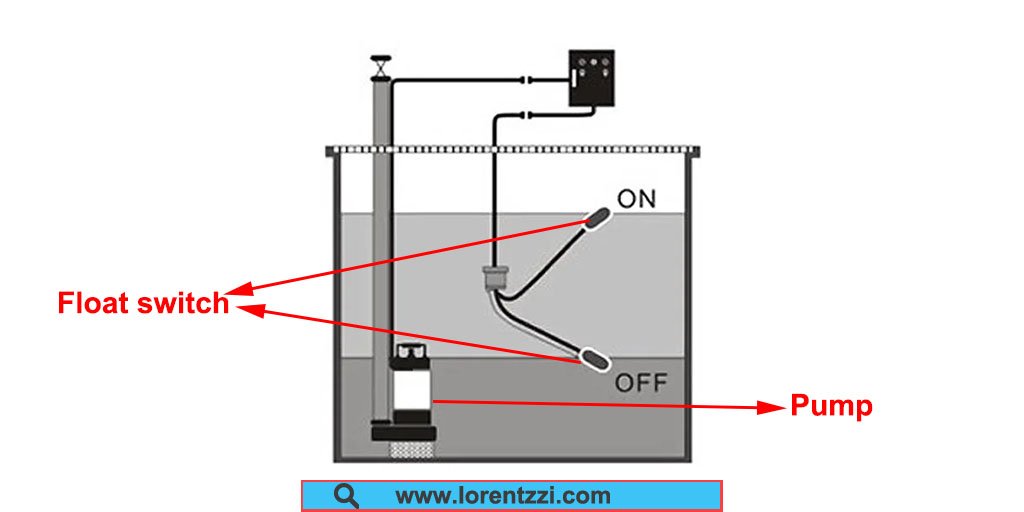
However, for applications involving food or hot water, a level relay is recommended.
This is because direct contact between a float switch and food may produce odors, causing hygiene problems, and hot water may deform the float’s outer casing. Furthermore, excessively high temperatures can significantly shorten the lifespan of the microswitch inside the float switches.
Specific application scenarios for float switches are as follows:
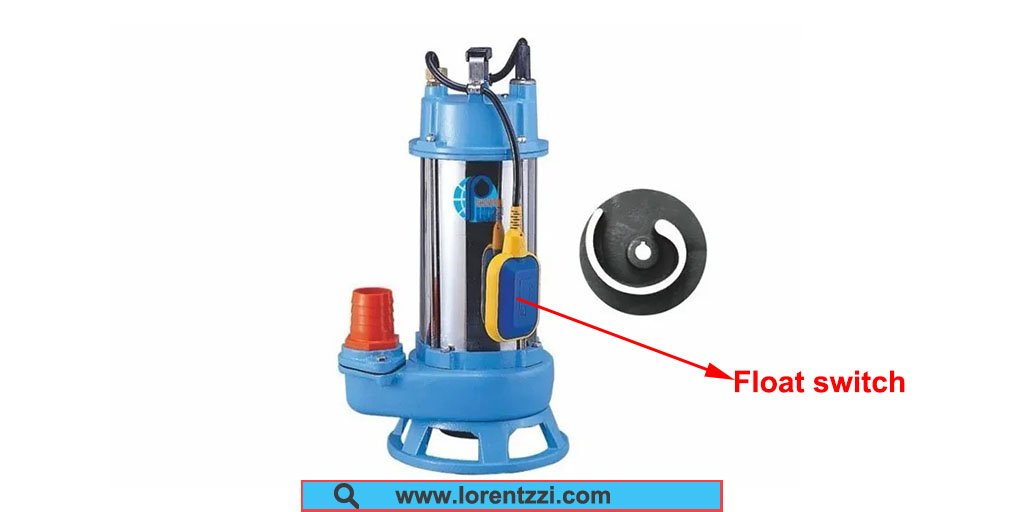
- Automatic drainage systems for sewage tanks, sump pits, basement water storage tanks, and rainwater wells (the sewage pump application scenario you mentioned earlier).
- Submersible pumps and well pumps with dry-run protection and burn-out protection.
- Industrial wastewater tanks, sewage treatment tanks, and septic tanks with level start/stop and overflow alarm functions.
- Simple water supply control systems for ordinary water tanks and water towers (small-scale water supply).
- Chemical storage tanks, engine oil/hydraulic oil tanks, and water tanks for cleaning machines (selecting suitable corrosion-resistant float materials).
- Fish ponds, landscape ponds, and aquaculture ponds.
- Wastewater tanks for ship and car washing, and temporary water storage tanks at construction sites.
Differences between a water level relay and a float switch
The main differences between water level relays and float switches lie in their working principles, applicable liquid types, service life, cost, and the depth of the liquid being measured, fluid level control accuracy.
| Item | Water level relay | Float switch |
|---|---|---|
Working principle |
The working principle of a water level relay is based on the conductivity of liquids. |
The float switch detects liquid level by buoyancy of a float. |
Moving parts |
No moving parts |
Yes, a moving metal ball is used to control the on/off state of a microswitch. |
Applicable liquid |
Only suitable for conductive liquids (tap water, most solutions). Not suitable for pure water, oils, or fuels. |
Both conductive and non-conductive liquids are acceptable. Avoid using liquids with excessively high viscosity. |
Service life |
The service life of a water level relay is longer than that of a float switch. Generally, a water level relay has a service life exceeding 3 years. |
The service life of a float switch is generally 1 to 3 years. |
Cost |
Relay plus electrodes, usually higher overall |
The price is lower than that of a water level relay. |
Measurable liquid depth |
The water level to be tested should ideally be less than 3 meters. |
Depending on the cable length. |
Accuracy |
High |
Low |
Which one should I use?
If your liquid is conductive (e.g., tap water), you need a long lifespan, don’t want the plastic of a float switch to be submerged in drinking water, or you’re using it to detect hot water in a boiler, then a level relay with electrodes is a better choice.
If your liquid is non-conductive or its conductivity is uncertain, or you need a simple, low-cost basic level switch control solution, then a float switch is a wiser choice.
Conclusion
In summary, both level relays and float switches can be used for water level control.
For wastewater or other non-conductive liquids, float switches are strongly recommended.
For hot water, drinking water, food, and beverage applications, level relays are ideal because they do not have a moving float, are less prone to jamming or clogging, and are more hygienic.
If you require high-quality floatless level switches, Lorentzzi Electric can provide them. You can email shonxu@lorentzzi.com for a quote!