As a sales representative and manager at Wenzhou Lorentzzi Electric Co., Ltd. in China, I am frequently asked:
- What industries are your temperature controllers suitable for?
- If we become your distributors, what kind of advertising should we do in the market? To which groups or companies should we promote and sell them?
These two questions are crucial, as they relate to our market positioning as distributors and wholesalers, and how to promote and sell our products.
In this blog post, we will list 10 typical industrial applications of temperature controllers, including glass production, plastics production, and more.
Let’s take a closer look.
1.Glass production
Precise temperature control is crucial in glass production.
To melt the glass raw materials, the temperature needs to be maintained between 1400 and 1600 degrees Celsius for a period of time. If the melting temperature is inaccurate, for example, too low, the finished glass will exhibit bubbles or uneven melting of the raw materials, severely impacting the aesthetics of the produced glass and resulting in material waste.
Another important factor to consider in glass production is the annealing temperature.
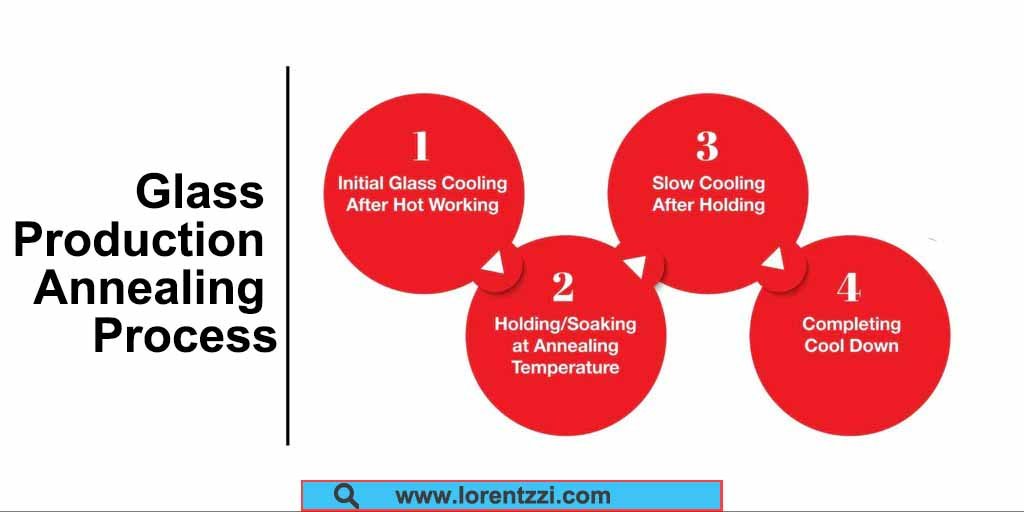
During annealing, the temperature needs to be maintained between 500 and 600 degrees Celsius. Inaccurate temperature control or excessively rapid cooling can cause the glass to break during the cooling process, resulting in significant cost waste.
So how do you achieve precise temperature control?
The answer is simple: you can try using a ramp and soak temperature controller.
The ramp and soak temperature controller can be set with different temperature control curves, allowing you to maintain the temperature for a specific period while controlling the rate of temperature increase and decrease.
2.Rubber and plastic production
Precise temperature control is essential in rubber and plastic manufacturing, and this is largely achieved through PID temperature controllers.
So, how do they work and where do you find the temperature controller?
Let’s take a plastic extruder as an example.
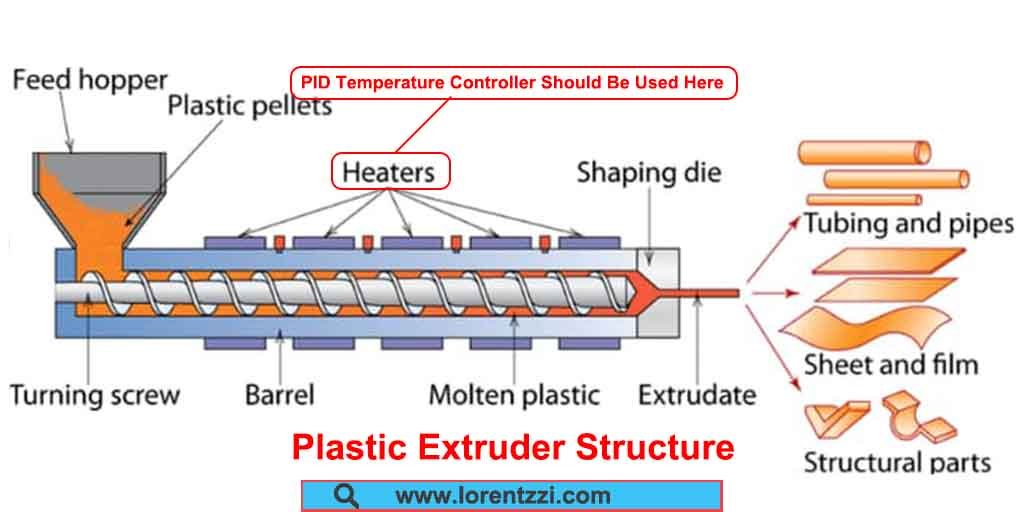
The process begins with plastic granules being fed into a hopper and conveyed forward by a rotating screw. As the material moves through the barrel, it is gradually heated and melted in temperature-controlled zones. The molten plastic is then homogenized under pressure and extruded through a die.
Without a PID temperature controller, the heating zone would be unable to maintain a stable temperature. This can lead to overheating that burns the plastic, or uneven melting that compromises the quality of the final product.
3.Packaging machine
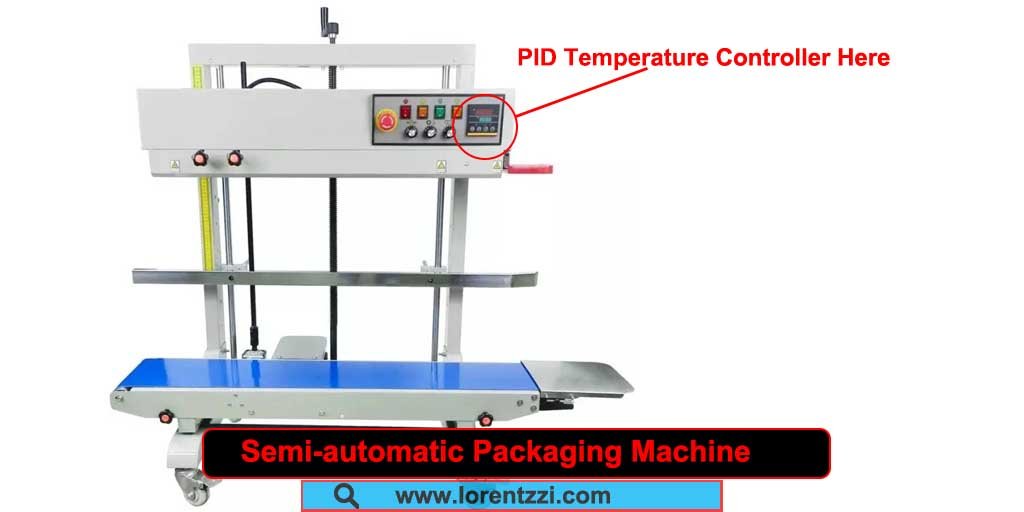
PID temperature controllers are widely used in packaging machinery, particularly in conjunction with heating rollers, temperature sensors, and solid-state relays for bag sealing applications.
In this setup, the PID controller regulates the solid-state relay to switch the heating element on or off, while the temperature sensor continuously monitors the temperature of the heating element and feeds this data back to the controller.
This enables precise and stable temperature control, ensuring consistent sealing quality.
Lorentzzi Electric offers a complete PID temperature controller kit for your bag sealing machine, including our latest TC5 temperature controller, K-type thermocouple, DC/AC solid-state relay, heat sink, etc.
4.Muffle furnace
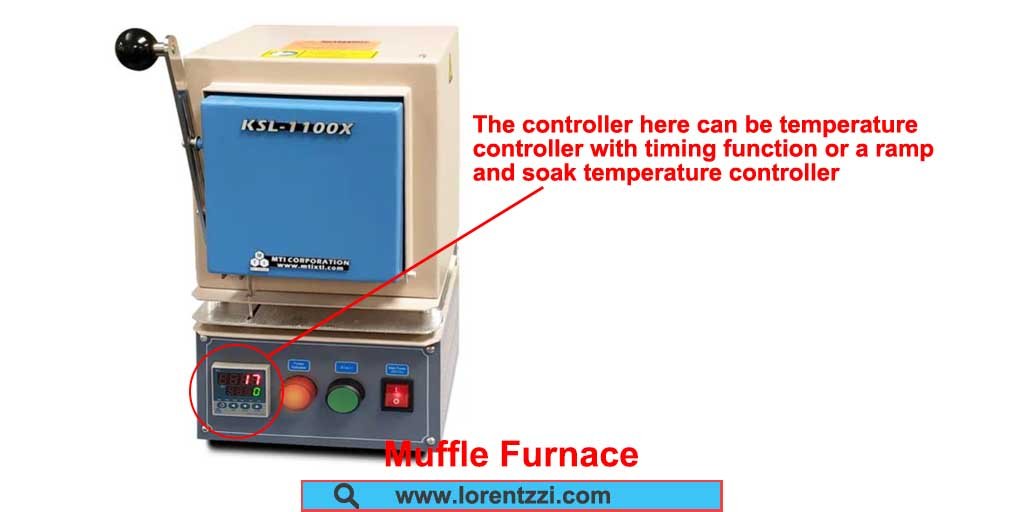
Muffle furnaces are common in laboratories, primarily used for heating and testing materials, such as determining the proportion of organic components in plastics.
Muffle furnaces can heat materials to temperatures ranging from several hundred to several thousand degrees Celsius.
Their working principle is very simple: resistance heating → furnace body heat preservation → automatic temperature control by a temperature controller → achieving high-temperature heating, calcination, and sintering.
Therefore, a muffle furnace must be equipped with a temperature controller to function. For better results, it is best to use a temperature controller with timing function (or a temperature controller has single setpoint control with a single ramp to setpoint and a dwell) in the muffle furnace. This type of controller heats the object to the set temperature and holds it at that temperature for a period of time. When the holding time ends, it will sound an alarm to alert relevant personnel.
5.Sterilization equipment
The disinfection equipment we will be discussing here is high-temperature sterilization equipment.
We collected relevant information and found that the optimal temperature and humidity for microbial survival are 20°C to 40°C (68–113°F) and relative humidity (RH) above 60%.
Obviously, a high temperature of 160℃–170℃ in a dry environment can achieve sterilization. How is this realized?
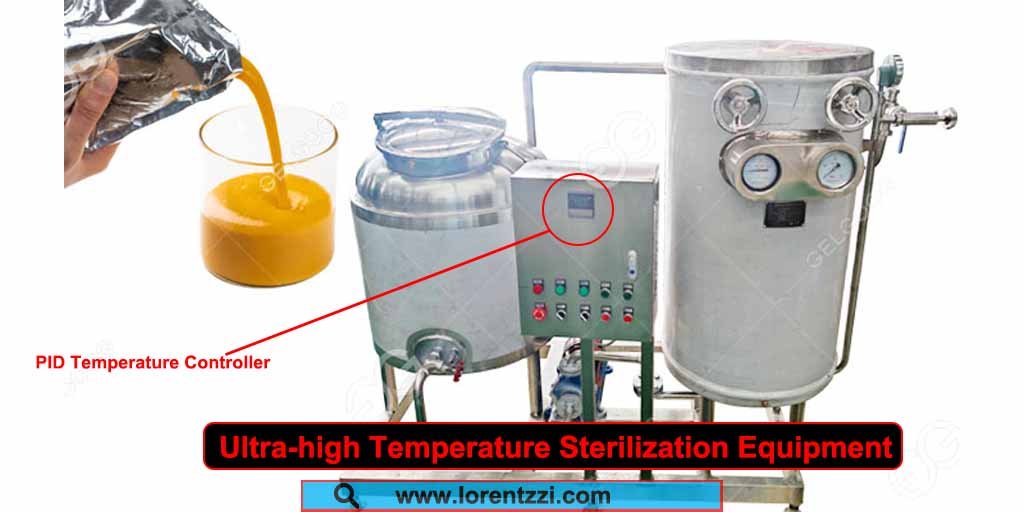
Simply put, precise control of sterilization temperature and time can be achieved using a PID temperature controller with timing function, heating elements, a solid-state relay or AC contactor, and a temperature sensor. The controller regulates the solid-state relay or contactor and indirectly controls the temperature of the heating elements via feedback from the temperature sensor.
6.Commercial dehydrator
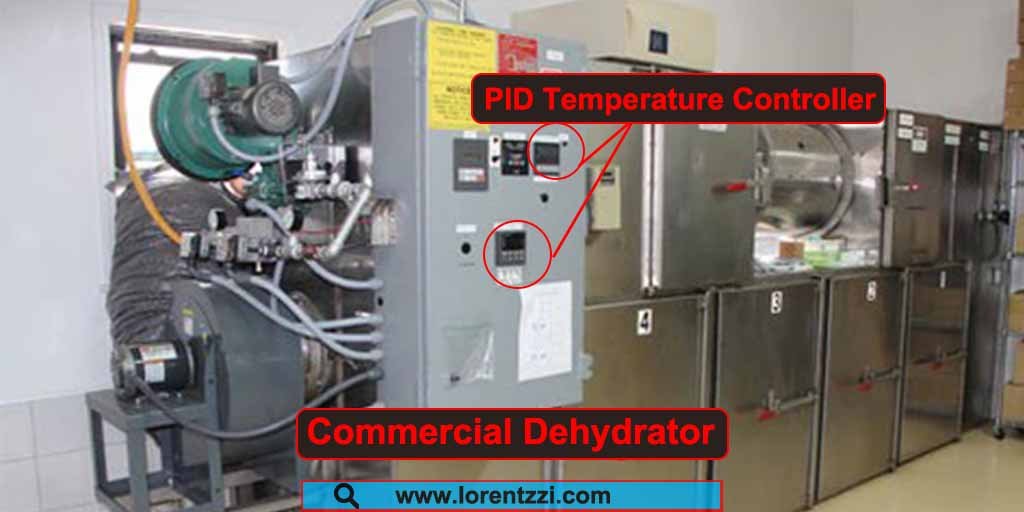
Commercial dehydrators are widely used to remove moisture from various materials.
In food processing, they are applied to dry fruits and vegetables.In hotels and hospitals, they are used for drying textiles such as bed sheets, towels and uniforms.
In these machines, the PID temperature controller is a key component.It allows operators to set and maintain a precise temperature, ensuring optimal drying conditions.
For fruits and vegetables, precise temperature control helps prevent mold caused by excess humidity and extends shelf life.
For textiles, it ensures effective drying and disinfection, which is particularly important for hotel linens and hospital uniforms.
7.Commercial electric bakery oven
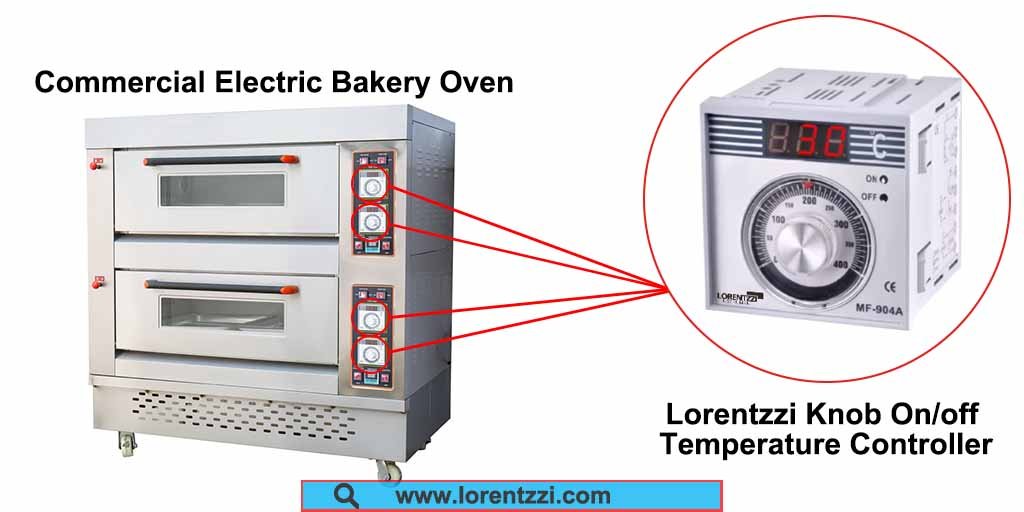
In commercial electric bakery ovens, many manufacturers prefer to use simple rotary on/off temperature controllers, as shown in the image below.
Why?
There are 3 reasons:
- Unlike complex digital PID temperature controllers with soft buttons, manual rotary switch temperature controllers are less prone to electronic malfunctions in the hot and dusty environment of a baking workshop.
- For skilled bakers, this analog control method provides instant tactile feedback, allowing them to quickly adjust the temperature based on the appearance and texture of the baked goods without having to navigate through digital menus.
- Baking processes are not strictly temperature-sensitive, and foods can be baked over a wide temperature range; therefore, simple on/off temperature controllers are more popular.
Therefore, this simplicity ensures that the core function of temperature control can be implemented with minimal complexity, making it ideal for mass production.
8.Powder coating oven
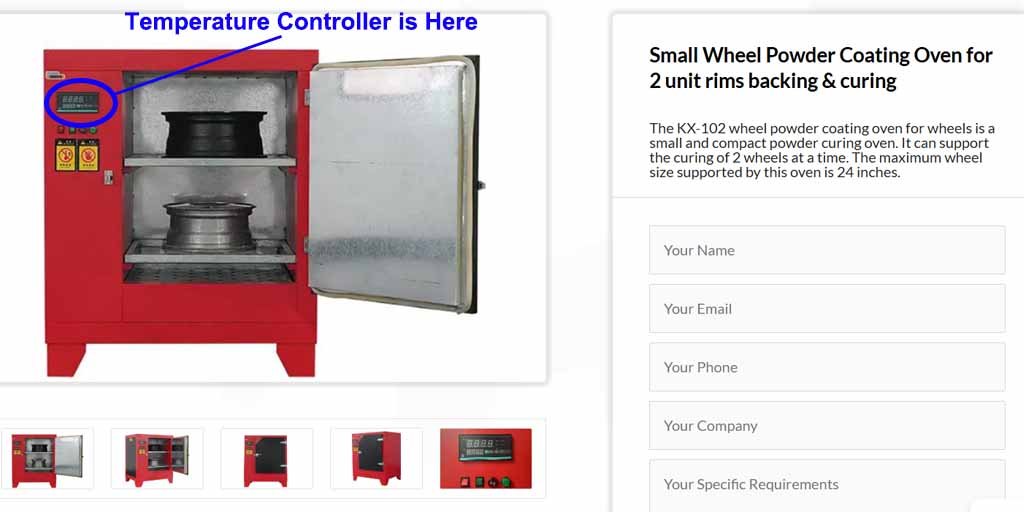
Powder coating ovens, also known as curing ovens, are primarily used to melt, level, crosslink, and cure powder coatings(such as epoxy, polyester, polyurethane, or nylon) on workpieces (such as railings, outdoor tables and chairs, refrigerator casings, and car wheel hubs) to form a durable coating.
The workflow can be divided into three key stages: loading and preheating, melting and leveling, and crosslinking and curing.
To obtain a high-performance protective coating, the oven must be equipped with a temperature controller with a timer. These components ensure that the oven maintains the required curing temperature (typically between 250°F to 400°F (121°C to 204°C)) for 10 to 30 minutes. This controlled environment allows the powder electrostatically sprayed onto the workpiece surface to fully melt, level, crosslink, and cure, resulting in a uniform and tough final coating.
9.Automatic oil press
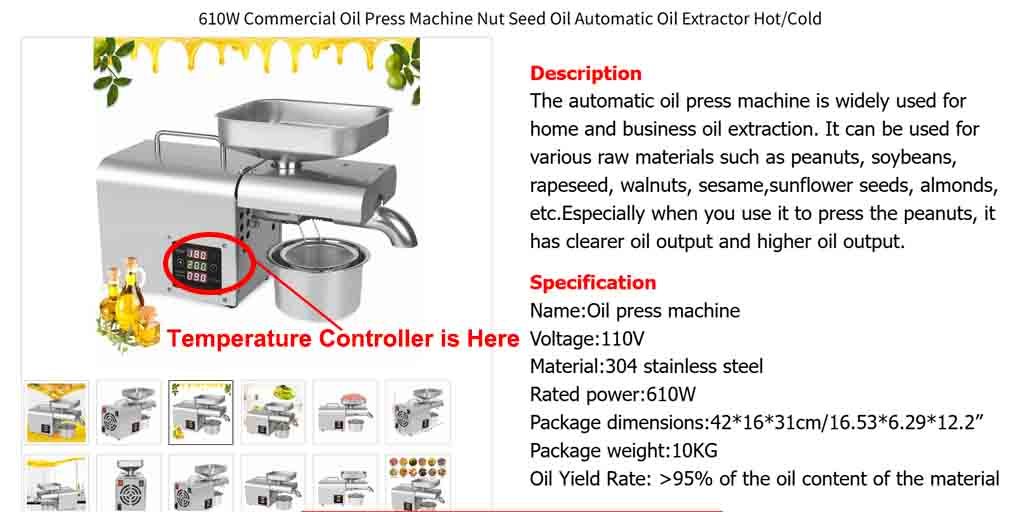
The peanut oil and soybean oil we usually consume are mostly produced using a screw oil press. Do you know how it works?
The first step in oil pressing is pretreatment. To increase oil yield and aroma, the oilseeds need to be roasted first. For example, the roasting temperature for peanuts and soybeans is usually controlled between 120℃ and 180℃.
Then, the processed oilseeds enter the pressing chamber. Inside the chamber, a high-speed rotating screw propels the oilseeds forward. As the internal space of the chamber gradually narrows, the pressure increases sharply, and the oil is “squeezed” out under strong physical pressure, flowing out through the gaps in the press cage.
This is a continuous process: on one side, golden crude oil flows out continuously, ready to eat after filtering; on the other side, the pressed oilseed residue is compressed into a hard “cake” and automatically discharged from the end of the pressing chamber.
As can be seen from the first step, precise temperature control is a key factor; incorrect temperature settings will severely affect the oil yield and flavor. Therefore, a PID temperature controller can be used in an oil press to achieve precise temperature control.
10.Chemical reactor
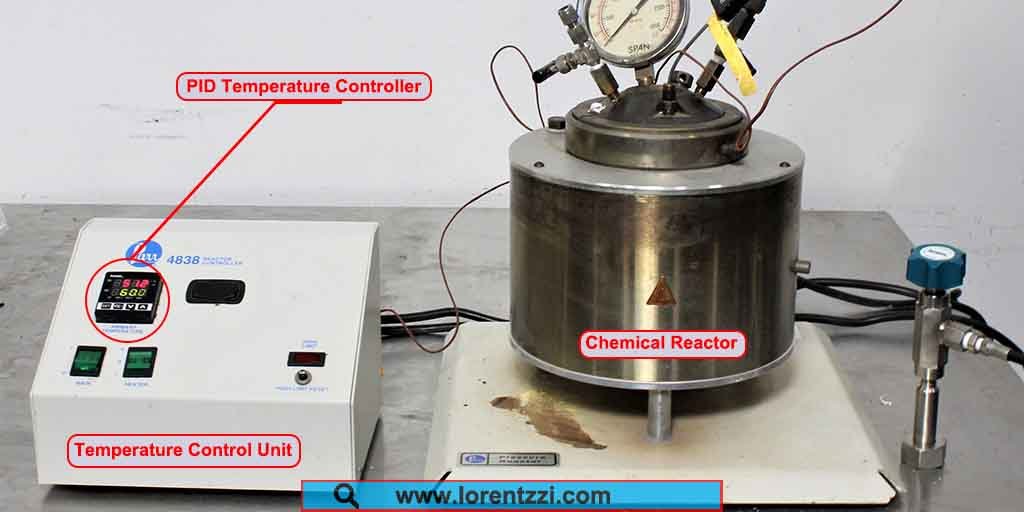
In chemical experiments, many chemical reactions require high temperatures to occur, such as the growth of artificial crystals (approximately 330-360°C), the preparation of tungsten (approximately 800-1000°C), and the decomposition of calcium carbonate (calcination of limestone into quicklime) (approximately 900-1200°C).
For these chemical reactions to proceed smoothly, the reaction vessel temperature needs to be adjusted to a suitable level; therefore, a temperature controller is necessary.
The following is PARR 4913 4838 Reactor Controller Temperature Control Includes O-Ring:
Conclusion
Precise temperature control extends beyond the 10 typical applications mentioned above; it is also widely used in oil refining equipment, chemical production, and other fields.
Lorentzzi Electric provides a wide range of temperature controllers, temperature sensors, and solid-state relays for your industrial temperature control needs. We are not just a product supplier, but a solutions provider.
Contact us today via email to get your customized solution!