
Soft start is a control strategy that is widely used not only in the field of heater temperature control, but also in other applications, such as motor start control, etc.
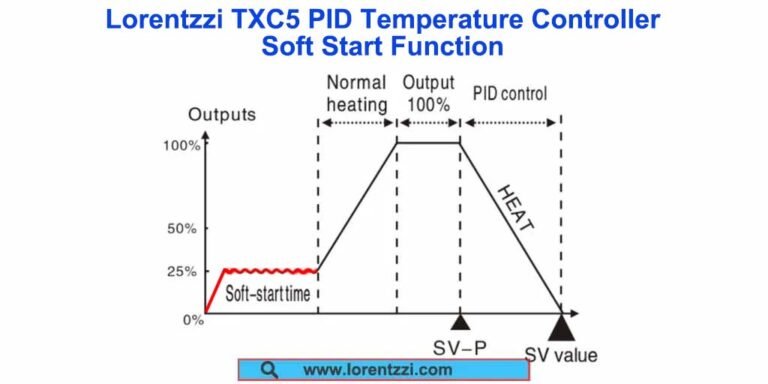
In the temperature control system, soft start can gradually increase the power of the heater and then gradually bring the heater to the required temperature.

This strategy can prevent the heater from being damaged by surge current or voltage, greatly improving the service life of the heating element.
But what exactly is it, how does it work, and what benefits can we get from this soft start control strategy? In this article, we will provide you with detailed knowledge. Now let’s take a look.
What is a soft start and how does it work?
The soft start is like driving a car to a desired speed. You can’t expect to reach it instantly; it’s a gradual process that requires time to achieve.

In the heating temperature control systems, we can use three steps to realize the soft start function:
Step 1: When the heater starts, the soft starter limits the initial voltage, thereby reducing the current surge.
Step 2: By controlling the conduction angle of the silicon controlled rectifier (SCR), the soft starter gradually increases the voltage to the heater so that it reaches full power smoothly.
Step 3: Full Power Operation: Once the heater reaches the predetermined operating temperature, the soft starter switches to bypass mode, allowing full power output.
The benefits of soft start used in a heater
There are 3 typical benefits we can get from the soft starting, we have listed them in the below section:
1.Reduce the current impact on the power grid or other equipment: When the voltage applied to the heating tube increases slowly, the current also increases slowly according to Ohm’s law. This slow increase process can effectively reduce the impact on the power grid or heating distribution system, which is beneficial to protect other equipment in the circuit.

2. Avoid over-current protection of heating control systems: Some high-end heating generating systems are produced with an over-current protection function. If we provide too high voltage to the heater at the beginning, due to the small resistance of the heater, the excessive voltage will cause the heating system over-current protection, which will make the heating tube unable to work normally and affect normal use.
3. Extend the lifetime of the heater: By slowly increasing the voltage, thermal fatigue of the heating element can be reduced, thus extending its service life.
How to realize the soft start function for a heater?
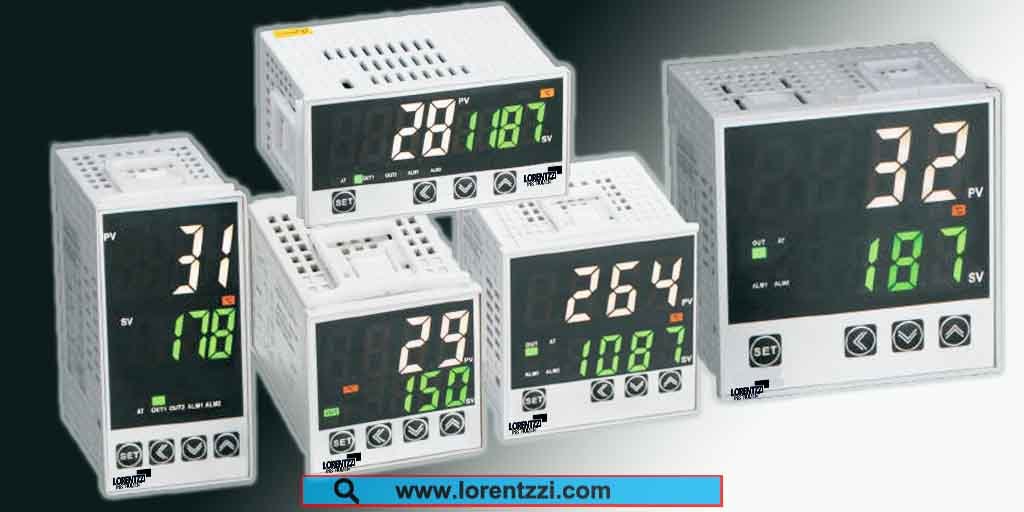
In order to achieve the soft start function in industrial applications, you can try to use the following TCX5 PID temperature controller to achieve it. Our newly developed TCX5 PID temperature controller not only has a large, clear and easy-to-read LED display screen, but also has a fast sampling time of only 100 milliseconds, making temperature acquisition and control more accurate.
Another solution is to use our PID temperature controller with our LSCRTM closed-loop SCR power controller. Our LSCRTM series controller soft start time can be adjusted within 0-120 seconds, and its output can be constant current, constant voltage or constant power, phase shift control or zero-crossing control, etc. This SCR power controller is widely used in temperature control systems.

Conclusion
In conclusion, adding a soft start to the heater is necessary to help us use the heater more safely and greatly extend the life of the heating element.
If you need a quote from us for the LC5 digital PID temperature controller or SCR power controller, please contact us by sending an email to shonxu@lorentzzi.com.
Lorentzzi® is always there for you and ready to support!