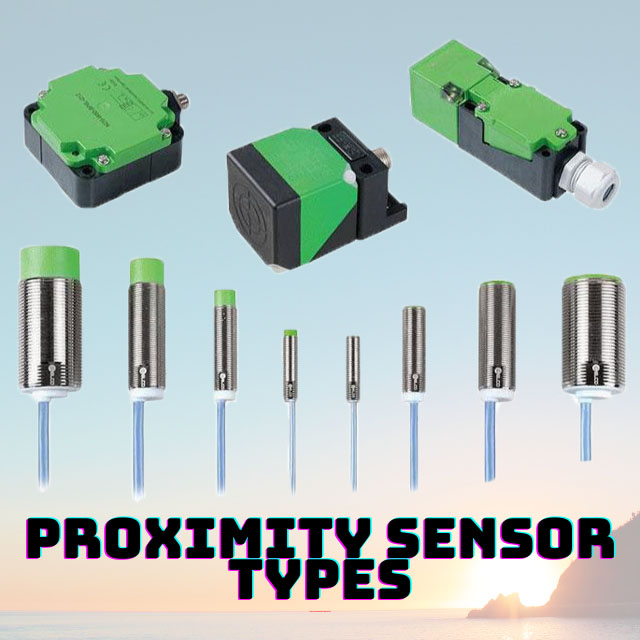

A line driver encoder, often referred to simply as a “line driver,” is an electronic circuit used in conjunction with a rotary encoder. Its main function is to amplify and condition the encoder’s output signals to ensure that they can be transmitted over longer distances without degradation due to noise or signal loss. Here’s a more detailed explanation:
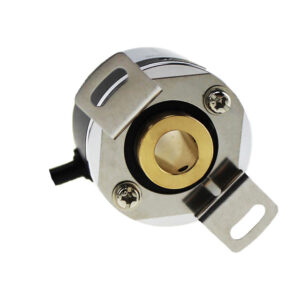
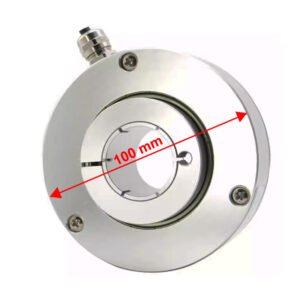
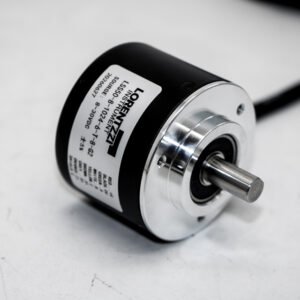
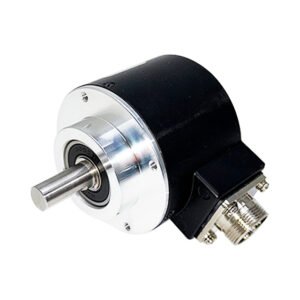
Line driver encoder purpose
In an industrial environment, the encoder may be located far away from the control device or the equipment that reads its signal. Over long distances, the encoder’s output signal may become weak or corrupted by electrical noise. Line drivers help overcome this problem by boosting signal strength.
Line driver encoder Operation
The line driver takes the encoder’s output signal and converts it into a format suitable for long-distance transmission. This usually involves converting the signal to a differential format, where the two lines carry complementary signals. This differential signaling helps suppress noise and interference.
Differential Signaling
One of the primary functions of many line drivers is the use of differential signaling. In this method, the signal is transmitted over two wires: one carries the actual signal and the other carries its inverse signal. On the receiving end, the difference between the two signals is obtained. Since any noise or interference affects both lines equally, taking the difference helps eliminate the noise.
Universal Line Driver
Some universal line driver standards used by encoders include RS-422 and RS-485. These standards define the electrical characteristics of line driver and receiver circuits.
Benefits
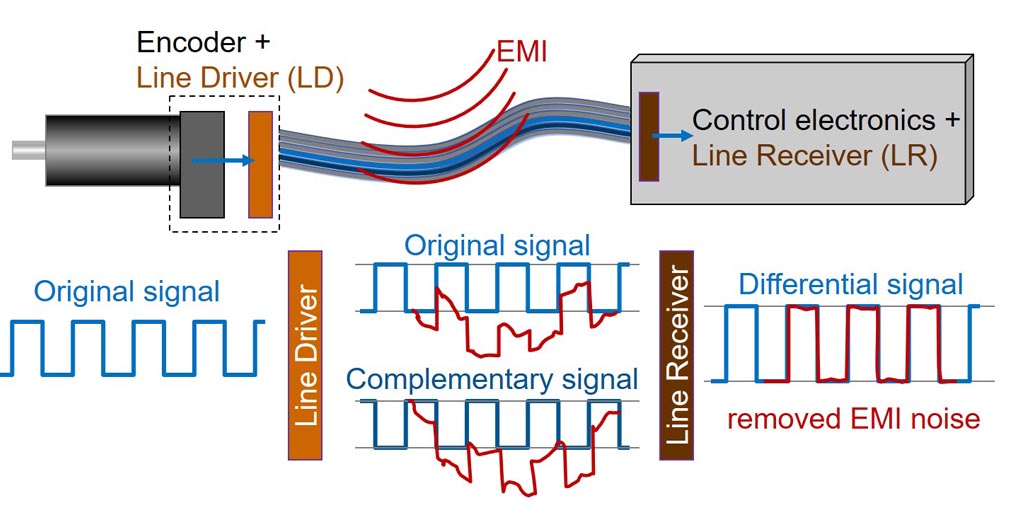
- Noise Immunity: The boosted and conditioned signal is less susceptible to electrical noise and interference.
- Longer Transmission Distance: Signals can travel longer distances without noticeable loss or degradation.
- Reliability: Ensures consistency and reliability of data transmission, especially in industrial environments with large amounts of electrical equipment and potential sources of interference.
Conclusion
In summary, line driver encoders or encoders with line drivers are critical for applications where the encoder is located far away from control or monitoring equipment, especially in noisy environments. Line drivers ensure that encoder signals are transmitted clearly and reliably over the required distance.