SMPS is an abbreviation for Switched-Mode Power Supply, widely used in industrial control applications to drive DC loads. It can effectively convert alternating current (AC) voltage to direct current (DC) voltage.
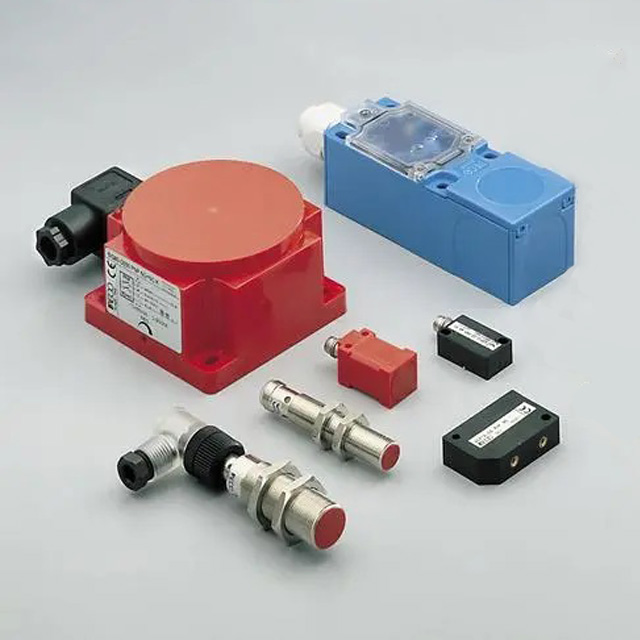
Switching power supplies are one of the top 10 commonly used components in industrial automation, providing power to various devices such as PLCs, temperature sensors, proximity sensors, safety light curtains, indicator lights, temperature transmitters, solenoid valves, temperature controllers, solid state relays and various LED light strips.
In this blog post, you will learn:
- What is an SMPS?
- How it works.
- What loads can it drive?
- Types of SMPS.
- SMPS selection guide.
Now let’s delve deeper.
What is an SMPS?
In short, a switching power supply (SMPS) is a voltage converter that transforms alternating current (AC) voltage into a fixed value of direct current (DC) voltage. Therefore, laptop adapters, mobile phone chargers, and LED drivers can all be considered switching power supplies.
Its input voltage can be single-phase AC 110 V, 220 V, or three-phase AC 380 V. These inputs are converted to DC 5 V, 12 V, 24 V or 48 V through the SMPS’s internal circuitry, according to the product design.
In the next section, we will explain the working principle of a switching power supply in detail.
How does an SMPS work?
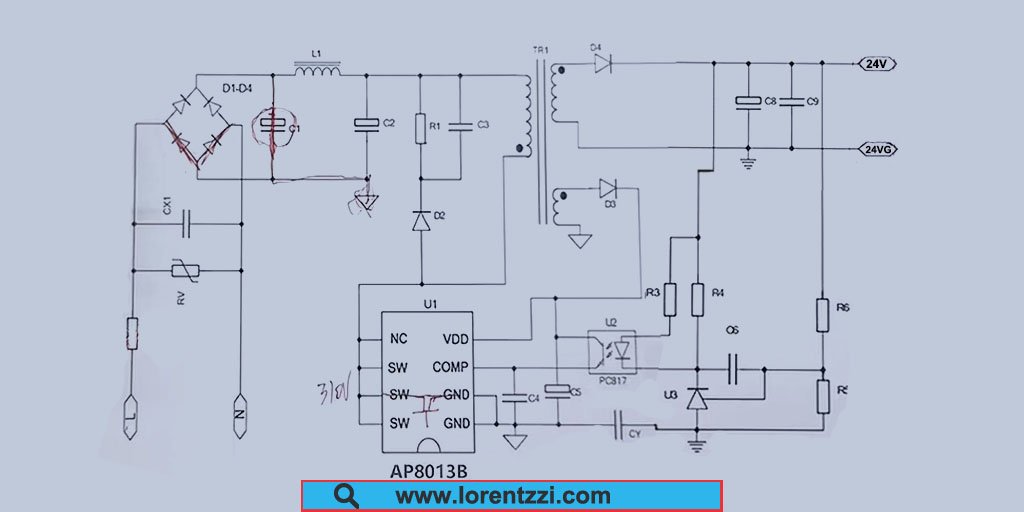
The SMPS workflow consists of 6 stages: AC mains power → EMI filter → rectifier bridge + electrolytic capacitor (DC310V or DC150V bus) → PWM switch + high frequency transformer → secondary side rectification and filtering → stable DC voltage output.
Let’s take a closer look at each stage.
1.AC mains power input
We need to connect AC 110V, AC 220V, or AC 380V to the input terminals of the switching mode power supply.
2.EMI filter
During this stage, the AC voltage will be filtered to obtain a clean AC power supply, while other interference signals (such as high-frequency electromagnetic noise) will be filtered out and absorbed.
3.Rectifier bridge + electrolytic capacitor (DC310V or DC150V bus)
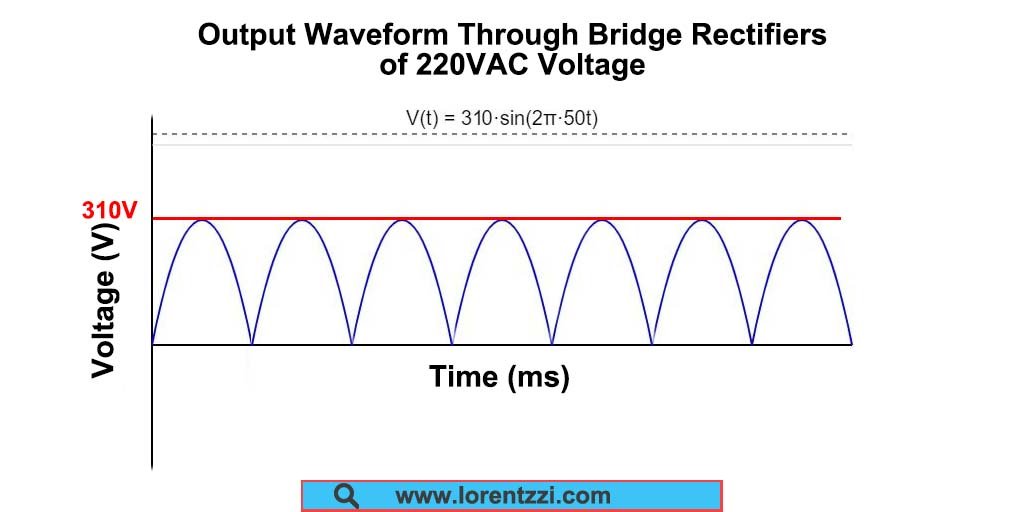
In this section, the input voltage is 220 V AC (Note: The voltage mentioned here is 220 V AC, the RMS value of mains supply. Its peak value is 220 × √2 = 310 V.). This AC voltage is converted to 310 V DC.
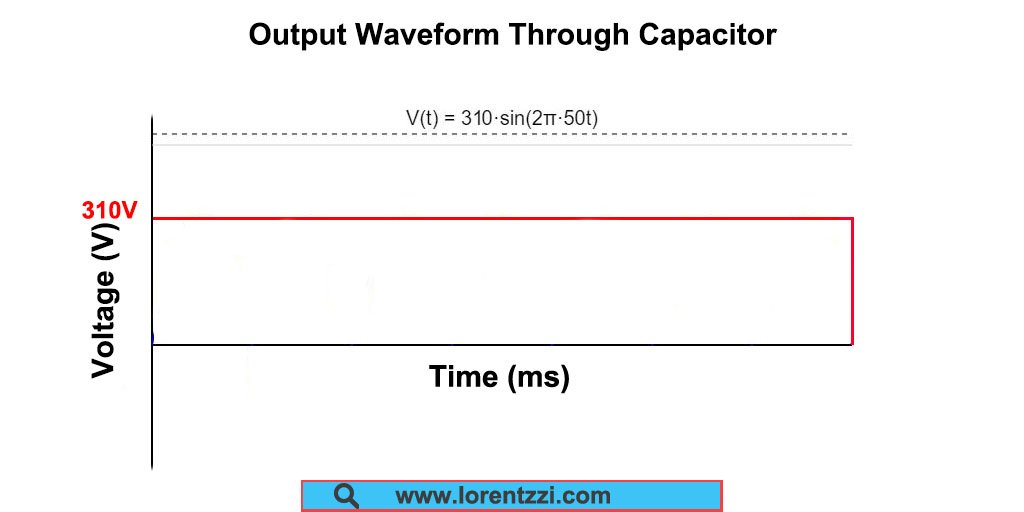
The relevant waveform is divided into two stages as shown and described below:
- The AC current passes through a full-bridge rectifier, converting the alternating positive and negative AC current into unidirectional pulsating DC current;
- After filtering by a large-capacity electrolytic capacitor, a smooth high-voltage DC 310V is obtained.
4.PWM switch + high frequency transformer
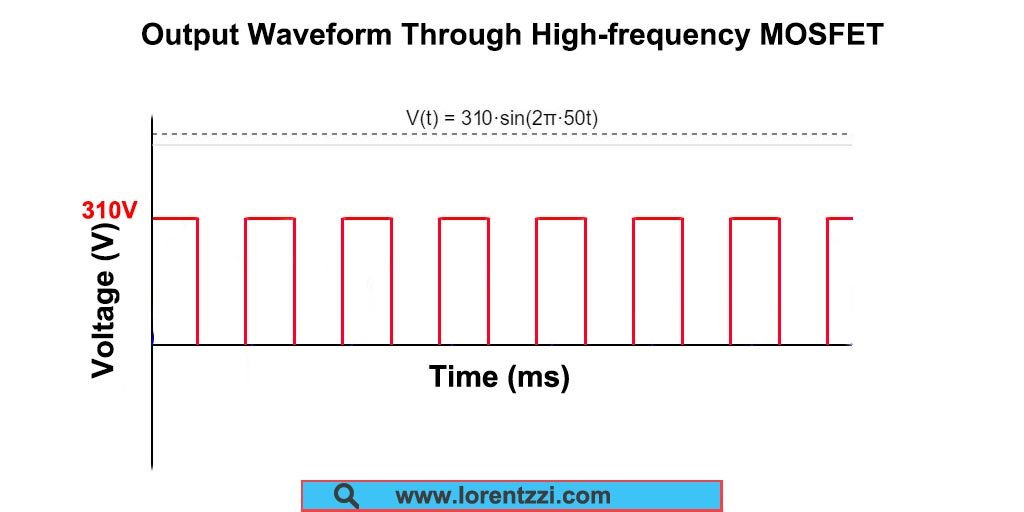
We now have 310V DC. This is not our target output, so we need a transformer to step it down to 12V, 24V, or 5V DC.
However, no transformer can directly convert stable DC. This is because DC will generate static flux inside the transformer, preventing voltage from being induced on the secondary side for voltage transformation.
How to solve this problem?
The solution is to use a high-frequency MOSFET to convert the static DC into high-frequency DC pulses, you can see this DC pulses below:
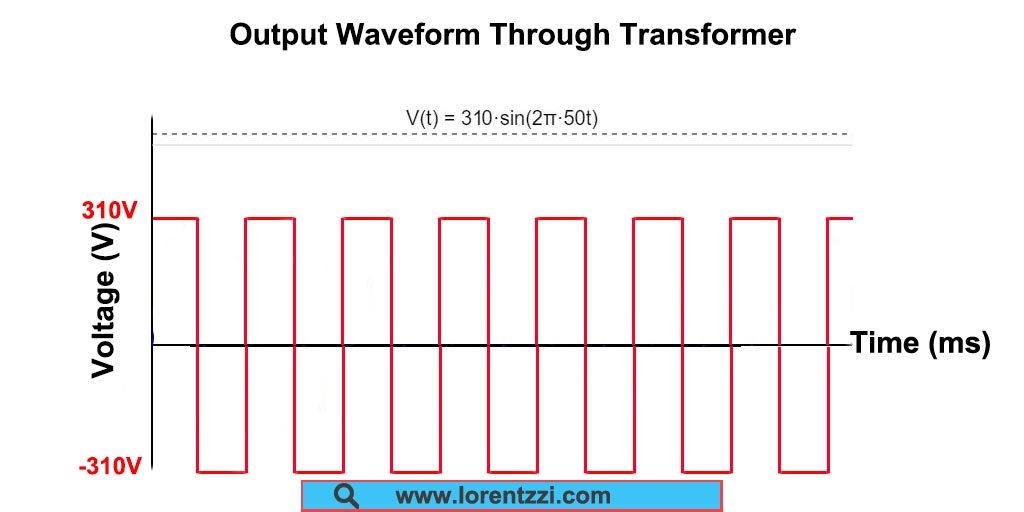
With this method, high DC voltage can be converted to low voltage. Still, the alternating pulses from the transformer need to be turned into unidirectional positive DC.
Now we move on to the next stage: secondary-side rectification and filtering.
5. Secondary side rectification and filtering
This circuit allows the voltage to be changed from a high-voltage 310VDC square wave to a low-voltage DC5V, DC12V, or DC24V square wave.
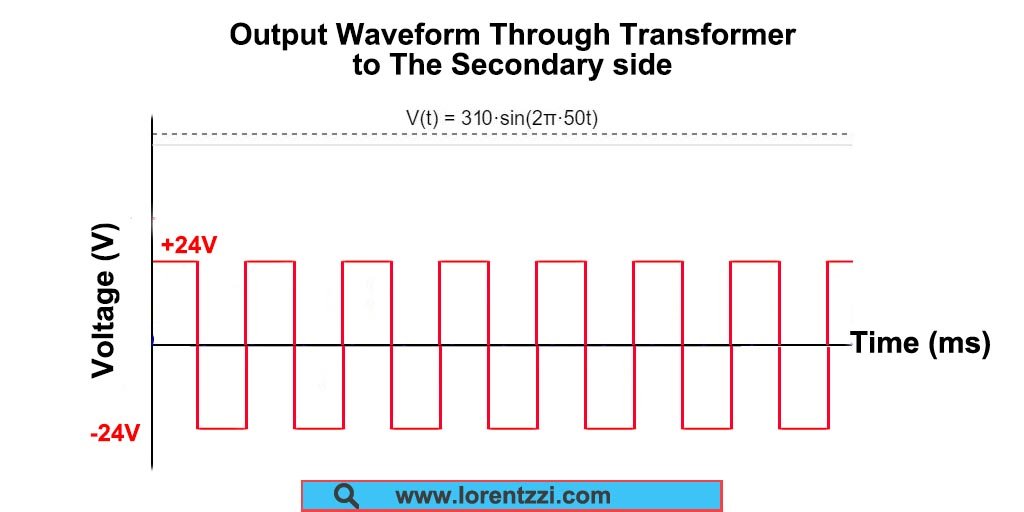
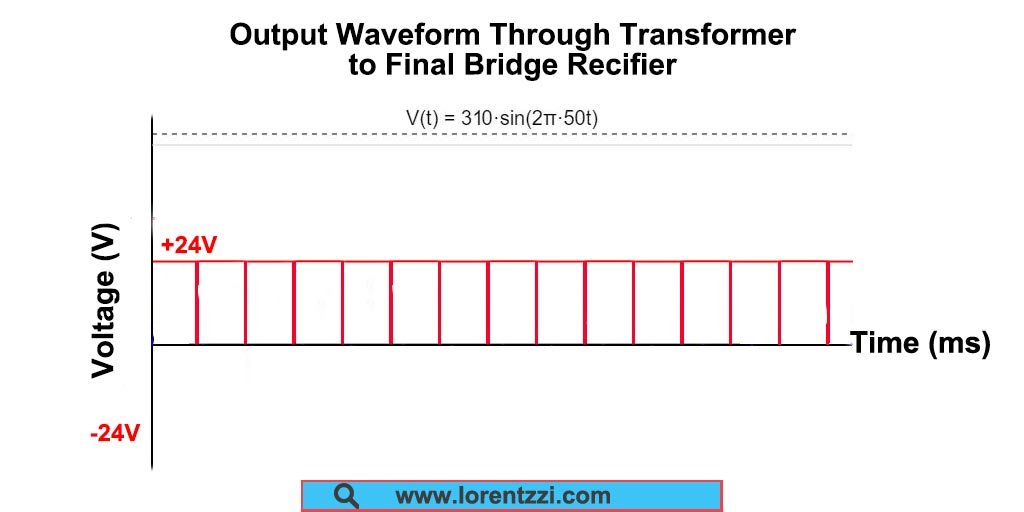
The next step is to flip the negative half-cycle of the square wave to the positive half-cycle, so that the entire output becomes a DC voltage. This can be achieved using another rectifier circuit.
After filtering out other noise, the output will be a stable low DC voltage.
Types of SMPS
Based on our experience, switching power supplies can be mainly divided into three types: variable output switching power supplies, DIN rail-mounted switching power supplies, and standard screw-mounted switching power supplies. We will introduce each of them in the next section.
Variable output SMPS
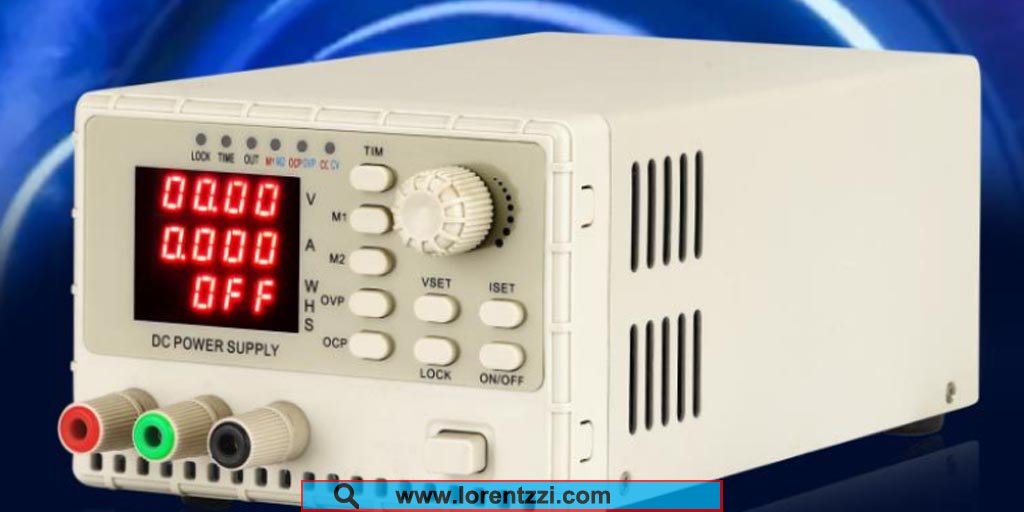
Variable output switching power supplies (SMPS), also known as variable DC power supplies, allow you to obtain the desired DC voltage by adjusting a knob on the product.
Their variable DC output characteristic makes it easy for users to obtain the required voltage, but for this reason, their price is much higher than the two types of switching power supplies we will introduce below.
Therefore, variable output switching power supplies are mainly used in laboratories and test equipment, and are rarely seen in actual production lines.
DIN rail SMPS
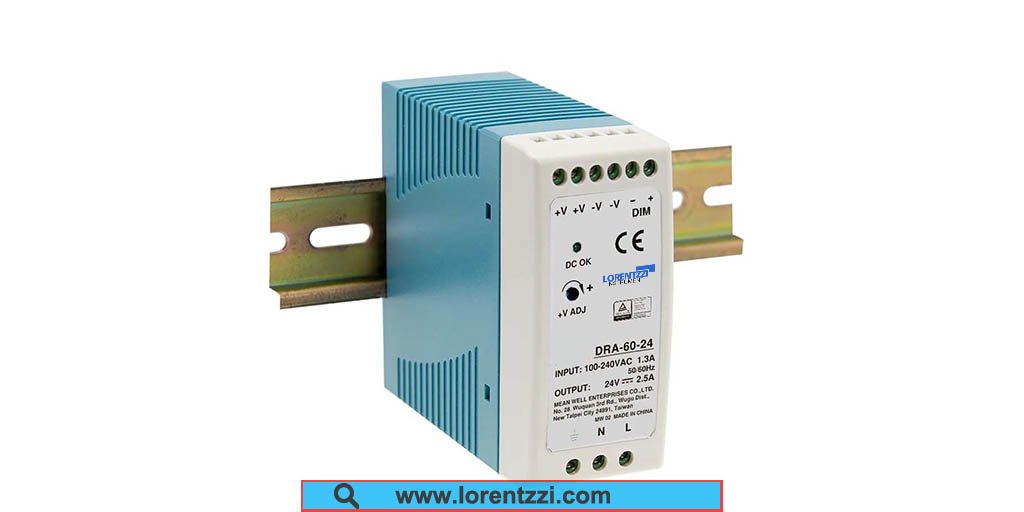
DIN rail-mounted switching power supplies feature a DIN rail mounting structure on the back, allowing users to easily install them on 35 mm DIN rails.
Among them, the most popular models include the DR series and the NDR series.
Comparing the two series of switching power supplies with the same output power, the NDR series is thinner than the DR series.
Screw-fixed SMPS
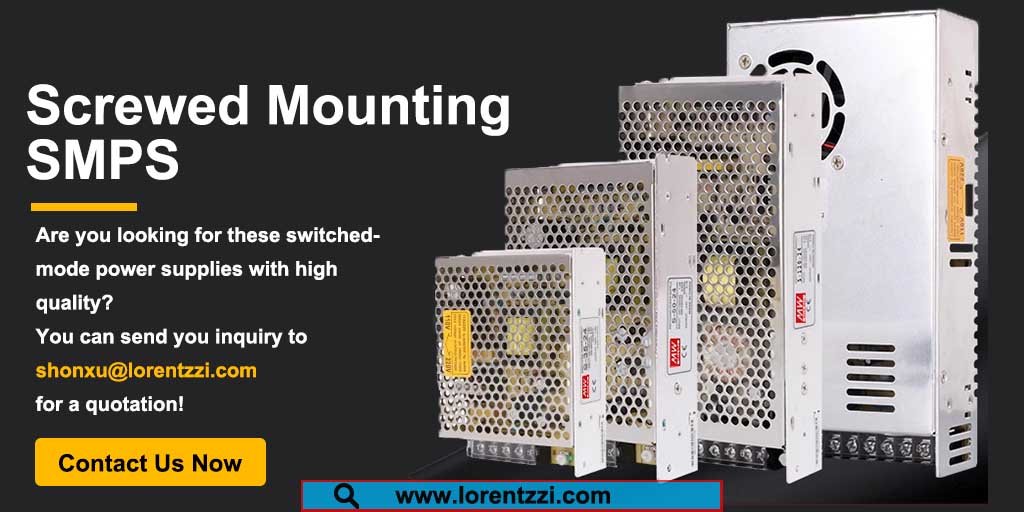
Another more commonly used type of switching power supply is the screw-mounted switching power supply, named for its screw-mounting method.
Screw-mounted switching power supplies include the S series, D series, SP series, and MS series. You can click this link to download our switching power supply product catalog: Lorentzzi Switching Power Supply Product Catalog.
Screw-mounted switching power supplies are commonly found in LED lighting control systems, used to drive LED light strips, streetlights, etc.
Which devices can be operated by the SMPS?
Switching-mode power supplies (SMPS) power a wide range of DC electronic devices, including:
1.Industrial automation equipment
Such as various proximity sensors, safety light curtains, PLCs, general purpose relays(Intermediate relays), solenoid valves, DC coil contactors, servo control modules, and DC HMI.
2.Lighting
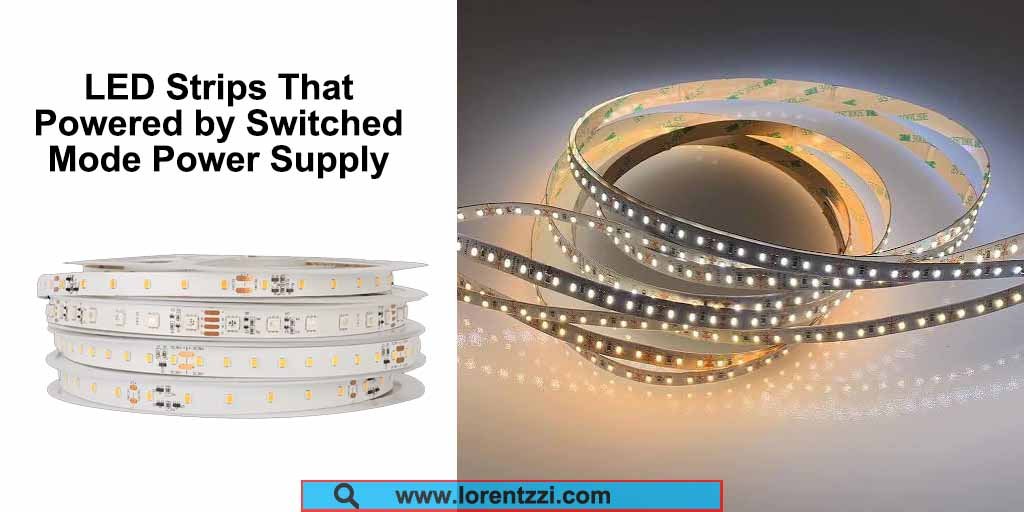
LED strips and constant-voltage LED luminaires.
3.Communication and network hardware
Routers, switches, CCTV, and network terminal equipment.
4.Consumer and commercial electronics
Battery charger, phone charger, laptop adapters and so on.
How to choose the right SMPS for your application?
Choosing the right switching power supply for your load can avoid a lot of trouble.
Simply put, choosing the right switching power supply can be divided into 4 steps: 1. Confirm the rated power of the load, 2. Confirm the rated voltage of the load, 3. Leave some margin for the load, 4. Confirm installation method.
In the following section, we will teach you step by step.
1. Confirm the rated power of the load
You can determine the rated power of a DC load by reading its nameplate; if you don’t know, we can provide some information: for most sensors, the rated power is usually less than 10W; for capacitive loads such as solenoid valves, the rated power is usually less than 30W, but their starting power is usually 2-3 times their rated power, so it is best to use a 100W switching power supply.
2. Confirm the rated voltage of the load
You can also determine the load’s rated voltage by reading the nameplate. For example, if your load is 24VDC, you should select a switching power supply with a 24VDC output.
Choosing the wrong output voltage could cause the coils of your DC load to overheat and burn out.
3. Leave some margin for the load
For stable, non-inductive loads (sensors, safety light curtains, temperature controllers): Reserve a power margin of 20%~30%.
For inductive loads (solenoid valves, relays): Reserve a power margin of 40%~50%
4. Confirm installation method
Finally, confirm your plan for installing the SMPS power supply in the rack.
If you want quick and easy installation, choose a DIN rail SMPS power supply; if your rack does not have DIN rails, choose a screw-mount SMPS power supply and secure it firmly in the rack using four screws.
Conclusion
In summary, switched-mode power supplies are widely used in industrial control, enabling them to provide stable DC power to DC loads using AC power.
If you still have questions about switching power supplies(SMPS), or are looking for a Chinese supplier capable of producing high-quality switching power supplies, you can send your questions or inquiries to shonxu@lorentzzi.com, and the sales department of Lorentzzi Electric will contact you shortly.