
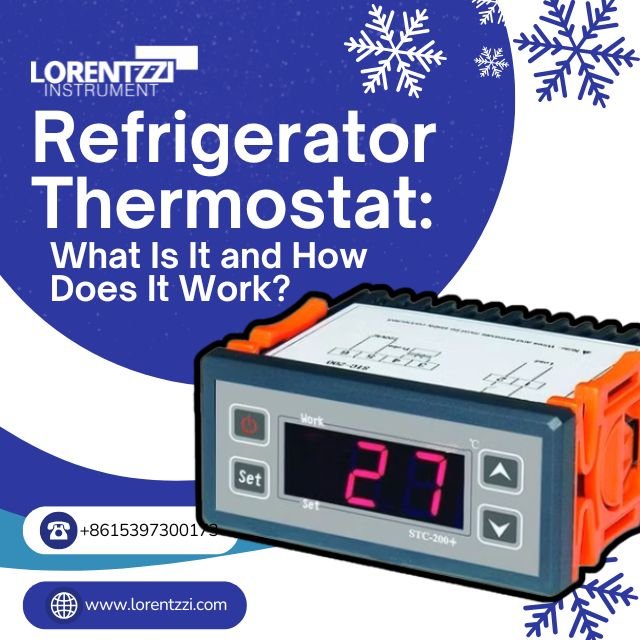
Besides controlling the temperature of heating equipment, thermostats also have wide applications in the refrigeration field.
In this blog post, we will introduce refrigeration thermostats in detail, including their definition, working principle, types, and the differences between refrigeration thermostats and heating thermostats.
Now, let’s delve deeper.
Refrigerator thermostat definition
The thermostat in a refrigerator or freezer regulates the temperature inside the freezer/refrigerator compartment by controlling the compressor‘s start and stop.
It is a crucial control unit that obtains temperature values from a temperature sensor, compares them with a set value, and then determines when to start and stop the compressor.
It works in conjunction with the sensor (as a feedback element) and the compressor (as an actuator) to form a closed-loop system.
How does the refrigerator thermostat work?
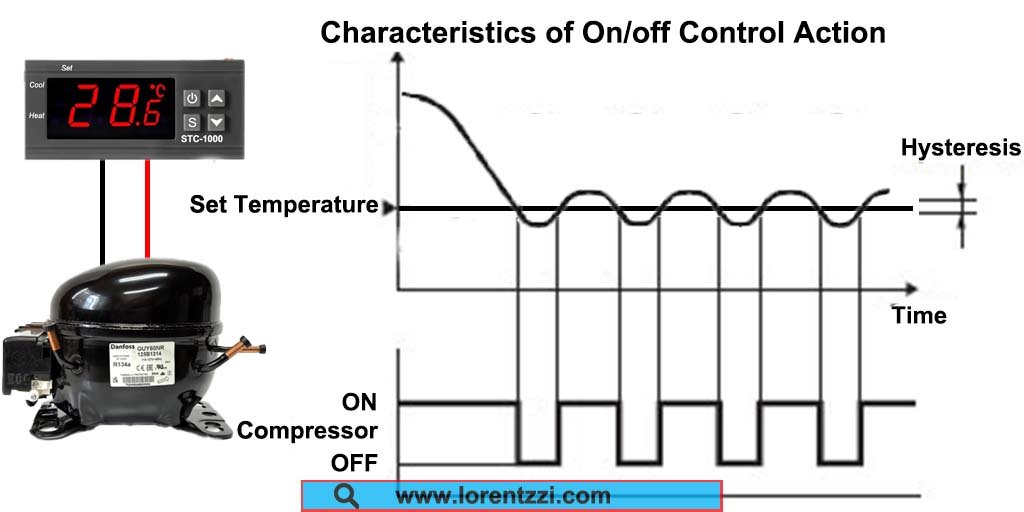
A refrigerator thermostat works on a simple on/off control principle. It continuously compares the set temperature with the actual temperature inside the refrigerator. Based on the comparison result, it decides whether to start the compressor to begin cooling or to stop the compressor. This cycle repeats continuously to maintain the desired temperature.
For example, suppose you set the refrigerator compartment temperature to -2°C, and the ambient temperature is 35°C. Over time, the temperature inside the refrigerator compartment will gradually rise due to heat penetration. The built-in temperature sensor detects this temperature increase and sends a reading to the thermostat.
The thermostat compares this reading with the -2°C setpoint. If it finds the internal temperature too high, it immediately starts the compressor. After the compressor runs for a while (usually a few minutes to tens of minutes), the internal temperature will drop to -2°C. At this point, the thermostat will cut off the compressor’s power, stopping it from operating.
As the ambient temperature rises, the freezer compartment temperature will gradually recover, and the thermostat will restart the cycle.
Types of refrigerator thermostat
There are two types of refrigerator thermostats on the market: electronic refrigerator thermostats and mechanical refrigerator thermostats.
In the following part, we will explain each thermostat in detail.
Electronic refrigerator thermostat
Electronic thermostats, also known as digital thermostats, are widely used in various refrigeration equipment, including freezers, refrigerators, and refrigerated display cases.
You can see its application in commercial refrigerated display cases below:
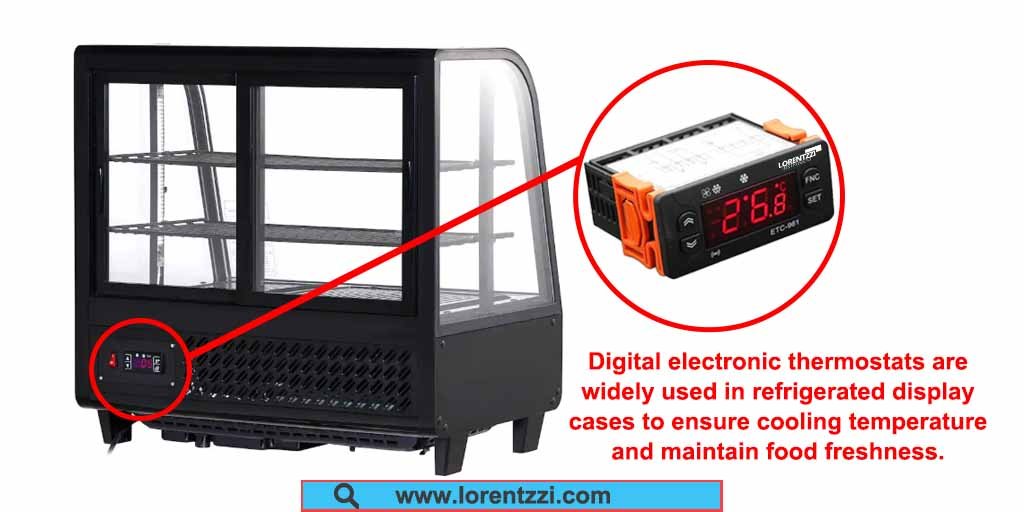
These thermostats are typically equipped with a digital display and multiple soft-set buttons, enabling them to handle complex operations.
In addition to precise temperature control, they offer accurate control of the defrost cycle, customizable temperature settings, remote monitoring via communication, over-temperature or under-temperature alarms, and management of the compressor’s soft-start time.
Mechanical refrigerator thermostat
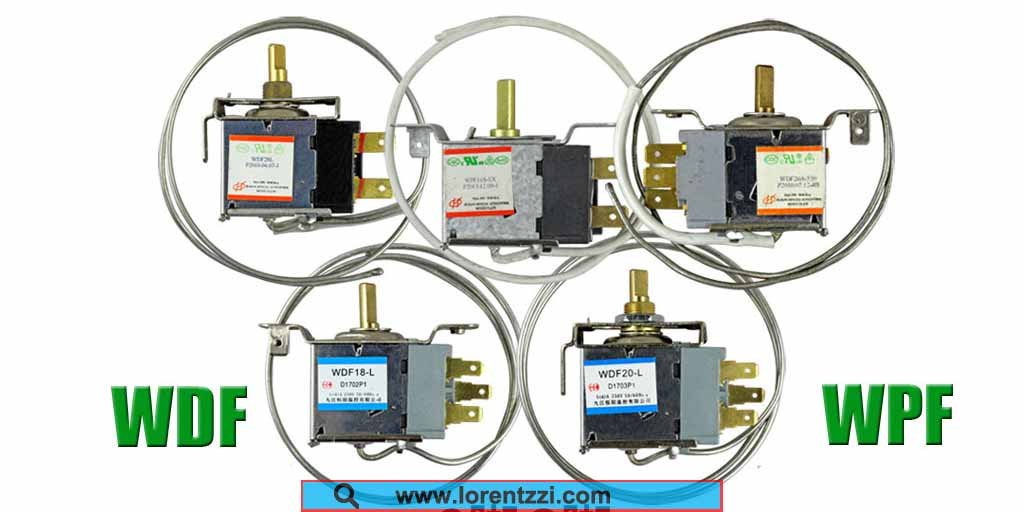
A mechanical refrigerator thermostat is a basic and simple refrigeration control unit widely used in simple refrigerators and economical refrigeration equipment.
Its working principle is simple: when the temperature has not reached or has reached the preset value, the thermostat will correspondingly close or open its electrical contacts, thereby starting or stopping the compressor to maintain the desired temperature.
Unlike electronic thermostats, which allow for flexible temperature settings, mechanical thermostats can only be set to one or more temperature points. For example, common mechanical thermostats have seven temperature points, adjustable between 0 and 10 degrees Celsius.
Differences between refrigerator thermostats and heating temperature controllers
Cooling thermostats and heating temperature controllers differ in many ways, but there are three main key differences between them in terms of working principle, type and application.
| Item | Refrigerator thermostat | Heating temperature controller |
|---|---|---|
Working principle |
Simple on/off control |
On/off control (for simple heating equipment temperature control) or PID control (for precise heating temperature control). |
Type |
There are two types available: mechanical and electronic. |
Two types of heating temperature controllers are available: mechanical and electronic. Furthermore, the electronic digital type can be further divided into on/off temperature controllers and PID temperature controllers. |
Application |
Cooling usage, including HVAC, freezer, air conditioner, fridge, refrigerated equipment and so on. |
Heating usages including: HVAC / air-conditioning equipment, blow molding machines, annealing furnaces, plastic injection machines, glass production. |
Conclusion
In summary, the refrigerator thermostat is an innovative and reliable product designed specifically for cooling equipment.
We strongly recommend that users or manufacturers use electronic digital thermostats instead of mechanical thermostats because they offer more features and allow users to easily set the desired temperature.
If your customers are unsure of the exact temperature they need, we suggest using a simple and easy-to-use mechanical thermostat.
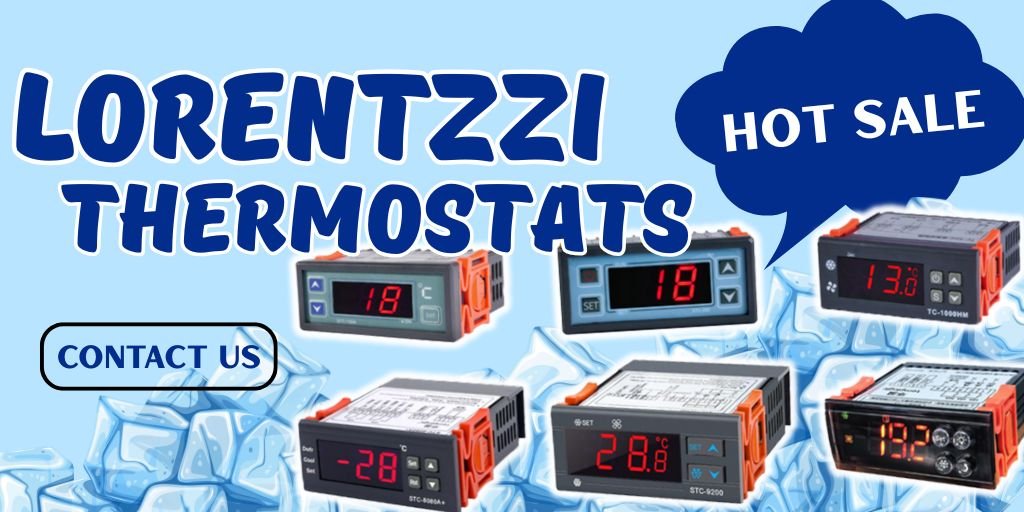
If you are looking for a reliable global thermostat supplier, Lorentzzi Electric manufactures and supplies various types of thermostats for both cooling and heating applications. Contact us today for a quote!