
In the real world, there are two main types of power: DC power and AC power. But what are these two types of power? What is the difference between them? And how do you convert DC power to AC power or AC power to DC power? This article will provide you with a more detailed explanation.
What is DC power?
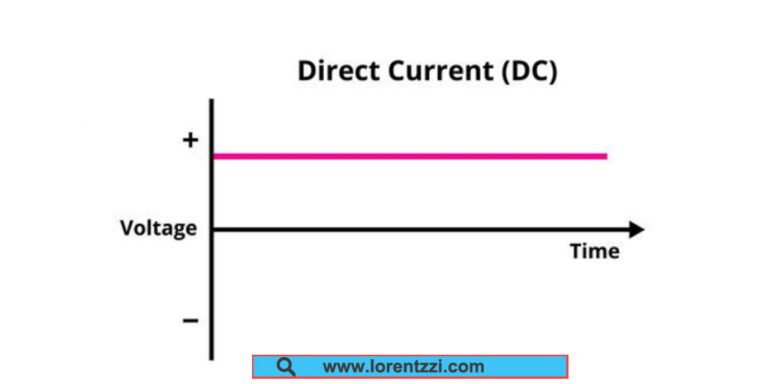
DC stands for direct current, first discovered by Thomas Edison. Imagine a battery with a positive terminal and a negative terminal. DC current starts at the positive terminal and flows steadily along the wire or conductive material in the circuit, eventually flowing to the negative terminal. It does not change direction as it flows.
What is AC power?
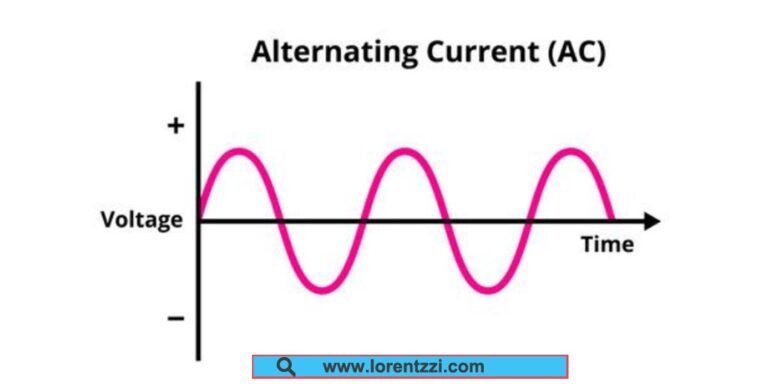
In contrast, AC is alternating current, invented by Nikola Tesla, and its current direction is not fixed like direct current. In the previous cycle, it will flow from the positive pole of the power supply to the negative pole, and in the next cycle, the direction of the current flow will change, and the current will flow from the negative pole of the power supply to the positive pole.
The difference between DC and AC power
There are 6 differences between DC power supply and AC power supply, which are working principle, voltage characteristics, generation, transmission, application and transformer adjustable voltage. You can see these differences in the chart below.
| Aspect | DC | AC |
|---|---|---|
Working principle |
Current flows in a constant single direction. |
Current direction reverses periodically. |
Voltage characteristics |
Stable |
The voltage varies sinusoidally with time. |
Power generation |
Batteries, photovoltaic cells, fuel cells, etc. |
Dynamo |
Transmission |
Not suitable for long distance transmission because of voltage loss on the line. |
Transformers are used to increase or decrease voltage, which is suitable for long-distance transmission. |
Applications |
Used in electronic devices, electric vehicles, photovoltaic systems, etc. |
Widely used in mains power, household appliances, industrial equipment. |
Step up and down voltage through transformer |
No, the magnetic generated by DC power is stable, voltage can’t be changed by transformer. |
Yes |
How do I convert one to the other?
DC to AC
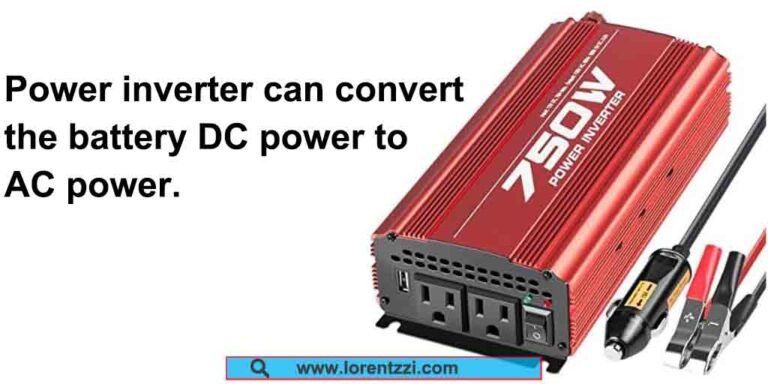
Power Inverter: A power inverter is an electronic device that can convert direct current (DC) to alternating current (AC). For example, in a solar power system, a power inverter converts the direct current generated by photovoltaic panels into household alternating current, enabling the solar power to be used by common household appliances that are designed to operate on AC power.
AC to DC
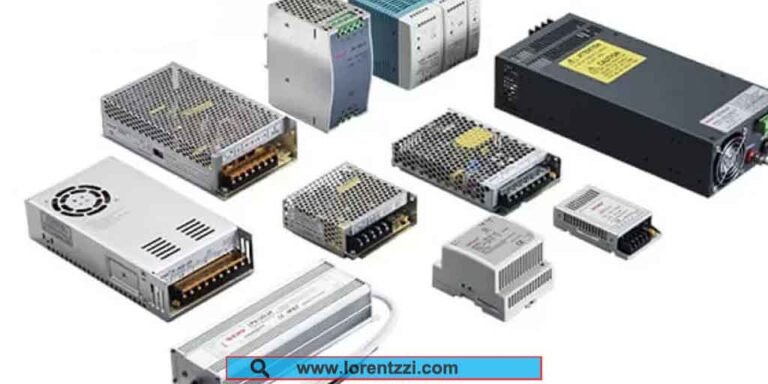
There are several products that can convert AC to DC. The first product is a switch mode power supply (SMPS). SMPS are widely used in a variety of electronic devices due to their high efficiency and compact size. Another product is a bridge rectifier. A bridge rectifier is a diode structure that converts AC to DC by allowing current to flow in one direction. It can provide a relatively smooth DC output, which is essential for powering many electronic circuits.
Which one is better?
The choice between DC and AC depends on the specific application.
DC power is more stable, can prevent LED lights from flickering, and is more energy-efficient. Direct current is also widely used in electronic devices such as mobile phones, electric vehicles, and electronic circuits.
For devices with higher power requirements, or when multiple devices need to be powered at the same time, AC is often a more suitable choice because the main voltage of the power grid is AC. And since most of our home appliances are powered by AC, AC is more suitable for home appliances.
DC and AC power applications
DC power applications:
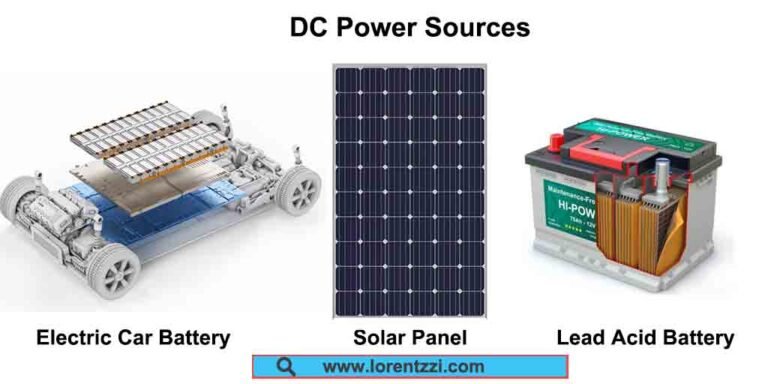
- Batteries: Batteries, such as cell phone batteries and car batteries, store electrical energy in the form of direct current.
- Solar panels: Solar panels generate electrical energy in the form of direct current.
- Electronic devices: Many small electronic devices, including cell phones, computers, circuit boards, and LED lights, require direct current.
AC power applications:

- Household electricity: The electricity supplied to our homes through power sockets is AC.
- Power transmission: AC is the preferred form of electricity for large-scale power transmission, and the electricity used in the power grid is also AC.
- Industrial equipment: Many industrial equipment, such as electric motors and induction cookers, require AC power.
Conclusion
In short, DC and AC have their own advantages and disadvantages, and each has its own applicable scenarios. And they can be converted into each other.
If you have any questions about the difference between direct current and alternating current, you can send an email to shonxu@lorentzzi.com and the Lorentzzi® team will answer your questions within 24 hours.