AC solid-state relays are widely used in heating control systems, but do you know what the most important component inside an AC solid-state relay (used for AC or DC control) is?
AC solid-state relays contain various components, such as resistors, capacitors, optocoupler isolation circuits, and control units.
Among these components, the most important is the TRIAC or back-to-back thyristor. It is responsible for switching the load on and off, ensuring reliable operation.
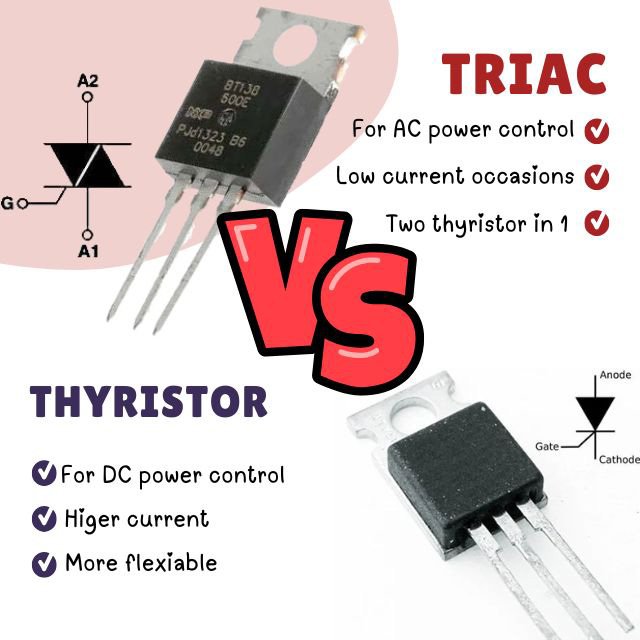
Although TRIACs and back-to-back thyristors function similarly, what are the key differences between them?
This article will answer these questions:
- What are they?
- Key differences between them
Let’s continue!
What is a TRIAC?
TRIAC is an abbreviation for Triode AC Switch, which consists of two anti-reverse connected thyristors packaged together, sharing a common gate.
Unlike unidirectional thyristors that only conduct DC in a single direction, TRIACs are designed for AC control.
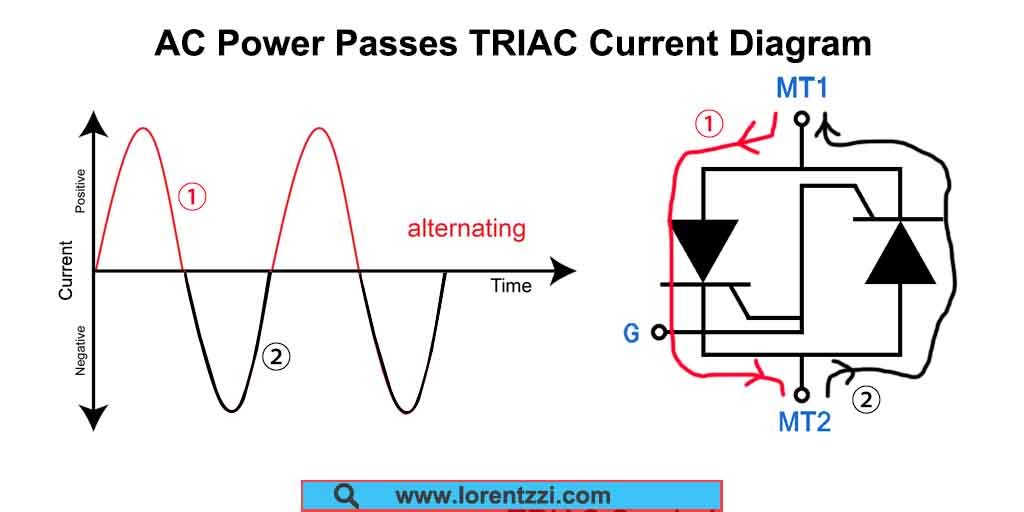
It features three terminals: MT1, MT2 and G, where the G terminal is used to trigger conduction between MT1 and MT2 bidirectionally.
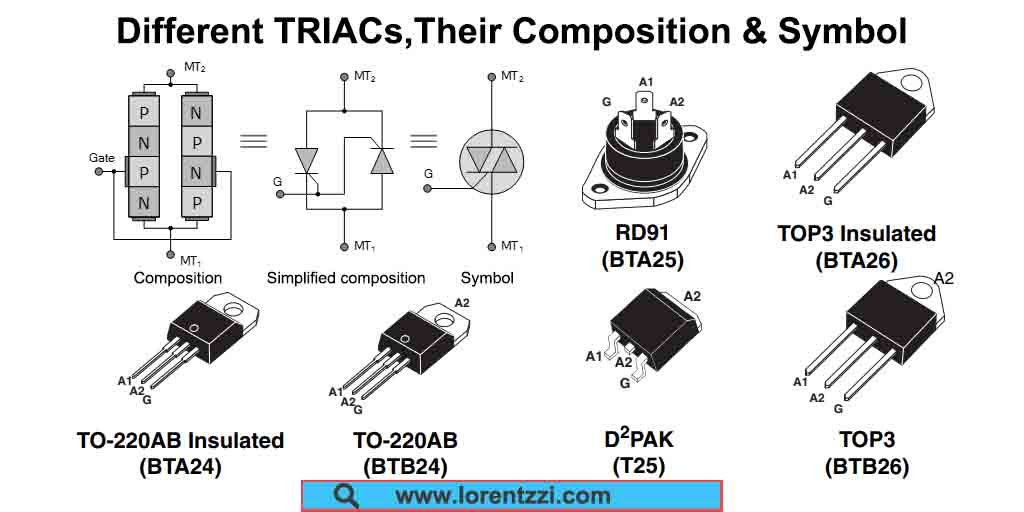
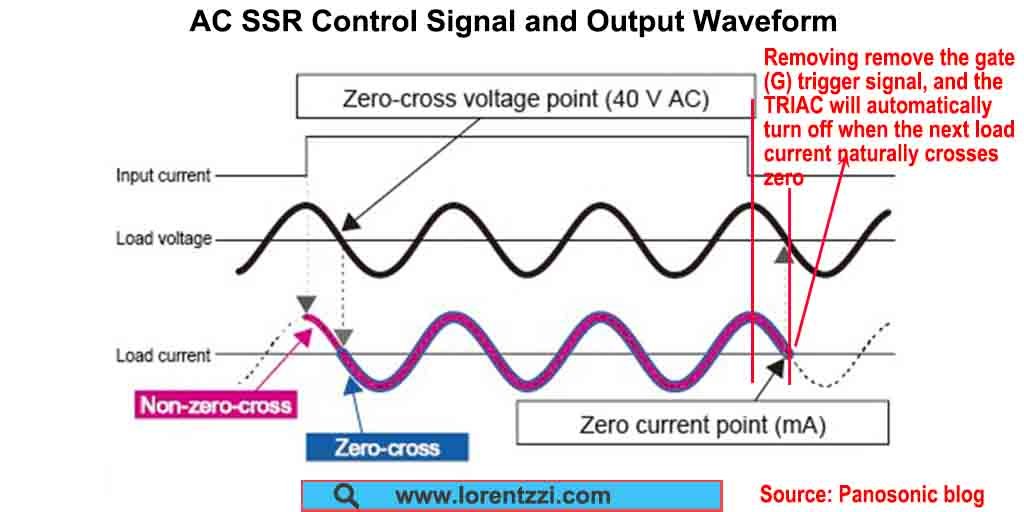
Once a trigger current is applied to the G terminal, the TRIAC will remain in the on state.
So how do you turn it off?
There are two methods:
The first method is to disconnect the main power supply to the MT1 and MT2 terminals;
The second method is to remove the gate (G) trigger signal, and the TRIAC will automatically turn off when the next load current naturally crosses zero. This method of turning off by utilizing the zero-crossing characteristic of AC current is the basis for AC phase control (such as dimming and speed regulation) and the operation of solid-state relays.
What is a thyristor?
Now let’s look at thyristors.
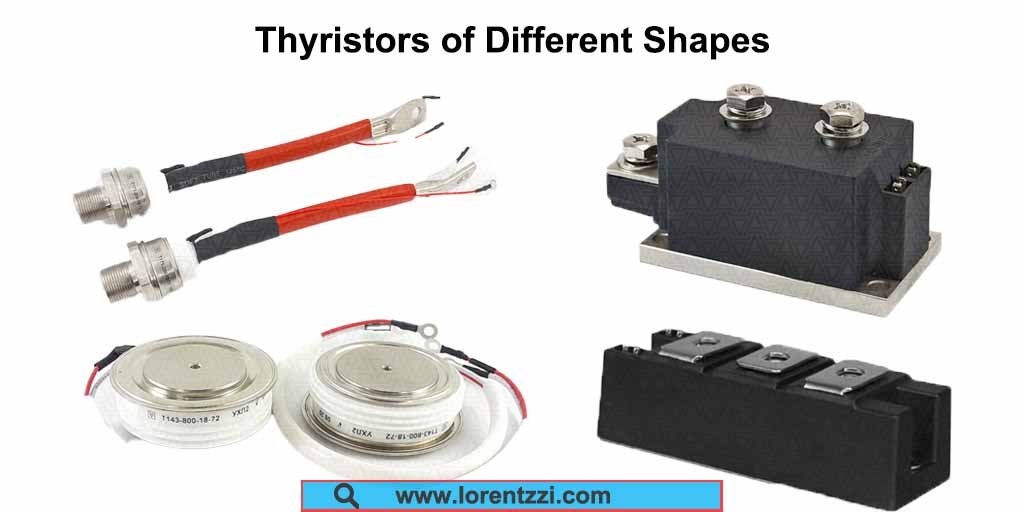
Strictly speaking, the thyristor is a key component of a bidirectional silicon controlled rectifier (TRIAC).
As shown in the introduction to TRIAC above, two thyristors placed back-to-back constitute a TRIAC, and together they form a complete control device.
The thyristor, also known as an SCR (silicon controlled rectifier), is used to control DC power supplies.
You can think of a thyristor as a faucet.
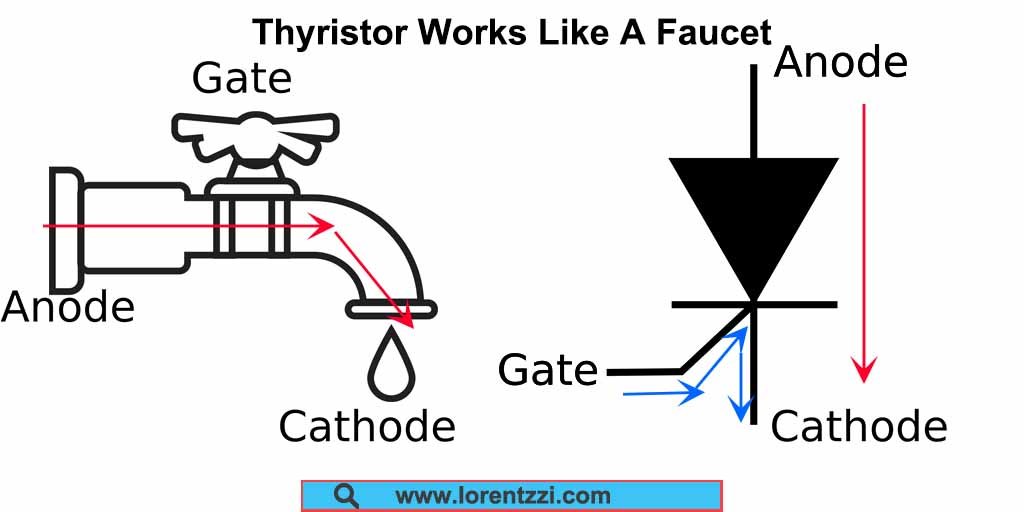
Its working principle is as follows: the anode (A) of the thyristor is like the faucet inlet; current flows in from the anode, just as water enters the faucet through the inlet.
The cathode (K) is like the faucet outlet; current flows out from the cathode, just as water flows out of the outlet.
The control electrode (G) plays a crucial control role and can be likened to the faucet handle.
Applying a trigger signal to the control electrode is equivalent to turning the handle; the thyristor conducts, and the current flows smoothly.
It is important to note that thyristors have unidirectional conductivity. Once turned on, they remain in conduction even after the gate signal is removed. However, when used to control AC power, the thyristor will turn off when the AC voltage reverses polarity.
Key differences between TRIAC and thyristor
Simply knowing what triacs and thyristors are is not enough; to better understand or select them, we should clearly understand the differences between them.
Next, we will list 7 key differences, including current direction, structure, circuit application, triggering method, turn-off method, application areas, and maximum through current.
| Item | TRIAC | Thyristor(SCR) |
|---|---|---|
|
Current direction |
Bidirectional. Current flows between MT1 and MT2. |
Unidirectional. Current flows from A to K. |
|
Structure |
Equivalent to two SCRs connected in reverse parallel and integrated on a single silicon chip. |
Four-layer semiconductor structure (PNPN). |
|
Circuit application |
Direct control of AC circuits, such as AC voltage regulation, dimming, and motor speed control. |
DC circuits; or full-wave/half-wave rectifier control for AC circuits. |
|
Triggering method |
Complex, we can use DIAC, pulses, DC/logic circuits, or RC circuits for triggering. |
Simple, a positive pulse is applied to the gate relative to the cathode. |
|
Shut down method |
When the current passes zero, removing the control signal can shut down or cut off the power from MT1 to MT2 |
In DC circuits, a commutator circuit is used to turn off the current; in AC circuits, the current automatically turns off when it crosses zero. |
|
Application |
Phase-controlled voltage regulation, such as dimmers, voltage regulators, and speed controllers. |
Rectifier, inverter, DC system heating control. |
|
Maximum through current |
320 amps, if inside SSR cases, maximum 40 amps |
3200 amps |
Selection tips for TRIACs and thyristors
Below, we will provide selection tips and suggestions from an application perspective:
For controlling household AC appliances (such as induction motors in refrigerators or fans, AC lights, or general-purpose motors), a triac (TRIAC) is typically chosen.
For controlling DC equipment or performing precise, high-power AC rectification (such as DC motor drivers or phase-controlled rectifiers), a standard thyristor (SCR) is typically used.
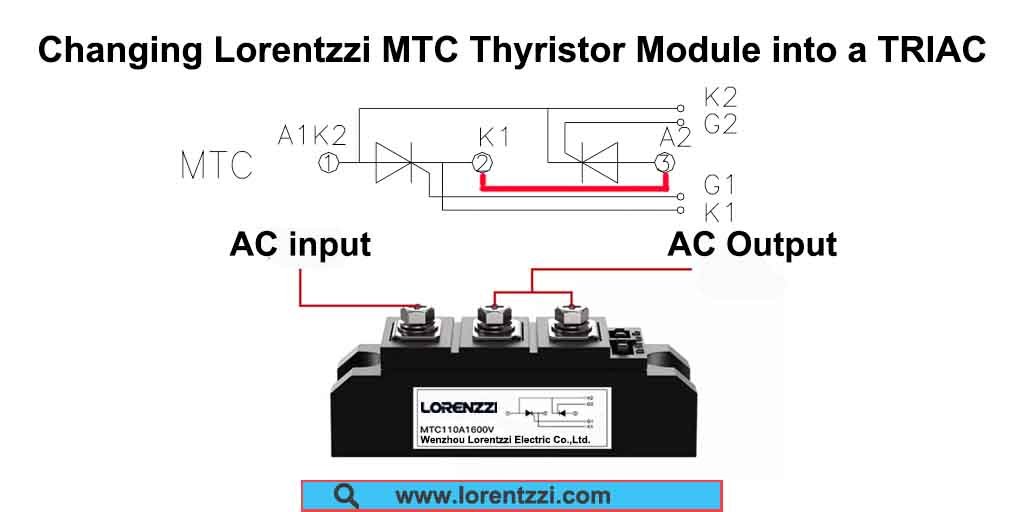
In addition, if you only have thyristors on hand but want to control an AC load, you can connect two thyristors in reverse parallel to achieve the same function as a bidirectional silicon controlled rectifier (SCR) switch, and this method is very suitable for controlling high-power AC loads.
Conclusion
TRIAC and thyristors are two different types of semiconductor devices with different power levels and applications.
They can be found not only in solid-state relays but also in other devices such as SCR power regulators, dimming controllers, power inverters, soft starters, and so on.
If you are looking for TRIACs such as BTA16, BTA26, BTA41, or MTC, MTA, MTK, and MTX series thyristors, you can send an inquiry to shonxu@lorentzzi.com for more information!